Coding Bootcamp Worth It 2026: Data-Driven Job Placement & Salary Analysis
Anúncios
In an ever-evolving technological landscape, the question of whether a coding bootcamp worth the investment in 2026 continues to resonate with aspiring developers and career changers. The rapid pace of innovation, coupled with the persistent demand for skilled tech professionals, has positioned coding bootcamps as a compelling alternative to traditional higher education. But beyond the marketing hype, what does the data truly say about job placement rates, salary increases, and the overall return on investment for those who choose this intensive educational path?
This comprehensive, data-driven analysis aims to cut through the noise, providing a clear perspective on the efficacy of coding bootcamps in the current and projected job market. We will delve into various factors, including the curriculum’s relevance, the quality of career services, and the long-term career trajectory of graduates. Our goal is to equip you with the insights needed to make an informed decision about whether a coding bootcamp worth your time and financial commitment in 2026.
Anúncios
The Evolving Landscape of Tech Education: Why Coding Bootcamps Gained Traction
The rise of coding bootcamps over the past decade is no accident. Traditional computer science degrees, while offering a foundational theoretical understanding, often struggle to keep pace with the industry’s rapidly changing skill requirements. Bootcamps, on the other hand, are designed with agility, frequently updating their curricula to reflect the most in-demand technologies and programming languages. This responsiveness is a significant factor in understanding if a coding bootcamp worth the investment for those seeking immediate entry into the tech workforce.
Initially, bootcamps were viewed with skepticism by some employers, who preferred candidates with four-year degrees. However, as the quality of bootcamp education improved and graduates consistently demonstrated practical, job-ready skills, this perception began to shift. Today, many leading tech companies actively recruit from bootcamps, recognizing the value of their intensive, project-based learning models. The focus on practical application, collaborative projects, and real-world problem-solving makes bootcamp graduates highly adaptable and productive from day one.
Anúncios
Furthermore, the accessibility and shorter duration of bootcamps appeal to a broader demographic, including individuals looking to pivot careers, those without a traditional college background, and even experienced professionals seeking to upskill. The lower cost compared to a four-year degree, coupled with the potential for rapid career advancement, makes the question of ‘is a coding bootcamp worth it’ increasingly pertinent for a diverse range of learners.
Defining Success: Job Placement Rates in 2026
One of the most critical metrics for evaluating if a coding bootcamp worth the investment is its job placement rate. Prospective students want assurance that their efforts will translate into tangible employment opportunities. In 2026, the tech job market remains robust, but also highly competitive. Bootcamps that consistently report high job placement rates typically share several common characteristics:
- Rigorous Curriculum: They teach highly relevant, in-demand skills that employers are actively seeking. This includes not just programming languages (like Python, JavaScript, Go, Rust) but also frameworks (React, Angular, Vue.js), databases (SQL, NoSQL), cloud platforms (AWS, Azure, GCP), and essential development practices (Agile, Git, testing).
- Strong Career Services: Beyond teaching code, successful bootcamps invest heavily in career preparation. This includes resume building, interview coaching (technical and behavioral), portfolio development, networking events, and direct connections with hiring partners. The quality of these services significantly impacts a graduate’s ability to secure a job.
- Alumni Network: A strong and engaged alumni network can be invaluable for job seekers, providing mentorship, referrals, and insights into company cultures. Bootcamps with a long history often boast extensive networks that aid new graduates.
- Transparency in Reporting: Reputable bootcamps are transparent about their job placement statistics, often adhering to standards set by organizations like the Council on Integrity in Results Reporting (CIRR). When assessing if a coding bootcamp worth it, always look for independently verified data.
Recent data from leading bootcamp providers and industry reports indicate that job placement rates for graduates within six months of completion remain strong, often ranging from 70% to 90% for those actively seeking employment. However, it’s crucial to examine the fine print: what constitutes ’employed’? Does it include internships, contract roles, or only full-time positions? Understanding these nuances is key to a realistic assessment.
The Financial Impact: Salary Increases and ROI
Beyond simply securing a job, the financial return on investment (ROI) is a primary consideration for anyone asking if a coding bootcamp worth the cost. The promise of a significant salary bump is a major draw, and data generally supports this claim, especially for individuals transitioning from lower-paying fields.
Initial Salary Expectations
Entry-level salaries for bootcamp graduates can vary widely based on location, specific skills acquired, and prior work experience. However, many graduates report starting salaries in the range of $60,000 to $80,000 annually in major tech hubs, with some even exceeding $90,000. For individuals coming from non-tech backgrounds, this represents a substantial increase, often justifying the bootcamp’s tuition, which typically ranges from $10,000 to $20,000.
Long-Term Salary Growth
The long-term earning potential is another crucial aspect when evaluating if a coding bootcamp worth the investment. While initial salaries might be competitive with some traditional computer science graduates, the growth trajectory can be steep. With 2-3 years of experience, bootcamp alumni often see their salaries climb significantly, often reaching six figures. This rapid progression is largely due to the practical skills gained and the ability to quickly contribute to projects, accumulating valuable experience at an accelerated pace.
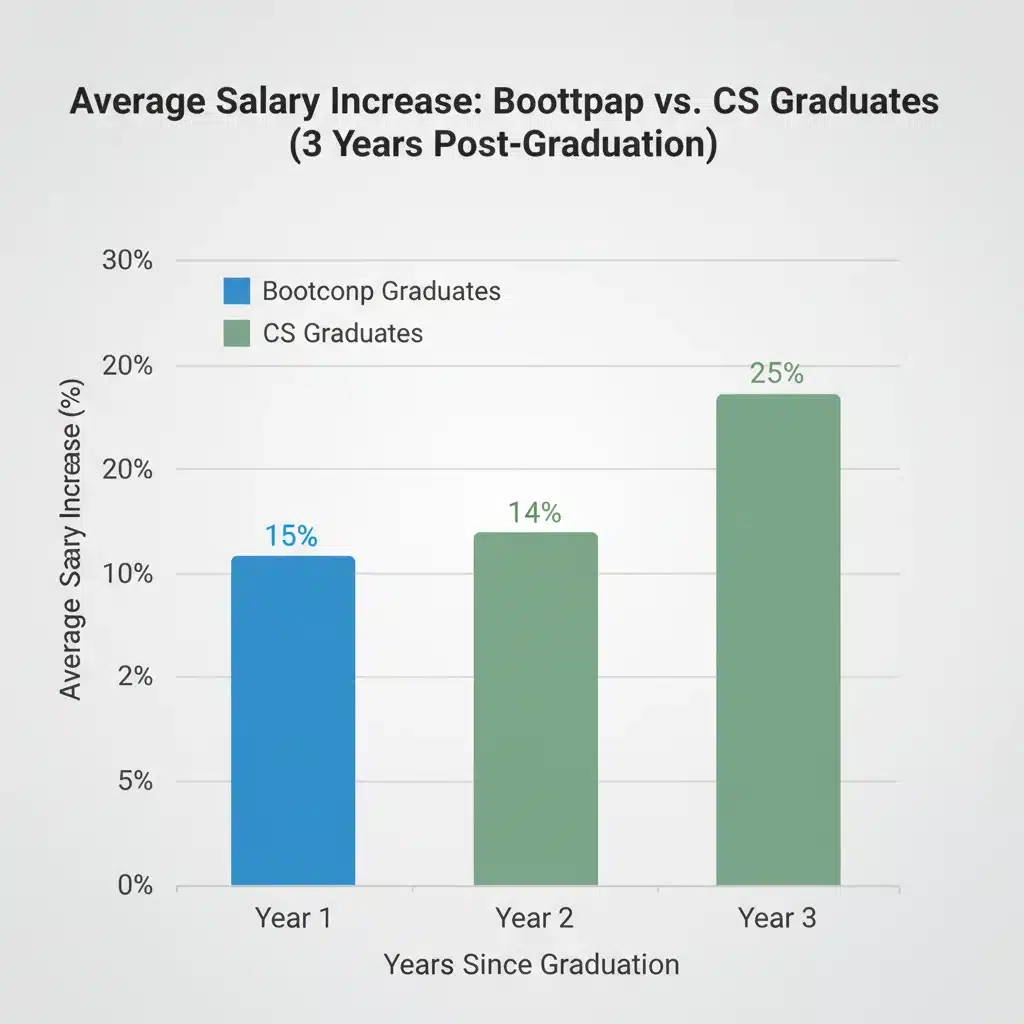
A recent study comparing the salary growth of bootcamp graduates versus those with traditional computer science degrees found that while CS graduates might have a slightly higher starting salary on average, bootcamp graduates often catch up or even surpass them within 3-5 years due to their focused, in-demand skill sets and rapid entry into the workforce. This accelerated career path is a compelling argument for the value proposition of bootcamps.
Calculating Your Personal ROI
To determine if a coding bootcamp worth it for your specific situation, consider these factors:
- Tuition Cost: The direct financial outlay for the program.
- Opportunity Cost: The income you forgo during the intensive study period. If you quit a job, this can be significant.
- Post-Bootcamp Salary: Your expected starting salary.
- Time to Placement: How quickly you anticipate finding a job after graduation.
By comparing the total cost (tuition + opportunity cost) against the projected increase in your annual salary, you can estimate your payback period. Many graduates find that they recoup their investment within 12-24 months, making the bootcamp a highly efficient path to a higher earning potential.
Curriculum and Specializations: Staying Relevant in 2026
The effectiveness of a coding bootcamp heavily depends on its curriculum’s relevance to current industry demands. In 2026, certain specializations and technologies continue to dominate the tech hiring landscape. When evaluating if a coding bootcamp worth your time, scrutinize their curriculum for these key areas:
- Full-Stack Web Development: Still highly sought after, covering both front-end (React, Vue, Angular) and back-end (Node.js, Python/Django, Ruby on Rails) technologies.
- Data Science and Machine Learning: With the explosion of AI and big data, bootcamps focusing on Python, R, machine learning algorithms, and data visualization are extremely valuable.
- Cybersecurity: The increasing threat landscape makes cybersecurity professionals indispensable. Bootcamps covering network security, ethical hacking, and compliance are in high demand.
- Cloud Computing: Expertise in AWS, Azure, or Google Cloud Platform is becoming a baseline requirement for many developer roles.
- Mobile Development: iOS (Swift) and Android (Kotlin/Java) development continue to be relevant, especially for consumer-facing applications.
Beyond specific technologies, look for bootcamps that emphasize fundamental computer science principles, problem-solving skills, and a strong understanding of software engineering best practices. These foundational skills are transferable and ensure graduates can adapt to new technologies throughout their careers. A curriculum that includes version control (Git), agile methodologies, and effective debugging techniques further enhances a graduate’s marketability, solidifying the argument for why a coding bootcamp worth serious consideration.
The Importance of Career Services and Networking
A significant differentiator for high-quality bootcamps is the strength of their career services. It’s not enough to simply teach coding; graduates need guidance and support in navigating the job market. When determining if a coding bootcamp worth the investment, investigate the following aspects of their career support:
- Dedicated Career Coaches: Do they offer personalized coaching for resume writing, LinkedIn profile optimization, and cover letter crafting?
- Interview Preparation: Are there mock interviews, both technical and behavioral, to help students practice and refine their responses?
- Portfolio Development: Do they guide students in building a robust portfolio of projects that showcases their skills to potential employers?
- Hiring Partner Network: Does the bootcamp have established relationships with companies actively looking to hire their graduates? Direct connections can significantly shorten the job search.
- Networking Events: Do they host career fairs, alumni panels, or industry meetups to connect students with professionals in the field?
The most successful graduates often attribute their rapid job placement not just to the technical skills learned, but also to the comprehensive career support they received. This holistic approach ensures that students are not only technically proficient but also professional and well-prepared for the intricacies of the job application process. Without strong career services, even the best technical education might not lead to desired employment outcomes, making this a critical component in assessing if a coding bootcamp worth the financial outlay.
Who is a Coding Bootcamp Best Suited For?
While coding bootcamps offer a promising path, they are not a one-size-fits-all solution. Understanding if a coding bootcamp worth it depends heavily on your individual circumstances and learning style:
- Career Changers: Individuals looking to transition into tech from unrelated fields often find bootcamps ideal due to their accelerated nature and focus on job-ready skills.
- Motivated Self-Starters: Bootcamps are intense and demanding. Success requires a high degree of self-discipline, perseverance, and a genuine passion for learning.
- Those Seeking Practical Skills: If you prefer hands-on learning and project-based work over theoretical academic study, a bootcamp’s approach will likely resonate with you.
- Individuals with Time and Financial Flexibility: While shorter than a degree, bootcamps still require a significant time commitment (often full-time for 10-16 weeks) and an upfront financial investment.
- Aspiring Developers Who Want to Enter the Workforce Quickly: If your goal is to gain relevant skills and secure a tech job within a relatively short timeframe, bootcamps offer an efficient pathway.
Conversely, if you prefer a more theoretical, research-oriented approach to computer science, or if you lack the self-discipline for an intensive program, a traditional degree or a more self-paced learning path might be more suitable. The intensity of a bootcamp can be overwhelming for some, highlighting the importance of self-assessment before committing.

Potential Downsides and How to Mitigate Them
While the data largely supports the value of coding bootcamps, it’s essential to acknowledge potential downsides and how to mitigate them to ensure a coding bootcamp worth your investment:
- Lack of Foundational CS Theory: Bootcamps prioritize practical skills, meaning they often skim over deeper computer science theory. This can be a disadvantage for roles requiring extensive algorithmic knowledge or advanced research. Mitigation: Supplement bootcamp learning with online courses on data structures and algorithms, or choose a bootcamp that integrates more theoretical components.
- Varying Quality: Not all bootcamps are created equal. Some may have outdated curricula, inexperienced instructors, or poor career services. Mitigation: Thoroughly research bootcamps, read reviews (on independent platforms like Course Report, Switchup), check CIRR reports, and speak to alumni.
- Intense Pace and Burnout: The accelerated nature can lead to stress and burnout. Mitigation: Ensure you have a strong support system, practice self-care, and understand the demanding schedule before enrolling.
- Job Search Can Still Be Challenging: While placement rates are good, the job search is rarely instantaneous. It requires persistence and resilience. Mitigation: Be prepared for a job search that could last several weeks or months, and actively leverage the bootcamp’s career services.
- Cost and Financing: Tuition can be a barrier. Mitigation: Explore financing options like ISAs (Income Share Agreements), scholarships, or deferred tuition plans offered by some bootcamps.
By being aware of these potential challenges and proactively addressing them, prospective students can significantly increase their chances of a successful bootcamp experience and a positive ROI, making the answer to ‘is a coding bootcamp worth it’ a resounding yes.
The Future of Coding Bootcamps in 2026 and Beyond
As we look towards 2026 and beyond, coding bootcamps are poised to continue playing a vital role in tech education. Their adaptability and industry responsiveness mean they will likely remain at the forefront of teaching emerging technologies. We can expect to see:
- Increased Specialization: More niche bootcamps focusing on specific areas like blockchain development, quantum computing, or specialized AI applications.
- Hybrid Learning Models: A blend of in-person and remote learning, offering greater flexibility and accessibility.
- Stronger Industry Partnerships: Deeper collaborations with tech companies to ensure curriculum alignment and direct hiring pipelines.
- Lifelong Learning Opportunities: Bootcamps may offer continuing education modules or alumni-exclusive workshops to help graduates stay current with new technologies.
The continuous evolution of bootcamps underscores their commitment to addressing the dynamic needs of the tech industry. For individuals contemplating a career in technology, bootcamps offer a pragmatic and efficient pathway to acquiring job-ready skills. The evidence, particularly in job placement and salary growth, suggests that for many, a coding bootcamp worth the investment, especially when chosen wisely and approached with dedication.
Conclusion: Is a Coding Bootcamp Worth It in 2026?
Based on a data-driven analysis of job placement rates, salary increases, and the evolving tech education landscape, the answer to ‘is a coding bootcamp worth it in 2026?’ is a qualified yes for many aspiring tech professionals. For individuals seeking an accelerated, practical, and career-focused path into the tech industry, bootcamps offer a compelling value proposition.
The key to maximizing this value lies in diligent research, selecting a reputable program with strong career services and a relevant curriculum, and committing fully to the intensive learning process. While not without its challenges, the potential for significant career change, substantial salary growth, and rapid entry into a high-demand field makes a well-chosen coding bootcamp a highly worthwhile investment in your future.
The tech industry’s hunger for skilled talent shows no signs of abating, and coding bootcamps are proving to be an increasingly effective solution for bridging the skills gap. If you’re ready to embrace the challenge and dedicate yourself to learning, a coding bootcamp could very well be the catalyst for the career transformation you’re seeking.