Master’s Degree ROI 2026: Is It Worth It in the US?

Anúncios
Is a Master’s Degree Still Worth It? A 2026 US Career Outlook Analysis of ROI in 3 Fields
In an increasingly competitive global job market, the pursuit of higher education often feels like a necessary step for career advancement. For many, this means considering a master’s degree. But with rising tuition costs and evolving industry demands, a critical question emerges: Is a master’s degree still worth it in 2026? This comprehensive analysis delves into the Master’s Degree ROI (Return on Investment) in the United States, examining the career outlook across three pivotal fields: Technology, Healthcare, and Business. We’ll explore the financial, professional, and personal returns an advanced degree can offer, helping prospective students make informed decisions about their academic and professional futures.
Anúncios
The landscape of education and employment is dynamic. What held true a decade ago might not apply today, and certainly not in the near future. The year 2026 serves as a crucial benchmark, allowing us to project trends based on current technological advancements, economic shifts, and societal needs. Understanding the long-term value of a master’s degree requires looking beyond immediate salary bumps and considering factors like job security, leadership opportunities, and the development of specialized skills that are highly sought after by employers.
This article aims to provide a balanced perspective, acknowledging both the significant benefits and the potential drawbacks of investing in a master’s degree. We will dissect the costs involved, the potential salary premiums, and the non-monetary advantages that often accompany advanced education. By focusing on specific sectors, we can offer more granular insights into where a master’s degree truly shines and where its value might be more nuanced. Our goal is to equip you with the knowledge needed to evaluate if pursuing a master’s degree aligns with your career aspirations and financial realities in the US by 2026.
Anúncios
Understanding Master’s Degree ROI: More Than Just a Paycheck
When we talk about Master’s Degree ROI, it’s crucial to define what ‘return’ truly encompasses. While an increase in salary is often the most tangible and immediately appealing benefit, the value of a master’s degree extends far beyond monetary gains. It includes career advancement, enhanced job security, expanded professional networks, and the acquisition of specialized knowledge and critical thinking skills that are invaluable in any professional setting.
The investment side of the equation involves not only tuition fees and living expenses but also the opportunity cost of foregone earnings during the period of study. For many, taking two years out of the workforce can represent a significant financial sacrifice. Therefore, a thorough ROI analysis must weigh these costs against both the direct financial benefits and the indirect, long-term advantages.
In 2026, the demand for highly skilled professionals is expected to continue its upward trajectory. Industries are becoming increasingly complex, driven by rapid technological innovation and global interconnectedness. This complexity often necessitates a deeper level of expertise than a bachelor’s degree alone can provide. A master’s degree signals to employers that an individual possesses advanced analytical capabilities, problem-solving skills, and a commitment to continuous learning – qualities that are highly prized in today’s workforce.
Moreover, the concept of ROI is highly individual. For some, a master’s degree might be a direct path to a specific, high-paying role. For others, it might be a strategic move to pivot careers, gain a competitive edge, or fulfill a personal passion for a particular subject. Understanding your personal motivations and career goals is therefore paramount in assessing the potential return on your investment.
The educational landscape itself is also adapting. Online master’s programs, hybrid models, and executive education options are becoming more prevalent, offering flexibility that can mitigate some of the opportunity costs. These diverse learning pathways allow individuals to pursue advanced degrees while often maintaining their professional commitments, thereby altering the traditional ROI calculation.
Ultimately, a master’s degree is an investment in human capital. Like any investment, its value is realized over time and is influenced by external market conditions as well as personal effort and strategic career planning. As we delve into specific sectors, we will see how these broader principles of Master’s Degree ROI play out in real-world scenarios in the lead-up to 2026.
Technology Sector: High Demand, High Master’s Degree ROI?
The technology sector continues to be a powerhouse of innovation and job creation in the US, and this trend is projected to intensify by 2026. Fields such as artificial intelligence, machine learning, cybersecurity, data science, and cloud computing are experiencing explosive growth. While a bachelor’s degree in computer science or a related field can certainly open doors, a master’s degree often becomes a differentiator, enabling access to more specialized, leadership, and research-oriented roles.
For instance, a master’s in Data Science or Business Analytics can lead to roles as a Lead Data Scientist, Machine Learning Engineer, or AI Architect, positions that command significantly higher salaries and offer greater intellectual challenges than entry-level analyst roles. Similarly, a master’s in Cybersecurity can position graduates for advanced roles like Chief Information Security Officer (CISO) or Security Architect, critical positions in an era of increasing cyber threats.
The financial Master’s Degree ROI in technology is often quite robust. According to various reports and projections, professionals with master’s degrees in tech fields typically earn 15-25% more than their bachelor’s-holding counterparts. This salary premium, coupled with the high demand for specialized skills, means that the upfront investment in a master’s degree can be recouped relatively quickly, often within 3-5 years post-graduation.
Beyond salary, a master’s degree in technology often provides access to cutting-edge research opportunities, allowing individuals to contribute to the advancement of their field. It also cultivates a deeper understanding of complex systems and theoretical frameworks, which is crucial for innovation and problem-solving at a higher level. Silicon Valley and other tech hubs are increasingly prioritizing candidates with advanced degrees for their most challenging and impactful projects.
However, the tech sector is also characterized by rapid change. What is cutting-edge today might be obsolete in five years. Therefore, the Master’s Degree ROI in technology is not just about the initial degree but also about the commitment to lifelong learning and continuous skill development. A master’s program should ideally provide a strong theoretical foundation that enables adaptability and the ability to quickly acquire new skills as technologies evolve. Furthermore, practical experience, internships, and a strong portfolio remain essential, even with an advanced degree.
In summary, for those aspiring to leadership, research, or highly specialized roles within the technology sector, a master’s degree in a relevant field appears to offer a compelling ROI by 2026, both in terms of financial reward and career fulfillment. The key is to choose a program that is forward-looking and aligns with emerging industry needs.
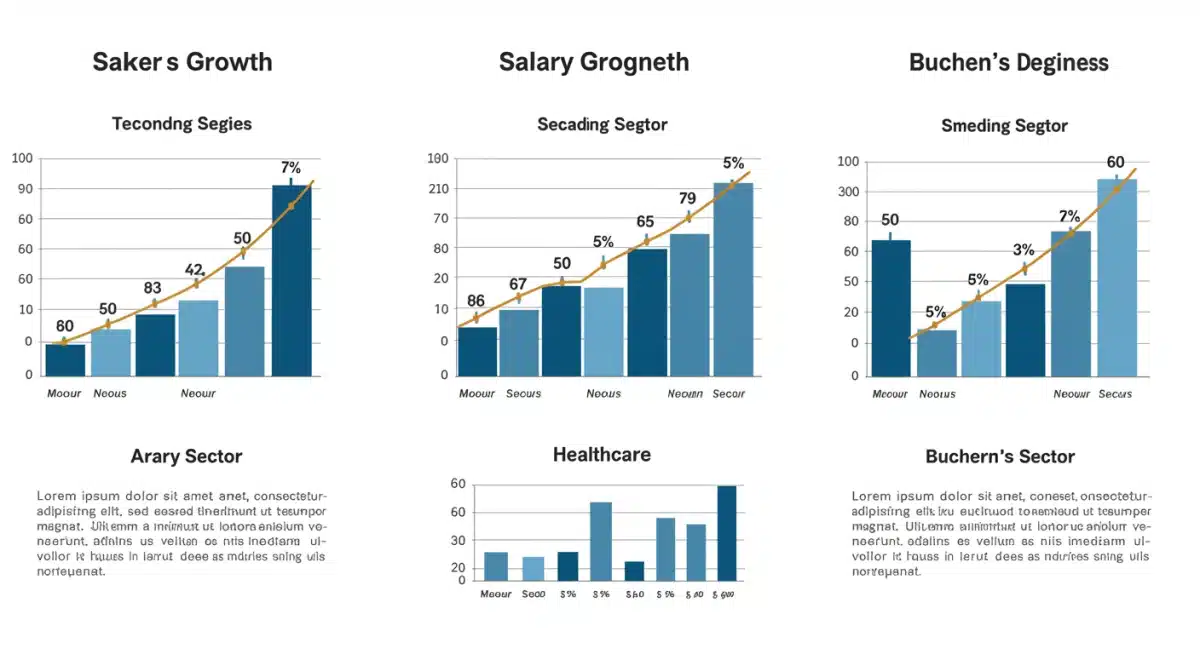
Healthcare Sector: Stability and Specialization Drive Master’s Degree ROI
The healthcare sector is another area where a master’s degree often yields significant returns, driven by an aging population, advancements in medical technology, and an increasing emphasis on specialized care. Unlike some other fields, healthcare often mandates advanced degrees for many professional roles, making the Master’s Degree ROI a more straightforward calculation for those aiming for specific career paths.
Consider professions like Nurse Practitioners (NPs), Physician Assistants (PAs), physical therapists, occupational therapists, and healthcare administrators. All these roles typically require a master’s degree (or a doctorate in some cases, which is beyond the scope of this master’s degree analysis but highlights the need for advanced education). The demand for these professionals is projected to grow substantially by 2026, ensuring strong job security and competitive salaries.
For example, the Bureau of Labor Statistics (BLS) projects a much faster than average growth for Nurse Practitioners, with a median salary significantly higher than that of registered nurses with only a bachelor’s degree. A Master of Science in Nursing (MSN) allows registered nurses to specialize and take on more autonomous roles, directly translating to a substantial Master’s Degree ROI.
Similarly, a Master of Health Administration (MHA) or a Master of Public Health (MPH) can lead to leadership positions in hospitals, public health organizations, and pharmaceutical companies. These roles are crucial for managing complex healthcare systems, developing public health policies, and ensuring efficient delivery of care. The salaries for these administrative and public health leadership roles are often very attractive, justifying the investment in an advanced degree.
The healthcare sector also benefits from a degree of recession-proofing, as the need for medical care remains constant regardless of economic fluctuations. This stability adds another layer of value to the Master’s Degree ROI in healthcare, offering peace of mind alongside professional fulfillment.
However, pursuing a master’s in healthcare can be demanding, involving rigorous academic work and often extensive clinical hours. The cost of these programs can also be substantial. Prospective students must carefully research specific program requirements, accreditation, and career placement rates to ensure their investment will indeed lead to the desired outcomes.
By 2026, the healthcare system will continue to evolve, with an increased focus on preventative care, telehealth, and personalized medicine. Master’s programs that integrate these emerging trends will likely offer the best Master’s Degree ROI, preparing graduates for the challenges and opportunities of modern healthcare.
Business Sector: Strategic Advantage and Leadership Potential with a Master’s
In the dynamic business world, a master’s degree, particularly a Master of Business Administration (MBA), has long been considered a passport to leadership and executive roles. While the value of an MBA has been debated in recent years due to the rise of alternative credentials and entrepreneurial paths, by 2026, it continues to offer a strategic advantage for many aspiring business leaders, contributing to a strong Master’s Degree ROI.
An MBA provides a holistic understanding of business functions, from finance and marketing to operations and strategy. This broad knowledge base is invaluable for individuals aiming for general management positions, consulting roles, or entrepreneurial ventures. The curriculum often involves case studies, group projects, and real-world simulations, developing critical decision-making and leadership skills.
The financial return on an MBA can be substantial. Post-MBA salaries often see a significant jump, with graduates typically earning 50-100% more than their pre-MBA salaries, depending on the school’s reputation and the chosen career path. Top-tier MBA programs, while expensive, often boast impressive salary and employment statistics, indicating a high Master’s Degree ROI for their alumni.
Beyond the MBA, specialized master’s degrees in business, such as a Master of Science in Finance (MSF), Master of Marketing (MM), or Master of Supply Chain Management, are also gaining traction. These programs cater to individuals who wish to deepen their expertise in a specific business function, often leading to specialized analyst, manager, or consultant roles that require advanced quantitative or strategic skills.
The non-monetary benefits of a master’s in business are equally significant. The networking opportunities provided by business schools are unparalleled. Connecting with peers, alumni, and faculty from diverse backgrounds can open doors to new career paths, mentorship, and even future business partnerships. This expanded professional network is a crucial component of the Master’s Degree ROI, often yielding long-term dividends.
However, the business sector is also highly competitive. Simply having a master’s degree is not enough; individuals must leverage their education with practical experience, strong interpersonal skills, and a clear career vision. The choice of business school and the specialization pursued can significantly impact the Master’s Degree ROI. Prospective students should consider factors like program reputation, career services support, and industry connections when making their selection.
As we approach 2026, the business world will continue to prioritize data-driven decision-making, digital transformation, and sustainable practices. Master’s programs that embed these themes into their curriculum will best prepare graduates for success and maximize their Master’s Degree ROI in the evolving corporate landscape.

Factors Influencing Master’s Degree ROI in 2026
While we’ve explored the general Master’s Degree ROI across specific sectors, several overarching factors will continue to influence its value in 2026. Understanding these nuances is crucial for any prospective student contemplating an advanced degree.
Program Reputation and Accreditation
Not all master’s degrees are created equal. The reputation of the institution and the specific program, along with its accreditation status, play a significant role in determining the degree’s market value. Employers often prioritize candidates from well-regarded programs, as these are perceived to offer a higher quality of education, stronger faculty, and better career services. A degree from a top-tier university often opens more doors and commands higher starting salaries, thus enhancing the Master’s Degree ROI.
Specialization and Niche Skills
In 2026, the job market will increasingly reward specialized skills. A master’s degree that focuses on a niche area in high demand (e.g., AI ethics, quantum computing, precision medicine, sustainable supply chain management) is likely to offer a higher Master’s Degree ROI than a more generalist degree. These specialized programs often equip graduates with unique competencies that are scarce in the workforce, making them highly valuable to employers.
Work Experience Before and During the Master’s Program
For many master’s programs, particularly MBAs and some technical degrees, prior work experience can significantly enhance the Master’s Degree ROI. Experienced professionals bring practical insights to the classroom and are better positioned to leverage their new credentials for career acceleration. Furthermore, some programs offer part-time or executive options that allow students to continue working, mitigating the opportunity cost of lost income.
Networking and Career Services
The value of a master’s degree extends beyond the curriculum. The professional network built during graduate school – including classmates, alumni, and faculty – can be an invaluable asset throughout one’s career. Strong career services departments that offer job placement assistance, interview coaching, and industry connections also contribute significantly to the Master’s Degree ROI by facilitating smoother transitions into desired roles and potentially higher earning potentials.
Geographic Location
The job market for master’s degree holders can vary significantly by geographic location. Major metropolitan areas and specific industry hubs (e.g., Silicon Valley for tech, Boston for biotech, New York for finance) often offer more opportunities and higher salaries for advanced degree holders. Considering the regional demand for your chosen field and the cost of living in those areas is an important aspect of calculating your overall Master’s Degree ROI.
Personal Aptitude and Drive
Ultimately, the Master’s Degree ROI is also heavily influenced by individual effort and aptitude. A master’s degree provides tools and opportunities, but it’s up to the individual to leverage them effectively. Strong academic performance, proactive networking, and a clear understanding of personal career goals are all crucial for maximizing the return on this significant educational investment.
Alternatives to a Master’s Degree: Are They Viable in 2026?
While this article focuses on the Master’s Degree ROI, it’s important to acknowledge that it’s not the only path to career advancement or specialized knowledge. In 2026, a growing number of credible alternatives exist, and for some individuals, these might offer a more suitable or cost-effective route.
Certifications and Bootcamps
Especially in the technology sector, intensive bootcamps and industry-recognized certifications (e.g., in cloud architecture, cybersecurity, data analytics) have emerged as powerful alternatives. These programs are typically shorter, less expensive, and highly focused on practical, in-demand skills. For individuals seeking to quickly pivot careers or gain specific technical expertise, these can offer a faster and often higher immediate Master’s Degree ROI. However, they may not carry the same weight for leadership roles or provide the same depth of theoretical knowledge as a master’s degree.
Online Courses and MOOCs
Massive Open Online Courses (MOOCs) from platforms like Coursera, edX, and Udacity offer flexible and affordable ways to acquire new skills or deepen existing knowledge. Many are offered by top universities and can lead to specializations or professional certificates. While they typically don’t carry academic credit in the same way as a master’s degree, they can be excellent for continuous learning and demonstrating initiative to employers. Their Master’s Degree ROI is usually measured in terms of skill acquisition and enhanced employability rather than a direct credential.
On-the-Job Training and Apprenticeships
For some industries, especially skilled trades and certain technical roles, extensive on-the-job training and apprenticeships can be a highly effective way to build expertise and advance. These pathways often provide immediate earning potential and hands-on experience, which can be more valuable than a theoretical degree in certain contexts. The Master’s Degree ROI here is replaced by a direct earning-while-learning model.
Entrepreneurship and Self-Learning
For aspiring entrepreneurs, the traditional academic path might be less relevant than practical experience, networking, and a strong business idea. The rise of digital resources and communities has made self-learning more accessible than ever. While not a direct alternative to a master’s degree, this path emphasizes experiential learning and innovation, with a highly variable but potentially very high ROI.
The choice between a master’s degree and an alternative depends heavily on individual career goals, financial situation, learning style, and the specific industry. For roles requiring deep theoretical understanding, research capabilities, or specific licensing (as often seen in healthcare), a master’s degree will likely remain the gold standard. However, for those seeking rapid skill acquisition, career pivots, or entrepreneurial pursuits, alternatives might offer a more direct and efficient path to success in 2026. A careful self-assessment is key to determining the best investment for your future.
The Long-Term Value and Future Outlook of a Master’s Degree Towards 2026 and Beyond
As we look towards 2026 and further into the future, the question of whether a master’s degree is ‘worth it’ will continue to evolve. However, several enduring aspects of advanced education suggest that the Master’s Degree ROI will remain positive for a significant portion of the workforce, particularly in the US.
Adaptability and Critical Thinking Skills
Beyond specific technical skills, a master’s degree program hones critical thinking, analytical reasoning, and complex problem-solving abilities. These are meta-skills that are highly transferable across industries and are becoming increasingly vital in a rapidly changing world. The ability to adapt to new technologies, analyze vast amounts of information, and develop innovative solutions is a long-term return on investment that transcends any single job role or industry trend. This intellectual agility is perhaps the most significant, albeit intangible, component of the Master’s Degree ROI.
Leadership and Management Pathways
For many, a master’s degree serves as a gateway to leadership and management positions. Whether it’s an MBA, an MSN for nurse leadership, or a master’s in engineering management, these programs are designed to cultivate the skills necessary to lead teams, manage projects, and drive organizational change. As organizations become flatter and more dynamic, effective leadership is more critical than ever, and a master’s degree often provides the credibility and foundational knowledge required for these roles.
Global Competitiveness
In a globalized economy, a master’s degree can enhance an individual’s competitiveness on an international stage. Many advanced degree programs attract a diverse cohort of students, offering exposure to different cultures, business practices, and global perspectives. This international outlook is invaluable for companies operating across borders and contributes to a broader Master’s Degree ROI in terms of global career mobility and understanding.
Lifelong Learning Foundation
A master’s degree instills a discipline of lifelong learning. The research skills, academic rigor, and exposure to cutting-edge knowledge within a program often foster an intellectual curiosity that continues long after graduation. In an era where skills obsolescence is a real concern, this foundation for continuous self-improvement is a powerful long-term asset, ensuring that the initial Master’s Degree ROI continues to grow over time.
Evolving Program Offerings
Universities are not static institutions; they are constantly adapting their curricula to meet market demands. We can expect to see more interdisciplinary master’s programs, greater integration of AI and data analytics across all fields, and more flexible learning formats (online, hybrid, micro-credentials that stack into degrees). These evolving offerings will make master’s degrees more accessible and relevant, potentially boosting their Master’s Degree ROI for a wider range of prospective students.
In conclusion, while the decision to pursue a master’s degree is a highly personal one, a careful analysis of the Master’s Degree ROI in 2026 reveals a generally positive outlook, particularly in high-growth, specialized fields like technology, healthcare, and business. The financial premiums, enhanced career opportunities, and development of invaluable soft skills collectively contribute to a compelling case for advanced education. However, strategic planning, careful program selection, and a clear understanding of one’s career goals are essential to maximize this significant investment.
As the job market continues its trajectory towards specialization and complex problem-solving, a master’s degree remains a powerful tool for those seeking to differentiate themselves, advance their careers, and make a lasting impact in their chosen professions.