
AI’s Impact on US Entry-Level Jobs: Strategies for 2026 Graduates
The rise of AI is reshaping the U.S. entry-level job market. This article outlines three crucial strategies for 2026 graduates to navigate these changes, focusing on skill development, adaptability, and identifying emerging opportunities.

Future-Proofing Careers: A Comparative Look at Reskilling vs. Upskilling Strategies
Is your career future-proof? In a rapidly changing job market, the choice between reskilling for a new career and upskilling for your current one is critical. This guide breaks down the methodologies, costs, and benefits of each path to help you make the right decision.
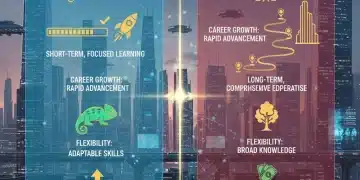
Micro-Credentials vs. Traditional Degrees: U.S. Job Market 2026 Analysis
This article analyzes the evolving U.S. job market in 2026, comparing the impact of micro-credentials and traditional degrees on career advancement, salary potential, and skill relevance. Understand which educational pathway is best suited for future success.

Future-Proofing Your Career: Adapting to Evolving Economic Landscapes
The traditional career ladder is broken. Discover the powerful economic forces reshaping the job market and learn how to future-proof your career by developing the high-demand skills employers are actively seeking.

Federal Grant Opportunities: How U.S. Students Can Secure Up to $7,000 for Higher Education in 2026
Unlock federal grant opportunities for U.S. students seeking higher education in 2026. This comprehensive guide details eligibility, application processes, and strategies to secure up to $7,000 in federal student grants, helping you fund your academic dreams without accumulating debt.

Reskilling for Automation: US Industries See 20% Demand Surge by 2027
The landscape of US industries is rapidly transforming due to automation. This article delves into the critical need for reskilling, projecting a 20% demand increase by 2027, and outlines how businesses and individuals can adapt to thrive in this evolving environment.

Gig Economy Skills 2026: Top 6 for U.S. Freelancers to Boost Income
The gig economy is rapidly transforming. This post identifies the top 6 critical skills U.S. freelancers need to master by 2026 to stay competitive, increase their earnings, and secure their future in an ever-evolving market.

Navigating 2026 Pell Grant Changes: Eligibility & Your Financial Aid Future
The landscape of federal student aid is evolving, with major changes to Pell Grant eligibility set for 2026. This article breaks down what U.S. undergraduate students need to know to navigate these updates, understand new criteria, and secure their financial future in higher education.

Charting Your Course: Essential Skills for Tomorrow’s Workforce
In a rapidly changing job market, staying competitive requires a new approach. This guide breaks down the essential soft and technical skills—from emotional intelligence to AI literacy—and provides a strategic roadmap for continuous learning and career resilience.

Career Development in Volatile Markets: 5 Proactive Steps for U.S. Professionals in Late 2026
Master your career development strategy in a fluctuating U.S. market. This guide offers 5 proactive steps for professionals to enhance skills, build networks, and adapt to economic shifts, ensuring sustained career growth and stability through late 2026 and beyond.