Navigating 2026 Pell Grant Changes: Eligibility & Your Financial Aid Future

Anúncios
Navigating 2026 Pell Grant Changes: Eligibility & Your Financial Aid Future
The landscape of federal student financial aid is constantly evolving, and for U.S. undergraduate students, 2026 marks a significant turning point with substantial updates to the Pell Grant program. As one of the most crucial forms of financial assistance for students pursuing higher education, understanding these upcoming changes is paramount. This comprehensive guide will delve deep into the Pell Grant 2026 Changes, explaining what they mean for your eligibility, how they might impact your financial aid package, and what steps you can take to prepare.
Anúncios
For decades, the Pell Grant has served as a cornerstone of federal student aid, providing need-based grants to millions of low-income undergraduate students to help cover the costs of college. Unlike loans, Pell Grants do not need to be repaid, making them an incredibly valuable resource. However, the methodology used to determine eligibility and award amounts is undergoing a significant overhaul, largely stemming from the FAFSA Simplification Act.
These reforms aim to streamline the application process, expand eligibility for certain student populations, and ultimately make higher education more accessible. But with any major change comes the need for clear understanding and proactive planning. Whether you’re a prospective student, currently enrolled, or a parent supporting a college-bound individual, grasping the nuances of the Pell Grant 2026 Changes will be essential for navigating your educational journey.
Anúncios
The Foundation: What is the Pell Grant?
Before we dive into the specifics of the Pell Grant 2026 Changes, let’s briefly recap what the Pell Grant is and why it’s so important. The Federal Pell Grant Program is the largest federal grant program offered by the U.S. Department of Education. It provides financial assistance to undergraduate students who demonstrate exceptional financial need and have not yet earned a bachelor’s, graduate, or professional degree. The amount of a Pell Grant award depends on several factors, including the student’s financial need, cost of attendance, enrollment status (full-time or part-time), and length of enrollment during the academic year.
Historically, eligibility has been determined by the Expected Family Contribution (EFC), a number calculated from the information provided on the Free Application for Federal Student Aid (FAFSA). The EFC was meant to represent the amount of money a family could reasonably contribute toward a student’s education for an academic year. However, this calculation often faced criticism for its complexity and for sometimes not accurately reflecting a family’s true financial capacity.
The grant acts as a crucial bridge for many students, enabling them to pursue higher education without accumulating significant debt. It can be used to pay for tuition, fees, room and board, books, supplies, and other educational expenses. Its non-repayable nature makes it distinct from federal student loans and a preferred option for those who qualify.
Why are Pell Grant Changes Happening?
The primary driver behind the Pell Grant 2026 Changes is the FAFSA Simplification Act, passed as part of the Consolidated Appropriations Act, 2021. This legislation mandates a comprehensive redesign of the FAFSA form and the underlying methodology for determining federal student aid eligibility. The goals are ambitious: to simplify the application process, make it more intuitive for students and families, and expand access to federal student aid, particularly for those with the greatest financial need.
Critics of the old FAFSA and EFC system pointed to its length and complexity as barriers to access, deterring many eligible students from applying. The new system aims to reduce these hurdles, making it easier for students to complete the application and understand their eligibility. Furthermore, the changes are designed to provide a more accurate assessment of a family’s financial situation, potentially leading to more equitable distribution of aid.
Key Changes to Pell Grant Eligibility in 2026
The most significant alteration under the Pell Grant 2026 Changes is the replacement of the Expected Family Contribution (EFC) with the Student Aid Index (SAI). This isn’t merely a name change; it represents a fundamental shift in how financial need is assessed. Let’s break down the core components of these reforms:
1. Introduction of the Student Aid Index (SAI)
The Student Aid Index (SAI) will replace the EFC. While both are indices used to determine aid eligibility, the SAI is designed to be a more accurate and student-friendly measure of a student’s ability to pay for college. A key difference is that the SAI can be a negative number, ranging from -1500 to 999999. An SAI of -1500 indicates the highest level of financial need, ensuring that students with the most significant need are identified and prioritized for aid.
The calculation of the SAI will incorporate several important adjustments:
- Income Protection Allowances (IPAs): These allowances, which protect a portion of a family’s income from being counted in the aid calculation, will increase significantly. This means more income will be shielded, potentially lowering the SAI for many families and increasing their aid eligibility.
- Assets: The treatment of assets will also see modifications. For example, cash-support payments (like child support) will be treated differently, and certain assets might be excluded or given more favorable treatment.
- Family Size: The new FAFSA will directly pull family size information from federal tax returns, simplifying this aspect of the application.
- Number of Students in College: This is a critical change. Under the old EFC formula, having multiple children in college simultaneously significantly reduced a family’s EFC. The new SAI formula eliminates this benefit. This means families with multiple children attending college at the same time may see a higher SAI and potentially less need-based aid, including Pell Grants, than they would have under the previous system. This is one of the most impactful Pell Grant 2026 Changes for many middle-income families.
2. Expanded Pell Grant Eligibility
One of the primary goals of the FAFSA Simplification Act is to expand Pell Grant eligibility to more students, particularly those with the greatest financial need. The new formula aims to achieve this in several ways:
- Minimum Pell Grant: Students whose Adjusted Gross Income (AGI) falls below certain thresholds, based on poverty guidelines, will be eligible for a minimum Pell Grant, regardless of their SAI. This provides a guaranteed baseline of aid for the lowest-income students.
- Maximum Pell Grant: Similarly, students whose AGI falls below higher thresholds will automatically qualify for the maximum Pell Grant award, again simplifying the process for those with significant need.
- Incarcerated Students: For the first time, incarcerated students enrolled in approved postsecondary education programs will regain eligibility for Pell Grants, opening doors to educational opportunities for a previously excluded population.
- Students with Drug Convictions: Eligibility for students with drug convictions will also be restored, removing a long-standing barrier to financial aid.
These expansions are expected to bring hundreds of thousands of new students into the Pell Grant program, significantly increasing access to higher education for underserved communities.
3. Simplified FAFSA Application
The FAFSA itself is undergoing a dramatic transformation. The number of questions on the form will be significantly reduced, from over 100 questions to approximately 36. This streamlining is intended to make the application process quicker, easier, and less intimidating for students and families.

A key simplification is the mandatory use of the IRS Direct Data Exchange (DDX). This feature will allow applicants to directly import their federal tax information from the IRS, reducing the need for manual entry and minimizing errors. For most applicants, this will mean fewer questions about income and assets, as much of that information will be automatically transferred. This is a crucial aspect of the Pell Grant 2026 Changes aimed at improving user experience.
4. Changes to Cost of Attendance (COA) Calculation
While not a direct change to Pell Grant eligibility, how institutions calculate the Cost of Attendance (COA) can indirectly affect the amount of aid a student receives. The FAFSA Simplification Act encourages institutions to use a more standardized and transparent approach to COA, ensuring that all necessary educational expenses are factored in. A higher COA, combined with a lower SAI, generally leads to a greater demonstrated financial need and potentially more aid.
Who Will Be Most Affected by the Pell Grant 2026 Changes?
The impact of the Pell Grant 2026 Changes will vary significantly across different student and family demographics. Understanding these potential effects can help you better prepare:
- Lowest-Income Students: These students are expected to benefit the most. With the introduction of minimum and maximum Pell Grant eligibility based on AGI and increased income protection allowances, many will find it easier to qualify for and receive substantial Pell Grant awards.
- Single-Parent Households: Changes to income protection allowances and how child support is treated may positively impact single-parent households, potentially increasing their Pell Grant eligibility.
- Students with Multiple Siblings in College: As mentioned, the elimination of the EFC adjustment for multiple children in college is a significant change. Families who previously benefited from this adjustment may see a higher SAI and potentially reduced Pell Grant eligibility for their children. This could necessitate a re-evaluation of financial planning for these families.
- Middle-Income Families: Some middle-income families, particularly those with multiple children in college, might experience a decrease in their eligibility for need-based aid. However, other middle-income families may find their eligibility expanded due to the increased income protection allowances. The impact will be highly individualized based on specific financial circumstances.
- Incarcerated Individuals: The restoration of Pell Grant eligibility for incarcerated students represents a monumental shift, providing opportunities for education and rehabilitation that were previously unavailable.
Preparing for the Pell Grant 2026 Changes: A Proactive Approach
Given the scope of the Pell Grant 2026 Changes, proactive preparation is key. Here’s what students, parents, and financial aid administrators should consider:
1. Stay Informed
The most crucial step is to stay updated on the latest information from the U.S. Department of Education, your college’s financial aid office, and reputable financial aid resources. The implementation details of these changes are still being refined, and official guidance will continue to be released. Regularly check the Federal Student Aid website (StudentAid.gov) for announcements and updated resources.
2. Understand the New FAFSA
While the goal is simplification, familiarizing yourself with the new FAFSA form when it becomes available will be beneficial. Pay close attention to how income and assets are reported and how the IRS Direct Data Exchange works. Ensure you have your tax information readily available to streamline the process.
3. Re-evaluate Your Financial Situation
If you anticipate being affected by the changes, particularly if you have multiple children in college, it’s wise to re-evaluate your financial planning. Consider how a potential change in Pell Grant eligibility might impact your overall college funding strategy. This might involve exploring other scholarship opportunities, state grants, or institutional aid.
4. Connect with Financial Aid Professionals
College financial aid offices are your best resource for personalized guidance. They will be equipped with the most current information regarding the Pell Grant 2026 Changes and how they specifically apply to your institution and your individual circumstances. Don’t hesitate to reach out to them with questions or concerns.
5. Explore Other Aid Opportunities
Remember that the Pell Grant is just one component of a comprehensive financial aid package. Continue to explore and apply for scholarships from private organizations, state grant programs, and institutional aid directly from colleges. Many scholarships are not need-based and can significantly reduce your out-of-pocket costs.
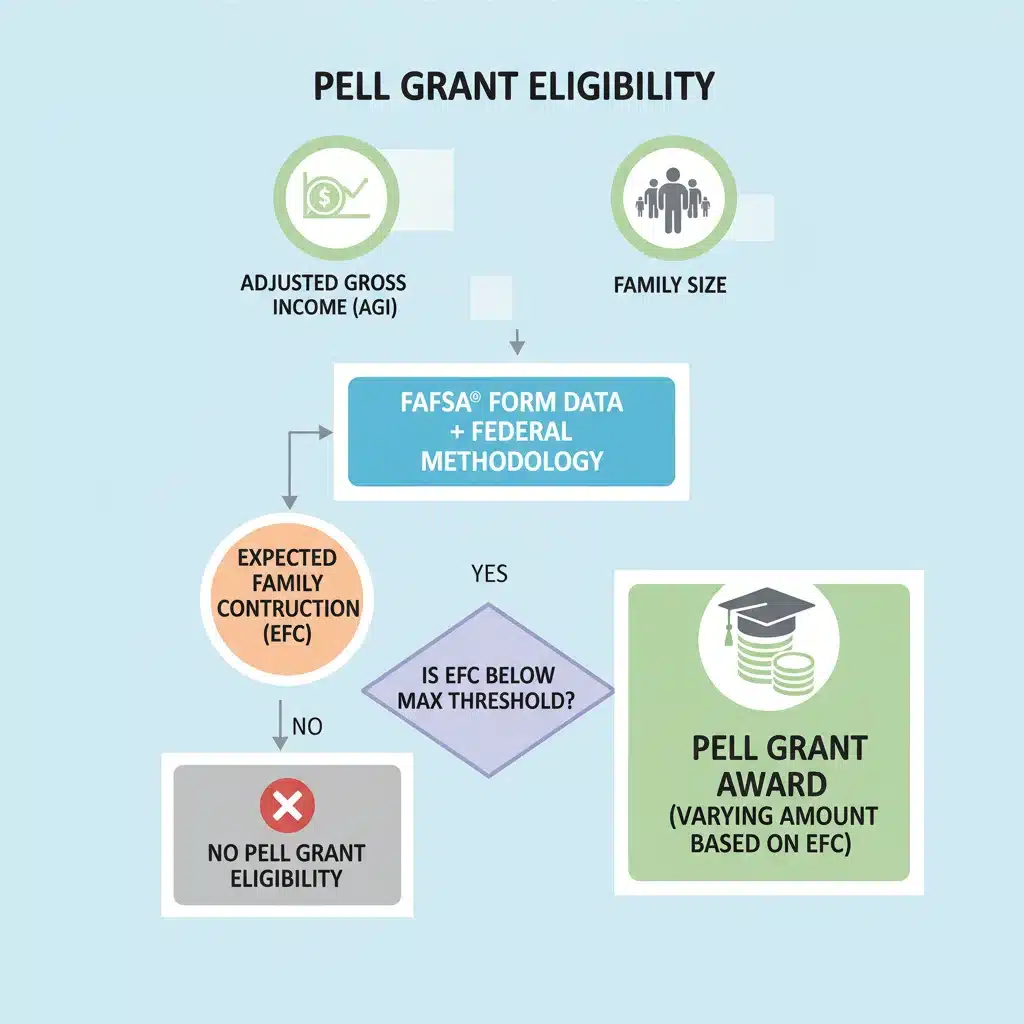
Understanding the SAI Calculation (Simplified)
While the full SAI calculation can be complex, here’s a simplified overview of the factors that will generally influence your Student Aid Index:
- Student’s Income and Assets: A portion of the student’s income and assets will be factored into the SAI.
- Parental Income and Assets (for dependent students): For dependent students, a portion of parental income and assets will also be included, after certain allowances and exclusions.
- Income Protection Allowances: As mentioned, these allowances protect a portion of income from being counted. The new system significantly increases these, which can lead to a lower SAI.
- Taxes Paid: Federal and state taxes paid will be considered, reducing the available income.
- Untaxed Income and Benefits: Certain untaxed income and benefits, such as Social Security benefits or child support, will be assessed differently under the new rules.
The goal of the SAI is to provide a more holistic and equitable assessment of a family’s financial strength. While the elimination of the multi-student discount may impact some, the overall intent is to direct more aid to those with the greatest need, aligning with the core mission of the Pell Grant program.
Impact on Specific Student Groups
Independent Students
Independent students, who do not rely on parental financial information, will also see changes. The increased income protection allowances can be particularly beneficial for independent students, especially those with dependents of their own. The simplified FAFSA process will also make it easier for them to apply for aid.
Part-Time Students
The Pell Grant 2026 Changes are designed to be more flexible for part-time students. Pell Grant awards will continue to be prorated based on enrollment intensity, meaning students enrolled less than full-time can still receive a portion of the grant, which is crucial for those balancing work, family, and education.
Dreamers and Non-Citizens
While the FAFSA Simplification Act does not directly change the eligibility of undocumented students for federal aid, it is important to note that only eligible non-citizens (such as permanent residents, refugees, and asylum seekers) can receive federal student aid, including Pell Grants. Undocumented students, including DACA recipients, remain ineligible for federal financial aid, though they may qualify for state or institutional aid depending on their state of residence and the policies of their chosen college.
Beyond the Pell Grant: Other FAFSA Simplification Act Impacts
It’s important to remember that the FAFSA Simplification Act impacts more than just the Pell Grant. Many other federal student aid programs, such as subsidized loans and work-study, also use the FAFSA data and the SAI to determine eligibility. Therefore, understanding the Pell Grant 2026 Changes is a crucial first step in comprehending your overall federal financial aid landscape.
The simplified FAFSA will also affect institutional aid calculations for many colleges that use FAFSA data as a starting point. While colleges have their own methodologies for awarding institutional grants and scholarships, changes to the federal methodology can influence their approach.
Common Misconceptions and Clarifications
Is the Pell Grant disappearing?
No, the Pell Grant is not disappearing. The program is being reformed and expanded, not eliminated. The Pell Grant 2026 Changes are intended to make it more accessible and responsive to student needs.
Will everyone get less aid?
Not necessarily. While some families, particularly those with multiple children in college, may see a decrease in their Pell Grant eligibility, many other students, especially those with the greatest financial need, are expected to receive more or become newly eligible for Pell Grants.
Is the FAFSA still required?
Yes, the FAFSA will absolutely still be required to apply for federal student aid, including Pell Grants, federal student loans, and federal work-study. The form itself is being simplified, but the application process remains essential.
When do these changes take effect?
While some aspects of the FAFSA Simplification Act were implemented earlier, the full implementation of the new SAI and the comprehensive Pell Grant 2026 Changes for eligibility determination are slated for the 2026-2027 award year. This means students applying for aid for the 2026-2027 academic year will be the first to experience these new rules.
Conclusion
The Pell Grant 2026 Changes represent a significant evolution in federal student aid. While the transition may bring some initial confusion, the underlying goals of simplifying the FAFSA, expanding access, and targeting aid more effectively are commendable. For U.S. undergraduate students, these reforms offer both opportunities and challenges.
By staying informed, understanding the new Student Aid Index, and engaging proactively with financial aid resources, you can confidently navigate these changes and ensure you receive the maximum financial assistance available to support your educational aspirations. The future of financial aid is shifting, but with the right knowledge and preparation, you can continue to pursue your academic dreams.
Remember to bookmark official government resources like StudentAid.gov and regularly consult with your chosen institution’s financial aid office for the most accurate and personalized advice. Your educational journey is an investment, and understanding the nuances of financial aid, especially the upcoming Pell Grant 2026 Changes, is a critical step in securing that investment.