Unemployment Rate 2.8%: Navigating Wage Growth in US Industries 2026
Anúncios
The US Labor Market in 2026: Navigating a 2.8% Unemployment Rate and Its Impact on Wage Growth
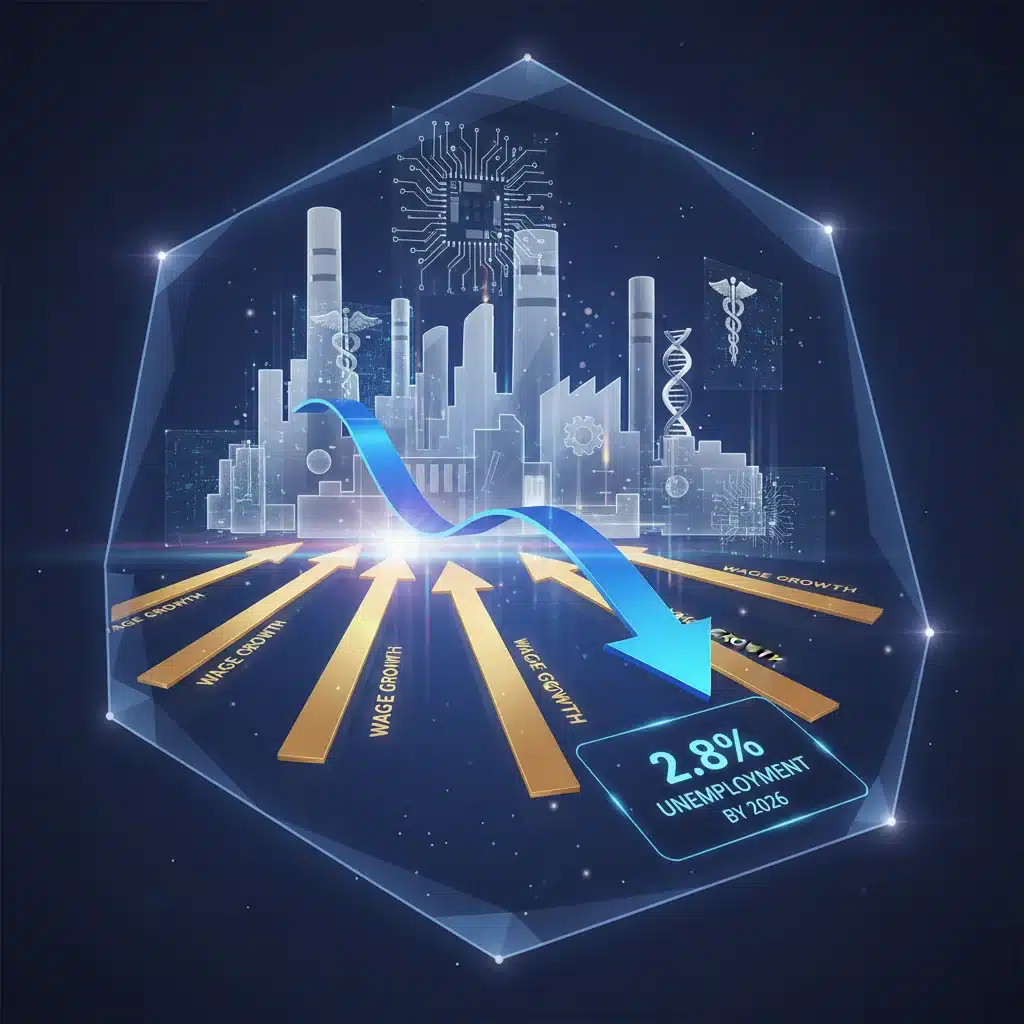
The year 2026 is rapidly approaching, bringing with it economic projections that paint a fascinating picture of the US Labor Market 2026. Forecasters are increasingly pointing towards a remarkably low unemployment rate, potentially dipping to an unprecedented 2.8%. Such a figure, while indicative of a robust economy, also introduces a complex set of challenges and opportunities, particularly concerning wage growth across various US industries. Understanding these dynamics is crucial for policymakers, businesses, and individuals alike, as they navigate the evolving economic landscape.
Anúncios
A 2.8% unemployment rate signifies a near full-employment scenario, where almost everyone who wants a job can find one. Historically, such low unemployment figures have been associated with significant shifts in labor market power, often tilting the balance towards employees. This typically translates into increased competition for talent among employers, which, in turn, can drive up wages. However, the uniformity and sustainability of this wage growth are subject to various factors, including inflation, productivity gains, technological advancements, and global economic influences.
This comprehensive analysis will delve into the multifaceted implications of a 2.8% unemployment rate on the US Labor Market 2026. We will explore how different sectors are likely to be affected, the potential for inflationary pressures, the role of automation and artificial intelligence, and the strategic responses businesses and workers might adopt to thrive in this environment. Our aim is to provide a nuanced understanding of what such a tight labor market truly means for the American economy.
Anúncios
Understanding the 2.8% Unemployment Rate: A Macroeconomic Perspective
A 2.8% unemployment rate is a significant macroeconomic indicator, signaling an economy operating at or near its maximum productive capacity. From a historical standpoint, the US has rarely experienced such sustained low levels of unemployment. The last time the rate approached this level was during specific periods of post-war economic booms or in highly localized, temporary conditions. This projected figure for 2026 suggests a period of sustained economic expansion and strong demand for labor.
However, a tight labor market, while generally positive, also presents potential challenges. One primary concern is the risk of inflation. When unemployment is very low, and demand for labor is high, businesses may have to increase wages significantly to attract and retain employees. These increased labor costs can then be passed on to consumers in the form of higher prices for goods and services, leading to wage-price spirals if not managed effectively by monetary policy. The Federal Reserve will undoubtedly be watching these indicators closely, balancing the goals of full employment and price stability.
Another aspect to consider is the composition of the unemployed. Even at 2.8%, there will still be individuals counted as unemployed. These might include frictional unemployment (people temporarily between jobs) and structural unemployment (people whose skills no longer match available jobs). The challenge for policymakers will be to address these remaining pockets of unemployment through targeted training programs and support, ensuring that the benefits of a strong economy are broadly shared.
Moreover, the 2.8% unemployment rate doesn’t exist in a vacuum. It is influenced by and, in turn, influences other critical economic variables such as GDP growth, consumer spending, business investment, and international trade. A robust labor market typically underpins strong consumer confidence and spending, which are vital components of economic growth. Therefore, the US Labor Market 2026 projections are intrinsically linked to the overall health and trajectory of the American economy.
Wage Growth Dynamics in a Tight Labor Market
The most direct and widely anticipated consequence of a 2.8% unemployment rate is its impact on wage growth. With fewer available workers, employers must offer more competitive compensation packages to attract and retain talent. This phenomenon is a fundamental principle of supply and demand in the labor market. As the supply of labor tightens, its ‘price’ (wages) tends to increase.
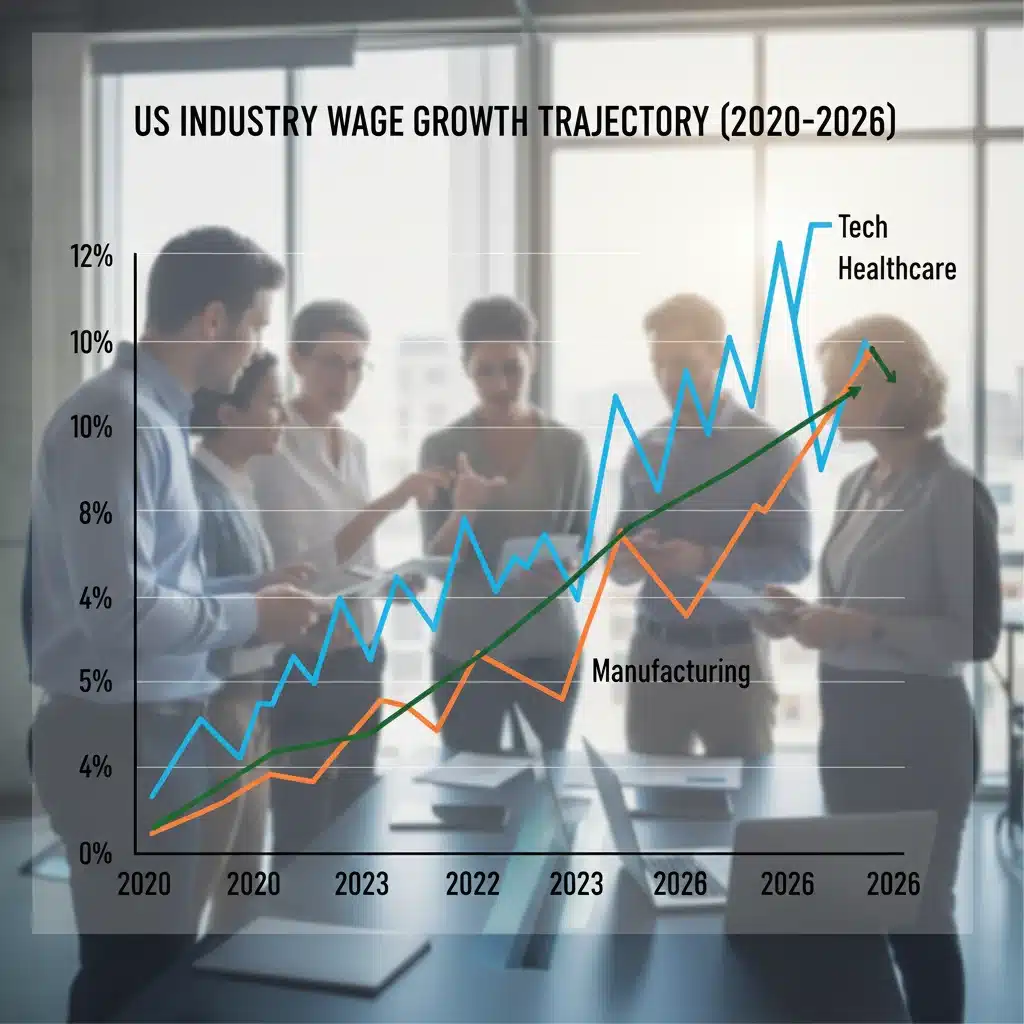
However, wage growth is unlikely to be uniform across all industries or skill levels. Sectors experiencing high demand for specialized skills, such as technology, healthcare, and certain segments of manufacturing, are likely to see the most significant wage increases. Conversely, industries with lower barriers to entry or those more susceptible to automation might experience more modest gains.
The critical question is whether wage growth will outpace inflation. If wages grow but are eroded by rising prices, the real purchasing power of consumers may not improve significantly. This highlights the importance of productivity growth. If workers become more productive, businesses can afford to pay higher wages without necessarily increasing prices, leading to sustainable improvements in living standards. Investment in technology, education, and infrastructure will be key to fostering such productivity gains.
Furthermore, the bargaining power of labor unions could see a resurgence in a tight labor market. With fewer available workers, strikes or collective bargaining actions could have a more pronounced impact on businesses, potentially leading to more favorable outcomes for workers in terms of wages and benefits. This dynamic could further contribute to the overall upward pressure on wages in the US Labor Market 2026.
Sectoral Shifts and Industry-Specific Impacts
The ripple effects of a 2.8% unemployment rate will not be felt equally across all sectors of the US economy. Some industries are inherently more sensitive to labor market fluctuations due to their reliance on specific skill sets, exposure to global competition, or susceptibility to technological disruption.
Technology Sector: Continued Demand and Premium Wages
The technology sector is expected to remain a hotbed of demand. With ongoing digital transformation across all industries, the need for software engineers, data scientists, cybersecurity experts, and AI specialists will continue to outstrip supply. This persistent demand will likely translate into premium wages and benefits, and intense competition among tech companies for top talent. Companies in this sector may also accelerate their adoption of automation and AI to mitigate labor shortages, potentially shifting the types of roles available.
Healthcare: Sustained Growth and Specialized Needs
The healthcare industry, driven by an aging population and advancements in medical technology, is projected to experience robust growth. Nurses, doctors, allied health professionals, and specialists in areas like telemedicine and elder care will be in high demand. Wage growth in this sector will be influenced by the critical nature of the services provided and the extensive training required for many roles. Labor shortages could become particularly acute in rural areas or for specific medical specializations, leading to significant wage differentials.
Manufacturing: Reskilling and Automation
The manufacturing sector faces a dual challenge and opportunity. While automation has reduced the need for some manual labor, there’s a growing demand for skilled technicians who can operate, maintain, and program advanced robotic systems. A 2.8% unemployment rate will intensify the need for reskilling and upskilling initiatives within manufacturing to bridge this skills gap. Wage growth will likely be concentrated in these specialized, high-skill roles, while traditional manufacturing jobs might see more moderate increases or continued pressure from automation.
Retail and Hospitality: Adapting to Labor Scarcity
Sectors like retail and hospitality, which traditionally rely on a large pool of readily available labor, will face significant challenges. With fewer entry-level workers, businesses will need to rethink their operational models. This could involve greater investment in self-service technologies, higher wages to attract staff, improved benefits, and more flexible work arrangements. The shift towards e-commerce will also continue to impact traditional retail, pushing for different skill sets in logistics and customer service.
Education: Addressing Teacher Shortages
The education sector, particularly K-12 and higher education, has long grappled with teacher shortages in certain subjects and regions. A tighter labor market could exacerbate these issues, making it harder to attract and retain qualified educators. This might prompt calls for increased funding for teacher salaries, improved working conditions, and innovative recruitment strategies to ensure a robust educational system in the face of intense competition for talent.
The Role of Automation and Artificial Intelligence
The projected 2.8% unemployment rate in the US Labor Market 2026 cannot be discussed without acknowledging the pervasive influence of automation and artificial intelligence (AI). These technologies are not just transforming how work is done; they are fundamentally reshaping the demand for certain skills and roles.
In a tight labor market, businesses have an even stronger incentive to invest in automation. When human labor is scarce and expensive, automating repetitive or routine tasks becomes a more attractive option. This can help companies maintain productivity and profitability without constantly escalating labor costs. However, this also means a continued shift in the types of jobs available.
Rather than widespread job displacement, the more likely scenario is job transformation. AI and automation will augment human capabilities, taking over mundane tasks and allowing workers to focus on more complex, creative, and strategic activities. This necessitates a significant emphasis on upskilling and reskilling the workforce to equip individuals with the skills needed to work alongside advanced technologies. Roles requiring critical thinking, problem-solving, creativity, emotional intelligence, and complex digital literacy will be increasingly valuable.
For example, in manufacturing, while assembly line workers might be replaced by robots, there will be a greater need for robotics engineers, maintenance technicians, and data analysts to optimize automated processes. In healthcare, AI might assist in diagnostics, but skilled medical professionals will be crucial for interpreting results, patient care, and ethical decision-making. The interaction between human labor and advanced technology will define many workplaces in 2026.
Strategic Responses for Businesses and Workers
Navigating a 2.8% unemployment rate and its associated wage growth dynamics requires strategic foresight from both businesses and the workforce.
For Businesses:
- Competitive Compensation and Benefits: Companies must offer attractive salaries, comprehensive benefits packages (including health, retirement, and wellness programs), and perks to stand out in a competitive hiring environment.
- Investment in Training and Development: Rather than solely relying on external hiring, businesses should invest heavily in internal training programs to upskill and reskill their existing workforce. This can build loyalty and ensure a steady supply of necessary skills.
- Flexible Work Arrangements: Offering remote work options, flexible hours, and compressed workweeks can significantly enhance a company’s appeal, especially to a workforce that increasingly values work-life balance.
- Automation and AI Adoption: Strategic implementation of automation and AI can help mitigate labor shortages, improve efficiency, and allow existing staff to focus on higher-value tasks.
- Diversity, Equity, and Inclusion (DEI):: A strong DEI strategy can broaden the talent pool, attracting individuals from underrepresented groups and fostering an inclusive environment that retains diverse talent.
- Employer Branding: Cultivating a positive company culture and strong employer brand is crucial to becoming an employer of choice.
For Workers:
- Continuous Learning and Skill Development: Workers must embrace lifelong learning. Acquiring new skills, especially in digital literacy, data analysis, and AI proficiency, will be essential for career advancement and job security.
- Adaptability and Flexibility: Being open to new roles, industries, and work arrangements will be critical. The traditional career path may become less common, replaced by more dynamic trajectories.
- Networking: Building professional networks can open doors to new opportunities and provide insights into emerging industry trends and in-demand skills.
- Understanding Market Value: Workers should regularly research salary benchmarks and understand their market value to negotiate competitive compensation.
- Focus on Soft Skills: While technical skills are vital, soft skills such as communication, collaboration, critical thinking, creativity, and emotional intelligence will be increasingly prized as automation handles more routine tasks.
Policy Implications and Government Responses
Government policies will play a crucial role in shaping the US Labor Market 2026 in response to a 2.8% unemployment rate. Policymakers will face the delicate task of balancing economic growth with inflation control and ensuring equitable distribution of prosperity.
Monetary Policy
The Federal Reserve will likely continue to monitor inflation closely. If wage growth significantly outpaces productivity and threatens to fuel inflation, the Fed might consider adjustments to interest rates to cool down the economy. However, they will also need to be careful not to stifle job creation or economic expansion prematurely.
Fiscal Policy
Government spending and taxation policies can influence the labor market. Investments in infrastructure projects, green energy initiatives, and research and development can create new jobs and stimulate demand for specific skills. Tax incentives for businesses that invest in employee training or adopt advanced technologies could also be considered.
Education and Workforce Development
Perhaps the most critical area for government intervention is education and workforce development. This includes:
- Funding for Vocational Training: Expanding access to vocational and technical training programs that align with in-demand skills.
- Community College Partnerships: Strengthening partnerships between community colleges and local industries to ensure curricula meet employer needs.
- Apprenticeship Programs: Promoting and funding modern apprenticeship programs that combine on-the-job training with classroom instruction.
- Digital Literacy Initiatives: Implementing programs to improve digital literacy across the population, ensuring no segment of the workforce is left behind by technological advancements.
- Support for Lifelong Learning: Creating incentives or frameworks that encourage continuous learning throughout an individual’s career.
Immigration Policy
In a tight labor market, immigration policy can also become a point of discussion. Carefully managed immigration can help address specific labor shortages, particularly in highly skilled professions or sectors facing acute workforce challenges. Striking the right balance between domestic workforce development and strategic immigration will be a key policy consideration.
The Global Context: How International Factors Influence the US Labor Market
The US Labor Market 2026 does not exist in isolation. Global economic trends, geopolitical events, and international trade dynamics will also influence the impact of a 2.8% unemployment rate and wage growth. Supply chain disruptions, for example, can affect manufacturing and retail sectors, influencing labor demand and costs.
Furthermore, global competition for talent can also play a role. If other developed nations also experience tight labor markets, the competition for highly skilled international workers could intensify. Conversely, if some global economies face downturns, it could lead to an influx of skilled workers seeking opportunities in the US, potentially easing some labor market pressures.
The rise of remote work also introduces a global dimension. US companies might hire talent from abroad for remote positions, or US workers might seek remote roles with international companies. This cross-border competition for talent can influence wage dynamics, particularly in sectors where remote work is prevalent.
Conclusion: A Dynamic and Evolving Landscape
The prospect of a 2.8% unemployment rate by 2026 signals a robust and dynamic US Labor Market 2026. While this low unemployment rate promises increased opportunities for workers and potential for significant wage growth, it also brings complexities related to inflation, sectoral shifts, and the accelerating impact of automation and AI. The future labor market will demand continuous adaptation from both businesses and individuals.
Businesses must innovate their talent acquisition and retention strategies, focusing on competitive compensation, continuous training, and flexible work environments. Workers, in turn, must embrace lifelong learning, cultivate adaptability, and develop skills that complement advanced technologies. Policymakers will be tasked with creating an environment that fosters sustainable growth, manages inflationary pressures, and ensures that the benefits of a strong economy are accessible to all segments of the population.
The journey to 2026 will undoubtedly be characterized by ongoing evolution. Those who understand these underlying forces and proactively adapt will be best positioned to thrive in this exciting, yet challenging, era of the American labor market. The conversation around the 2.8% unemployment rate is not just about a number; it’s about the future of work, prosperity, and economic resilience in the United States.