The Nearshoring Imperative: Analyzing the 2026 Impact on U.S. Manufacturing and Supply Chain Resilience
The global economic landscape is in constant flux, shaped by geopolitical shifts, technological advancements, and an ever-present need for efficiency and reliability. In recent years, one trend has emerged with increasing prominence: nearshoring. This strategic relocation of manufacturing operations to closer geographical regions, often within neighboring countries, is not merely a fleeting corporate strategy but a fundamental shift poised to redefine the future of industries, particularly U.S. manufacturing. By 2026, the ripple effects of nearshoring trends are expected to be profound, fundamentally altering supply chain dynamics and bolstering the resilience of the American industrial base.
The concept of nearshoring gained significant traction following a series of global disruptions, most notably the COVID-19 pandemic, which exposed the vulnerabilities inherent in extended, globalized supply chains. Factories in distant lands shuttered, shipping routes became congested, and a cascade of delays and shortages sent shockwaves through economies worldwide. This stark realization propelled businesses to re-evaluate their operational models, seeking greater control, reduced lead times, and enhanced adaptability. The United States, in particular, has a vested interest in strengthening its domestic manufacturing capabilities, not only for economic prosperity but also for national security and technological leadership.
Anúncios
This comprehensive article delves into the multifaceted impact of nearshoring on U.S. manufacturing, projecting its evolution and consequences by 2026. We will explore the primary drivers behind this trend, analyze its economic and strategic benefits, address the inherent challenges, and ultimately paint a picture of a more resilient, agile, and domestically focused manufacturing sector. Understanding these dynamics is crucial for policymakers, business leaders, and investors alike as they navigate the complexities of a rapidly changing global economy.
Understanding the Nearshoring Phenomenon: Why Now?
Before dissecting its future impact, it’s essential to grasp the core motivations driving the current surge in nearshoring initiatives. While cost reduction was historically the primary driver for offshoring, a more nuanced set of factors now underpins the decision to bring production closer to home. The global events of the past few years have undeniably accelerated this shift, but the underlying economic and strategic rationale has been building for over a decade.
Anúncios
The Fragility of Global Supply Chains Exposed
The COVID-19 pandemic served as a brutal awakening for many corporations. Just-in-time inventory systems, once lauded for their efficiency, proved disastrous when faced with unforeseen disruptions. Port closures, labor shortages, and manufacturing shutdowns in key overseas production hubs led to unprecedented delays and stockouts, severely impacting profitability and customer satisfaction. This fragility highlighted the urgent need for supply chain diversification and redundancy, making nearshoring an attractive solution for mitigating future risks.
Geopolitical Tensions and Trade Wars
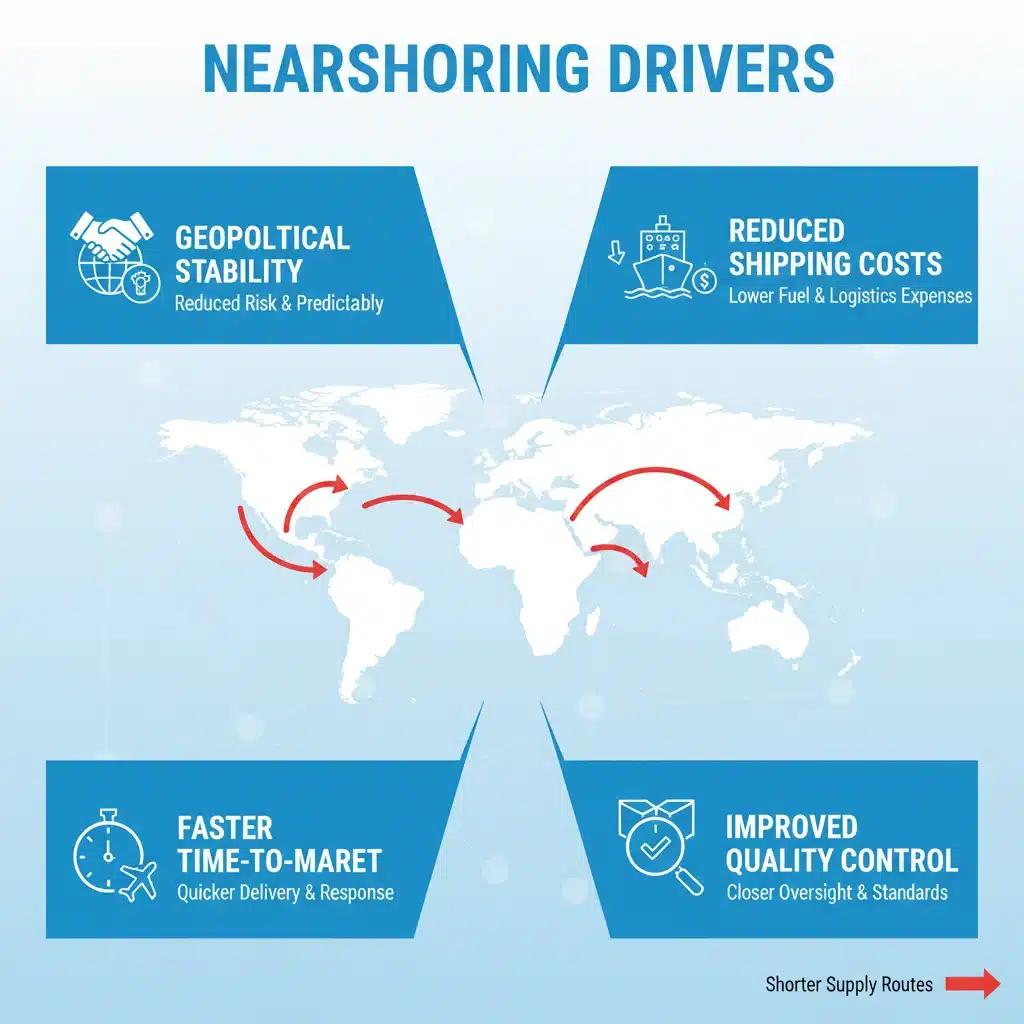
Beyond natural disasters and health crises, escalating geopolitical tensions and trade disputes have added another layer of complexity to global supply chains. The U.S.-China trade war, for instance, prompted many companies to reconsider their reliance on Chinese manufacturing, seeking alternatives that offer greater political stability and predictable trade policies. Nearshoring to countries like Mexico or Canada, with established trade agreements and stable political environments, offers a strategic hedge against such uncertainties.
Rising Labor Costs and Logistics Expenses
While labor costs in some Asian countries were once significantly lower, this gap has been narrowing. Simultaneously, the cost and complexity of international logistics have surged. Fuel price volatility, increased shipping container costs, and extended transit times have eroded the cost advantages of distant manufacturing. Nearshoring significantly reduces transportation costs, shortens transit times, and simplifies logistics management, leading to overall operational efficiencies.
Demand for Faster Time-to-Market and Customization
In today’s fast-paced consumer market, speed and responsiveness are paramount. Companies need to bring new products to market quickly and adapt rapidly to changing consumer preferences. Nearshoring enables shorter lead times, facilitating faster product development cycles, more responsive inventory management, and greater flexibility for customization. This agility is a critical competitive advantage in industries ranging from fashion to electronics.
Quality Control and Intellectual Property Protection
Maintaining stringent quality control standards can be challenging across vast geographical distances and different regulatory environments. Nearshoring allows for closer oversight of manufacturing processes, leading to improved product quality and consistency. Furthermore, concerns over intellectual property (IP) theft in certain overseas markets have driven companies to seek production locations where IP laws are more robustly enforced, providing greater security for their proprietary designs and technologies.
Projected Impact on U.S. Manufacturing by 2026
The confluence of these factors suggests that nearshoring is not a temporary trend but a sustained strategic shift. By 2026, its impact on U.S. manufacturing will be multifaceted and transformative, reshaping various aspects of the industrial ecosystem.
Enhanced Supply Chain Resilience
Perhaps the most significant impact will be the substantial increase in supply chain resilience. By diversifying manufacturing locations and bringing critical production closer to home, U.S. companies will be less vulnerable to external shocks. This means fewer disruptions from international conflicts, natural disasters, or pandemics, ensuring a more consistent flow of goods and components. The emphasis will shift from “just-in-time” to “just-in-case,” with a focus on redundancy and flexibility.
Job Creation and Economic Growth
Nearshoring initiatives will inevitably lead to job creation within the U.S. and its immediate vicinity. While some jobs may be in partner countries, a significant portion of the increased manufacturing activity will reside domestically. This includes not only direct manufacturing jobs but also roles in logistics, engineering, research and development, and supporting industries. This influx of jobs will stimulate local economies, increase consumer spending, and contribute to overall economic growth. Governments, at both federal and state levels, are likely to continue offering incentives to attract these manufacturing investments, further bolstering this trend.
Technological Advancement and Innovation
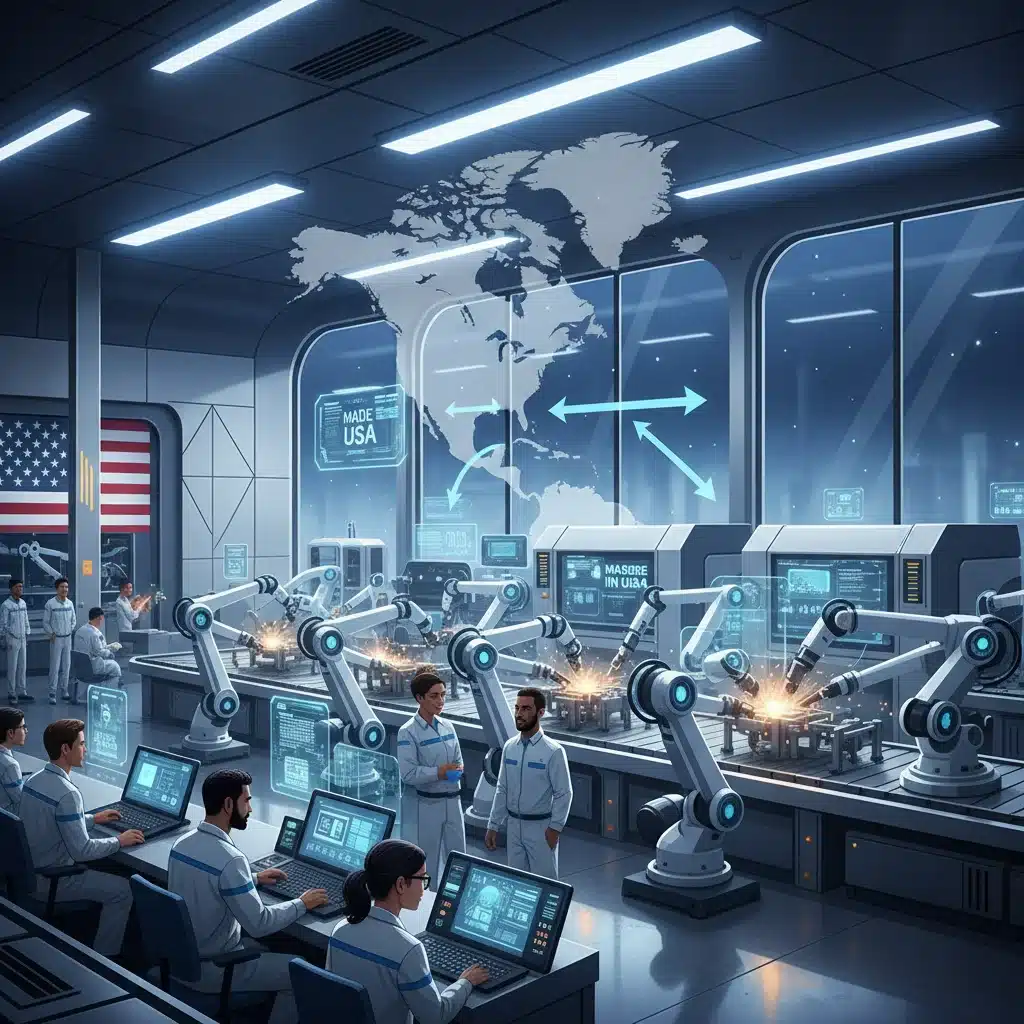
The return of manufacturing to the U.S. is not about replicating old industrial models. Instead, it’s an opportunity to integrate advanced manufacturing technologies. Companies investing in nearshoring are often simultaneously investing in automation, robotics, artificial intelligence, and the Internet of Things (IoT) to enhance efficiency and competitiveness. This will foster a new era of innovation in U.S. manufacturing, driving the development of smart factories and advanced production techniques. The proximity of R&D to manufacturing will accelerate product cycles and foster greater collaboration.
Reduced Environmental Impact
Shorter supply chains inherently mean less transportation, which translates to a reduced carbon footprint. While manufacturing itself has environmental considerations, the decreased reliance on long-haul shipping, particularly ocean freight, will contribute to lower greenhouse gas emissions. Additionally, U.S. manufacturing typically adheres to stricter environmental regulations than many overseas production hubs, potentially leading to more sustainable production practices overall.
Improved Product Quality and Safety
With closer oversight and adherence to U.S. regulatory standards, nearshored products are likely to exhibit higher quality and safety. This is particularly critical for industries like pharmaceuticals, medical devices, and food processing, where product integrity directly impacts public health. The ability to quickly identify and rectify quality issues will reduce recalls and enhance consumer trust.
Challenges and Considerations for Nearshoring by 2026
Despite its numerous advantages, nearshoring is not without its challenges. Companies embarking on this journey must carefully consider several factors to ensure successful implementation and long-term sustainability.
High Initial Investment Costs
Relocating manufacturing operations, establishing new facilities, and investing in advanced machinery requires significant upfront capital. Companies must conduct thorough cost-benefit analyses to justify these investments, considering long-term savings in logistics, reduced risk, and potential government incentives.
Skilled Labor Shortages
While nearshoring creates jobs, the U.S. manufacturing sector currently faces a shortage of skilled labor, particularly in areas requiring advanced technical expertise. Addressing this will necessitate significant investment in workforce development, vocational training, and STEM education to equip the next generation of manufacturing professionals. Collaboration between industry, academia, and government will be crucial.
Infrastructure Development
The existing infrastructure in some regions of the U.S. may not be fully equipped to handle a large-scale influx of new manufacturing operations. Investments in transportation networks, energy grids, and digital infrastructure will be necessary to support the growth spurred by nearshoring. Public-private partnerships will play a vital role in addressing these infrastructure gaps.
Regulatory and Compliance Complexities
While U.S. regulations offer stability, navigating the myriad of federal, state, and local compliance requirements can be complex and time-consuming. Companies must invest in robust legal and regulatory teams to ensure adherence to environmental standards, labor laws, and other statutory obligations. Similarly, nearshoring to neighboring countries still requires navigating their respective regulatory frameworks.
Supply Chain Integration and Supplier Development
Simply moving a factory is not enough; a robust ecosystem of local suppliers must also be developed or engaged. Companies will need to invest in supplier development programs, ensuring that local vendors can meet the quality, volume, and technological requirements of the nearshored operations. This involves building new relationships and sometimes even helping smaller suppliers scale up their capabilities.
Key Sectors Poised for Nearshoring Growth
By 2026, several key U.S. manufacturing sectors are expected to experience significant nearshoring activity, driven by a combination of strategic importance, vulnerability to global disruptions, and technological readiness.
Electronics and High-Tech Components
The semiconductor industry has already seen substantial investment in domestic production, spurred by government initiatives like the CHIPS Act. This trend is likely to expand to other high-tech components, including advanced sensors, specialized circuits, and critical electronic assemblies. The desire for supply chain security and intellectual property protection makes this sector a prime candidate for nearshoring.
Automotive and Electric Vehicles (EVs)
The automotive industry is undergoing a massive transformation with the shift to electric vehicles. As EV production scales up, there’s a strong impetus to nearshore the manufacturing of batteries, motors, and other critical EV components to reduce logistics costs, shorten lead times, and leverage existing automotive manufacturing expertise in North America. Mexico, in particular, is emerging as a significant hub for automotive nearshoring.
Pharmaceuticals and Medical Devices
The pandemic underscored the critical importance of a secure domestic supply of essential medicines and medical equipment. Nearshoring in this sector is driven by national security concerns, stringent regulatory requirements, and the need for rapid response capabilities during health crises. Expect to see increased domestic production of active pharmaceutical ingredients (APIs) and specialized medical devices.
Aerospace and Defense
For national security reasons, the aerospace and defense sector has always maintained a strong domestic manufacturing base. However, the push for greater supply chain resilience will likely lead to even further consolidation and nearshoring of critical components and sub-assemblies, reducing reliance on potentially unstable foreign suppliers.
Consumer Goods and Apparel
While still challenging due to labor cost differentials, certain segments of consumer goods and apparel, particularly those requiring rapid response to fashion trends or offering customization, are exploring nearshoring options. The emphasis here is on speed-to-market and reduced inventory risk rather than purely cost-driven decisions.

The Role of Government and Policy
Government policies will continue to play a pivotal role in shaping the nearshoring landscape by 2026. The current administration has already signaled a strong commitment to strengthening domestic supply chains and manufacturing capabilities through various legislative and incentive programs.
Incentives and Subsidies
Expect to see a continuation and potential expansion of tax incentives, grants, and subsidies aimed at encouraging companies to relocate or expand manufacturing operations within the U.S. and its trade partners. These can include R&D tax credits, investment tax credits, and funding for workforce training programs. The CHIPS Act is a prime example of such targeted legislation.
Trade Agreements and ‘Friendshoring’
Existing trade agreements, such as the United States-Mexico-Canada Agreement (USMCA), provide a stable framework for nearshoring within North America. The concept of ‘friendshoring’ – relocating supply chains to countries with shared values and geopolitical interests – will also gain traction, further solidifying relationships with key allies and enhancing collective economic security.
Infrastructure Investment
Government investment in infrastructure projects, including upgrades to ports, roads, railways, and broadband internet, will be essential to support the increased demands of a nearshored manufacturing base. These investments will improve logistics efficiency and reduce operational costs for businesses.
Workforce Development Programs
Recognizing the skilled labor gap, governments will likely continue to fund and support workforce development initiatives, partnering with educational institutions and industry to create training programs tailored to the needs of modern manufacturing. This includes apprenticeships, vocational training, and reskilling programs for existing workers.
Conclusion: A More Resilient U.S. Manufacturing Future
By 2026, the cumulative effect of nearshoring trends will have profoundly reshaped U.S. manufacturing. The era of purely cost-driven global supply chains is giving way to a more balanced approach that prioritizes resilience, agility, and strategic independence. While challenges remain, the economic, strategic, and technological benefits of bringing production closer to home are too compelling to ignore.
The U.S. manufacturing sector will emerge stronger, more innovative, and better equipped to withstand future disruptions. This shift will create new job opportunities, stimulate local economies, and foster a renewed sense of national industrial capability. Companies that proactively embrace nearshoring, coupled with investments in advanced technologies and workforce development, will be best positioned to thrive in this evolving landscape.
The journey towards a fully nearshored or ‘friendshored’ supply chain is complex and ongoing. It requires strategic planning, significant investment, and collaborative efforts between government and industry. However, the trajectory is clear: by 2026, nearshoring will have cemented its place as a cornerstone of U.S. manufacturing strategy, leading to a more robust, reliable, and ultimately more prosperous industrial future.