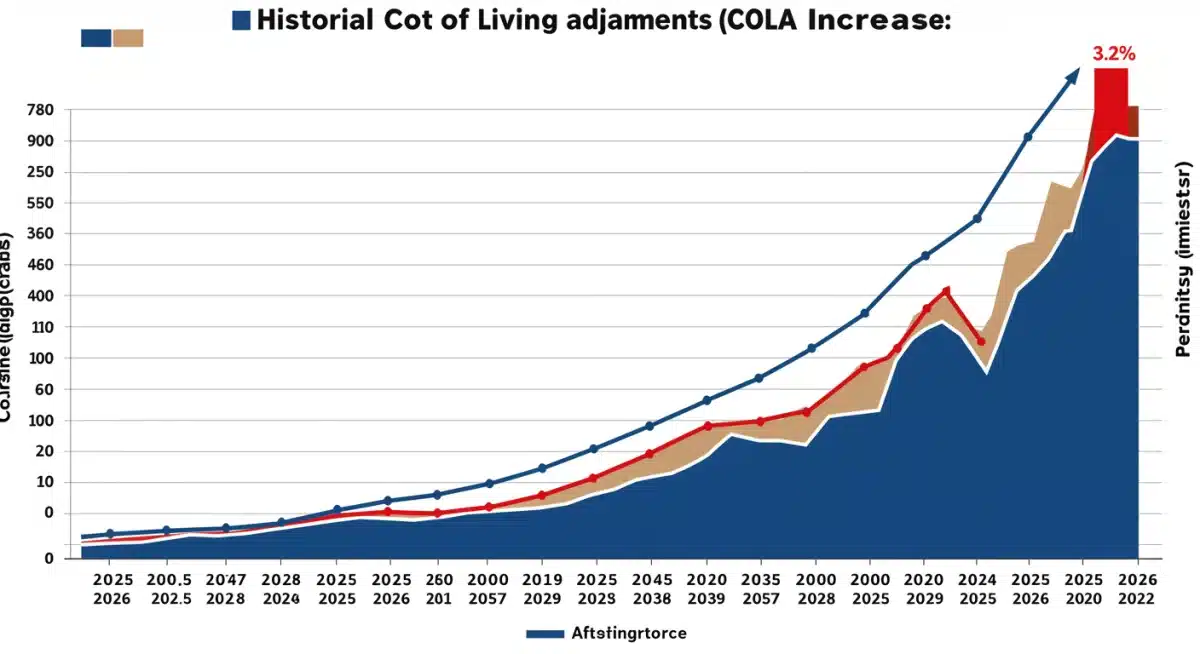
2026 Social Security Changes: 3.2% COLA Impact on Benefits

Anúncios
The projected 3.2% Cost-of-Living Adjustment for 2026 Social Security benefits will directly influence the purchasing power and financial stability of millions of Americans, reflecting ongoing economic inflationary pressures.
Anúncios
As we look towards the future, understanding the implications of Navigating 2026 Social Security Changes: What a 3.2% COLA Increase Means for Your Benefits becomes increasingly vital for millions of Americans. This adjustment, while seemingly straightforward, carries significant weight for retirees, disabled individuals, and survivors relying on these critical payments. Let’s explore how this projected increase will shape financial landscapes across the nation.
Understanding the Cost-of-Living Adjustment (COLA)
The Cost-of-Living Adjustment, or COLA, is an annual increase in Social Security and Supplemental Security Income (SSI) benefits. Its primary purpose is to help beneficiaries keep pace with inflation, ensuring their purchasing power isn’t eroded by rising costs of goods and services. Without COLA, the fixed income of many Americans would steadily diminish in real value over time, leading to financial hardship.
Anúncios
How COLA is Calculated
COLA is determined by the Social Security Administration (SSA) based on the Consumer Price Index for Urban Wage Earners and Clerical Workers (CPI-W). This specific index measures the average change over time in the prices paid by urban consumers for a market basket of consumer goods and services. The calculation involves comparing the average CPI-W for the third quarter of the current year (July, August, September) with the average for the third quarter of the last year in which a COLA was payable. The percentage increase, if any, is the COLA.
- CPI-W Index: The key metric used by the SSA.
- Third Quarter Comparison: Data from July, August, and September is crucial.
- Inflation Protection: Designed to maintain purchasing power.
The COLA mechanism is a critical safeguard built into the Social Security system, reflecting a commitment to protecting beneficiaries from economic fluctuations. While the calculation method aims for accuracy, its effectiveness can sometimes be debated, particularly concerning how well the CPI-W reflects the spending patterns of retirees who often have different expenditure profiles than urban wage earners.
In essence, COLA acts as a financial barometer, signaling how much more money beneficiaries will receive to offset the rising cost of living. The projected 3.2% for 2026 is a significant figure that will directly influence household budgets and financial planning for many.
The Projected 3.2% COLA for 2026: What It Signifies
The forecast of a 3.2% COLA for 2026 is a crucial piece of information for millions of Americans. This percentage is not just a number; it represents a tangible increase in monthly benefits designed to help individuals cope with the ongoing economic climate. It reflects an analysis of inflationary trends and economic indicators, suggesting that the cost of living is expected to continue rising.
Economic Factors Influencing the 2026 Projection
Several economic factors contribute to the COLA projection. Inflationary pressures, whether from supply chain disruptions, energy costs, or increased consumer demand, are primary drivers. The CPI-W, as previously mentioned, captures these changes. A 3.2% increase suggests that while inflation might not be at its peak, it remains a persistent force that necessitates adjustments to fixed incomes. Labor market conditions and wage growth also indirectly play a role, as they can influence overall economic stability and consumer prices.
- Inflationary Trends: Persistent rises in consumer prices.
- Energy Costs: Fluctuations in gas and utility prices.
- Supply Chain Dynamics: Impact on goods availability and cost.
This projected COLA is a direct response to these economic realities, aiming to prevent a decline in the real value of Social Security benefits. For beneficiaries, it translates into more dollars in their pockets, which can be critical for covering essential expenses like food, housing, and healthcare. However, the actual impact can vary depending on individual circumstances and spending habits.
The 3.2% figure also serves as an important signal for financial planners and policymakers. It indicates the need for continued vigilance regarding economic stability and the adequacy of retirement benefits. Understanding the underlying causes of this COLA projection is key to comprehending its broader economic significance.
Impact on Your Monthly Social Security Benefits
A 3.2% COLA increase for 2026 will directly translate into higher monthly Social Security payments for all eligible beneficiaries. This adjustment is applied uniformly across different benefit types, including retirement, disability, and survivor benefits. For someone receiving an average monthly benefit, this percentage increase can mean a noticeable boost in their disposable income, helping to cover rising daily expenses.
Calculating Your Potential Increase
To estimate your individual increase, simply multiply your current monthly benefit amount by 0.032. For example, if your current monthly benefit is $1,800, a 3.2% COLA would add approximately $57.60 to your payment, bringing your new monthly total to $1,857.60. While this might seem modest, over a year, it accumulates to a significant sum, providing crucial financial support.
- Direct Increase: Benefits rise by the COLA percentage.
- Uniform Application: Applies to all Social Security benefit types.
- Financial Relief: Helps offset increased cost of living.
It’s important to remember that this increase is designed to maintain your current purchasing power, not necessarily to enhance it significantly. The goal is to ensure that your benefits can still buy roughly the same amount of goods and services as they did before inflation occurred. This adjustment is a testament to the system’s design to adapt to economic changes and protect its beneficiaries.
Understanding how to calculate this increase allows beneficiaries to better plan their budgets and anticipate their financial standing in 2026. This transparency in the adjustment process empowers individuals to make informed decisions about their spending and savings.
Beyond the Check: Broader Financial Implications
While the direct increase in monthly checks is the most immediate effect of the 2026 COLA, its broader financial implications extend to various aspects of beneficiaries’ financial lives. These effects can range from impacts on taxes to eligibility for other government programs, making it crucial to consider the full picture.
Potential Medicare Premium Adjustments
One significant area of impact is Medicare premiums. Historically, increases in Social Security benefits have sometimes been offset by rises in Medicare Part B premiums. If the increase in Part B premiums is substantial, a portion, or even all, of the COLA increase could be absorbed by these higher healthcare costs. Beneficiaries should monitor announcements regarding 2026 Medicare premiums to understand the net effect on their finances.
Taxation of Social Security Benefits
Another consideration is the potential for increased tax liability. For some beneficiaries, a higher Social Security income might push them into a bracket where a portion of their benefits becomes taxable. This threshold depends on a beneficiary’s provisional income, which includes half of their Social Security benefits plus other taxable income. It’s essential for individuals to consult with a tax professional to understand how the 3.2% COLA might affect their specific tax situation.
- Medicare Part B Premiums: Potential offset to COLA gains.
- Income Tax Thresholds: Higher benefits could lead to taxable income.
- Eligibility for Aid: Impact on means-tested programs.
Furthermore, for those receiving other means-tested government benefits, a higher Social Security income could potentially affect their eligibility or the amount of aid they receive. Programs like Medicaid, food stamps, or housing assistance often have income limits, and even a modest increase in Social Security can sometimes push an individual over these thresholds. Therefore, beneficiaries need to review their overall financial situation comprehensively.
The 3.2% COLA is a double-edged sword: it offers necessary relief from inflation but also necessitates a careful review of one’s entire financial plan to account for these broader implications. Proactive planning and seeking expert advice are key to maximizing the benefits of the COLA while mitigating any potential downsides.
Planning for 2026: Strategies for Beneficiaries
With the projected 3.2% COLA for 2026, beneficiaries have an opportunity to review and adjust their financial strategies. Strategic planning ensures that this increase genuinely supports their financial well-being and helps them navigate the economic landscape effectively. It’s not just about receiving more money; it’s about making that money work harder for you.
Budgeting and Expense Management
The first step is to revisit your budget. Understand where your money is currently going and identify areas where the COLA increase can make the most impact. Prioritize essential expenses like housing, utilities, food, and healthcare. If you’ve been struggling to cover these costs, the additional funds can provide much-needed breathing room. Consider setting aside a portion of the increase for unexpected emergencies or future healthcare needs.
Maximizing Your Healthcare Coverage
Given the potential for Medicare premium adjustments, it’s wise to review your healthcare coverage options. Explore different Medicare Advantage plans or Medigap policies to ensure you have the most cost-effective and comprehensive coverage for your needs. Understanding your out-of-pocket maximums and prescription drug costs can help you make informed decisions and potentially save money in the long run.
- Review Budget: Reallocate funds to essential needs.
- Emergency Savings: Build a buffer for unforeseen costs.
- Healthcare Options: Optimize Medicare and other insurance.
For those who rely on other income-tested benefits, it’s crucial to understand how the COLA might affect eligibility. Contact relevant agencies to clarify any potential changes. This proactive approach can prevent unexpected loss of benefits. Additionally, consider consulting with a financial advisor who specializes in retirement planning. They can offer personalized advice on how to integrate the COLA increase into your overall financial strategy, taking into account taxes, investments, and long-term goals.
Ultimately, the 3.2% COLA for 2026 is an opportunity to reinforce your financial stability. By actively managing your budget, optimizing healthcare, and seeking professional guidance, you can ensure that this adjustment contributes positively to your quality of life.
The Future of Social Security: Long-Term Outlook
While the 2026 COLA provides immediate relief, it’s essential to consider the long-term outlook for Social Security. The system faces ongoing challenges, primarily related to its financial solvency and the demographic shifts occurring in the United States. Understanding these broader trends is crucial for long-term financial planning and advocating for sustainable solutions.
Challenges to Social Security Solvency
The primary concern revolves around the depletion of the Social Security trust funds. Projections indicate that without congressional action, the trust funds may be unable to pay 100% of promised benefits at some point in the future. This is largely due to an aging population, lower birth rates, and increased life expectancy, which means fewer workers are contributing per beneficiary.
Potential Policy Reforms and Their Impact
Various policy reforms have been proposed to address these challenges. These include raising the full retirement age, increasing the Social Security tax rate, adjusting the COLA calculation method, or modifying how benefits are calculated. Each of these proposals has significant implications for current and future beneficiaries. Understanding these potential changes is vital for individuals to plan accordingly and for the public to engage in informed discussions about the future of the program.
- Trust Fund Depletion: Long-term solvency concerns.
- Demographic Shifts: Aging population impacting worker-to-beneficiary ratio.
- Proposed Reforms: Tax increases, retirement age adjustments, benefit modifications.
The debate surrounding Social Security’s future is complex, involving economic, social, and political considerations. While the 2026 COLA addresses short-term inflationary pressures, the long-term health of the system requires sustained attention and thoughtful policy solutions. Beneficiaries and taxpayers alike have a vested interest in ensuring its continued viability.
Staying informed about these discussions and advocating for policies that promote the program’s stability is an important civic responsibility. The future of Social Security will depend on a collective commitment to finding balanced and equitable solutions that protect the financial security of generations to come.
| Key Aspect | Brief Description |
|---|---|
| 2026 COLA Percentage | Projected 3.2% increase in Social Security benefits. |
| Calculation Basis | Determined by the Consumer Price Index for Urban Wage Earners and Clerical Workers (CPI-W). |
| Impact on Benefits | Direct increase in monthly payments to combat inflation. |
| Financial Considerations | Potential effects on Medicare premiums, taxes, and other aid eligibility. |
Frequently Asked Questions About 2026 Social Security COLA
The main purpose of the Social Security Cost-of-Living Adjustment (COLA) is to protect the purchasing power of beneficiaries. It ensures that fixed Social Security and SSI payments do not lose value due to inflation, allowing recipients to maintain their standard of living amidst rising costs of goods and services.
The COLA is determined by comparing the Consumer Price Index for Urban Wage Earners and Clerical Workers (CPI-W) from the third quarter of the current year (July, August, September) with the same period of the last year a COLA was paid. The percentage increase reflects the rise in consumer prices.
Yes, it’s possible. Historically, increases in Social Security benefits can sometimes be partially or fully offset by rises in Medicare Part B premiums. Beneficiaries should monitor official announcements regarding 2026 Medicare costs to understand the net financial impact.
For some beneficiaries, a higher Social Security income resulting from the COLA could potentially push their provisional income above certain thresholds, making a portion of their benefits subject to federal income tax. Consulting a tax professional is recommended to assess individual situations.
Beneficiaries should review their current budget, consider how the increased funds can best address rising expenses, and explore optimizing healthcare coverage. It’s also wise to consult with a financial advisor to integrate the COLA into a broader financial plan and understand any tax implications.
Conclusion
The projected 3.2% COLA for 2026 represents a critical adjustment designed to help Social Security beneficiaries maintain their financial stability amidst ongoing inflation. While this increase offers welcome relief and an opportunity to adjust personal budgets, it also necessitates careful consideration of its broader implications, including potential impacts on Medicare premiums, income taxation, and eligibility for other government assistance programs. Proactive planning, informed decision-making, and staying abreast of economic and policy developments are essential for maximizing the benefits of this adjustment and ensuring long-term financial security. The future of Social Security itself remains a topic of vital discussion, underscoring the importance of continued engagement in its sustainability.