Inflationary Pressures in 2026: Fed’s 2% Target and Consumer Impact
Anúncios
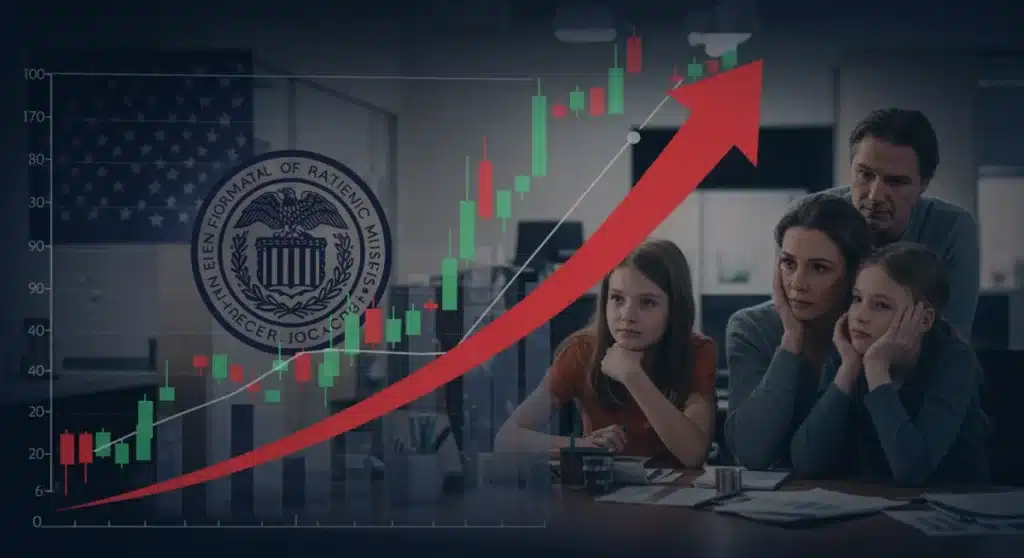
The Federal Reserve’s pursuit of a 2% inflation target in 2026 will significantly influence consumer spending patterns, affecting purchasing power and the broader economic landscape.
Anúncios
As the United States navigates the complexities of post-pandemic economic recovery and evolving global dynamics, understanding the future of prices becomes paramount. This article delves into the anticipated 2026 inflationary pressures, analyzing the Federal Reserve’s steadfast commitment to its 2% target and the ripple effects this will have on consumer spending and financial stability.
Understanding the Federal Reserve’s 2% Inflation Target
The Federal Reserve’s 2% inflation target is a cornerstone of its monetary policy framework, designed to foster price stability and maximize employment. This target is not arbitrary; it represents a delicate balance, aiming to avoid both deflation, which can stifle economic growth, and excessive inflation, which erodes purchasing power.
Anúncios
Achieving this target involves a complex interplay of economic indicators and policy tools. The Fed closely monitors various inflation measures, such as the Personal Consumption Expenditures (PCE) price index, which is its preferred gauge. Their interventions, including adjustments to the federal funds rate, quantitative easing, or tightening, are all geared towards guiding inflation towards this desired level.
Historical Context and Policy Evolution
The 2% target gained prominence in the early 2000s, becoming a global standard for many central banks. Before this, the Fed often operated with a less explicit inflation goal, leading to periods of greater uncertainty. The formal adoption of the 2% target was a move towards greater transparency and predictability in monetary policy.
- Early 00s: Informal adoption of the 2% target.
- 2012: Formal announcement of the 2% target.
- 2020: Shift to an average inflation targeting framework, allowing for periods where inflation might temporarily exceed 2% to compensate for prior undershoots.
The evolution of this policy reflects lessons learned from past economic crises and an ongoing effort to fine-tune the Fed’s approach to managing economic cycles. The goal is to anchor inflation expectations, ensuring businesses and consumers can make long-term plans with greater confidence.
In conclusion, the Fed’s 2% inflation target is a critical policy benchmark, influencing market expectations and guiding monetary policy decisions. Its history and evolution underscore a continuous effort to achieve stable prices while supporting broad economic health.
Current Economic Landscape Influencing 2026 Inflation
The current economic environment is a dynamic tapestry woven from various threads, each contributing to the potential trajectory of inflation by 2026. Global supply chain adjustments, geopolitical tensions, and ongoing labor market shifts are all significant factors that could either fuel or dampen inflationary pressures.
Understanding these drivers is essential for forecasting the economic climate. Post-pandemic recovery has seen unprecedented shifts in consumer demand and production capabilities, creating a complex backdrop against which future inflation will unfold.
Global Supply Chain Dynamics and Energy Prices
Supply chain resilience remains a key concern. While some bottlenecks have eased, new disruptions can emerge from geopolitical conflicts or natural disasters. Energy prices, notoriously volatile, also play a crucial role, impacting production costs and transportation across nearly all sectors.
- Geopolitical Events: Conflicts can disrupt oil and gas supplies, leading to price spikes.
- Manufacturing Hubs: Concentration of production in specific regions makes global supply chains vulnerable to localized issues.
- Logistics Costs: Higher fuel prices directly translate to increased shipping costs for goods.
Labor Market Trends and Wage Growth
The labor market continues to exhibit tightness in many sectors, contributing to upward pressure on wages. While wage growth can be a positive indicator of economic health, sustained rapid increases can feed into inflationary cycles, particularly if productivity does not keep pace. Businesses often pass these increased labor costs onto consumers through higher prices.
The balance between labor demand and supply, alongside factors like unionization efforts and remote work trends, will shape wage dynamics through 2026. This is a critical area the Federal Reserve monitors closely, as it directly influences core inflation.
The prevailing economic conditions, from global supply chains to domestic labor markets, form the foundation upon which future inflationary trends, including those anticipated for 2026, will be built. These interconnected factors require continuous monitoring and careful policy responses.
The Fed’s Tools and Strategies to Achieve its 2% Target
The Federal Reserve possesses a powerful arsenal of tools to influence inflation and steer it towards its 2% target. These instruments are employed strategically, often in combination, to manage liquidity, interest rates, and overall economic activity. The effectiveness of these tools hinges on market expectations and the broader economic context.
The Fed’s dual mandate of maximum employment and price stability means that decisions are always made with an eye on both objectives, requiring careful calibration to avoid unintended consequences.
Interest Rate Adjustments and Quantitative Measures
The primary tool is the federal funds rate, the target for overnight borrowing between banks. By raising or lowering this rate, the Fed influences borrowing costs throughout the economy. Higher rates tend to cool inflation by making borrowing more expensive, thereby reducing demand.
- Federal Funds Rate: Directly impacts short-term interest rates and indirectly influences long-term rates.
- Quantitative Easing (QE): Large-scale asset purchases to inject liquidity and lower long-term interest rates.
- Quantitative Tightening (QT): Reducing the balance sheet to withdraw liquidity and put upward pressure on long-term rates.
Forward Guidance and Communication
Beyond direct monetary policy tools, the Fed uses forward guidance to communicate its future policy intentions. This helps anchor market expectations and reduce uncertainty. Clear communication about the Fed’s inflation outlook and its commitment to the 2% target can influence how businesses and consumers make decisions today, impacting future inflation.
Regular press conferences, speeches, and published minutes from FOMC meetings are all part of this communication strategy. Transparency is key to maintaining credibility and ensuring that policy actions are effective.
In essence, the Federal Reserve employs a comprehensive set of tools, from interest rate manipulation to strategic communication, all designed to guide the economy towards its 2% inflation target while balancing employment goals. These strategies are constantly adapted to prevailing economic conditions.
Impact on Consumer Spending and Purchasing Power in 2026
The trajectory of inflation towards or away from the Fed’s 2% target in 2026 will have a profound and tangible impact on daily consumer spending and overall purchasing power. Consumers will feel these effects directly through the prices they pay for goods and services, as well as indirectly through wages and savings.
A stable 2% inflation rate is generally seen as healthy, allowing for predictable price increases that don’t severely erode savings. However, deviations from this target, particularly sustained higher inflation, can significantly alter household budgets and economic behavior.
Cost of Living and Household Budgets
If inflationary pressures exceed the 2% target, the cost of living will rise faster, forcing households to allocate a larger portion of their income to necessities like food, housing, and energy. This can lead to a reduction in discretionary spending, impacting sectors reliant on consumer confidence and non-essential purchases.
Conversely, if inflation falls below 2% or dips into deflation, consumers might delay purchases expecting further price drops, which can slow down economic activity. The sweet spot of 2% aims to encourage spending without causing undue financial strain.
Savings and Investment Decisions
Inflation directly affects the real value of savings. If inflation outpaces the interest earned on savings accounts, purchasing power diminishes over time. This encourages consumers to seek higher-yielding investments, potentially shifting capital towards riskier assets.
For those living on fixed incomes, such as retirees, high inflation can be particularly damaging, as their income does not adjust to the rising cost of goods. This highlights the importance of managing inflation expectations and maintaining a stable economic environment.
In summary, the Fed’s success in managing 2026 inflationary pressures towards its 2% target will directly dictate consumer spending patterns, impact household budgets, and influence savings and investment strategies, underscoring its critical role in everyday financial well-being.
Sector-Specific Analysis: Who Wins and Who Loses?
Inflationary environments rarely impact all sectors of the economy equally. Some industries may find themselves better positioned to pass on increased costs to consumers, while others might struggle with squeezed profit margins. Understanding these sector-specific dynamics is crucial for investors, businesses, and policymakers alike as we approach 2026.
The interplay of supply, demand, and pricing power determines which sectors thrive and which face significant headwinds during periods of fluctuating inflation.
Beneficiaries of Moderate Inflation
Sectors with strong pricing power and inelastic demand often fare better. Essential goods and services, such as healthcare, utilities, and some food manufacturers, can typically adjust prices without a significant drop in consumer demand. Companies with low debt levels and robust cash flows are also better equipped to weather rising input costs.
- Energy Sector: Benefits from rising commodity prices, especially if they are net producers.
- Real Estate: Property values often appreciate with inflation, and rental income can be adjusted.
- Consumer Staples: Companies selling essential goods can pass on costs more easily.
Challenges for Vulnerable Sectors
Conversely, sectors with high fixed costs, fierce competition, or discretionary products can suffer. Industries reliant on imported goods may face higher input costs due to currency fluctuations or supply chain issues. Businesses with significant debt could struggle with rising interest rates, increasing their cost of capital.
Technology companies, especially those in early growth stages that rely on future earnings, can also be vulnerable as higher interest rates make future profits less valuable in present terms. This can lead to a re-evaluation of growth stocks.
In conclusion, the impact of 2026 inflationary pressures will be unevenly distributed across the economy. While some sectors may find opportunities to thrive, others will need to adapt strategies to mitigate the challenges posed by evolving price levels and consumer behavior.
Future Outlook and Policy Considerations for 2026
Looking ahead to 2026, the future outlook for inflation remains a subject of intense debate among economists and policymakers. While the Federal Reserve is committed to its 2% target, various domestic and international factors could influence its ability to achieve and maintain this goal. Proactive policy considerations will be vital.
The landscape is constantly shifting, requiring agility and foresight from monetary authorities and fiscal bodies. The decisions made today will reverberate through the economy in the coming years.
Potential Economic Scenarios
Several scenarios could unfold. One possibility is a ‘soft landing,’ where inflation gradually returns to 2% without a significant economic downturn. Another is a ‘hard landing,’ characterized by a recession as aggressive monetary tightening brings inflation down. A third scenario involves ‘stagflation,’ where high inflation persists alongside slow economic growth.
The probability of each scenario depends on factors such as global economic stability, the resolution of supply chain issues, and the effectiveness of fiscal policies in complementing monetary efforts.
Global Economic Interdependencies
The U.S. economy does not operate in isolation. Inflationary pressures in other major economies, exchange rate fluctuations, and international trade policies will all play a role. Global economic slowdowns could dampen demand, potentially easing U.S. inflation, while robust global growth might reignite it.
Central banks worldwide often coordinate, or at least consider, each other’s policies, as their actions can have cross-border implications. This interconnectedness adds another layer of complexity to forecasting and managing inflation.
Ultimately, the 2026 inflationary pressures and the Fed’s success in achieving its 2% target will be shaped by a confluence of domestic policy decisions and global economic forces. Continuous vigilance and adaptable strategies will be paramount for navigating the economic landscape effectively.
| Key Aspect | Brief Description |
|---|---|
| Fed’s 2% Target | The Federal Reserve’s long-term goal for price stability, influencing monetary policy. |
| Consumer Spending | Directly affected by inflation, impacting purchasing power and household budgets. |
| Monetary Policy Tools | Interest rate adjustments, quantitative easing/tightening, and forward guidance. |
| Sectoral Impact | Inflation affects industries differently, creating winners and losers based on pricing power. |
Frequently Asked Questions About 2026 Inflation
The Fed’s 2% inflation target aims for stable prices, balancing economic growth and avoiding deflation or excessive inflation. It provides a benchmark for monetary policy, guiding decisions on interest rates and other tools to maintain a healthy economic environment for businesses and consumers.
If inflation remains elevated above 2% in 2026, consumers will face higher costs for goods and services, reducing their purchasing power. This could lead to a shift in spending patterns, prioritizing necessities over discretionary items, and potentially impacting savings and investment decisions.
The Fed primarily uses interest rate adjustments, such as the federal funds rate, to influence borrowing costs. It also employs quantitative easing (QE) to inject liquidity or quantitative tightening (QT) to withdraw it, alongside forward guidance to communicate its policy intentions and manage market expectations effectively.
Sectors with high fixed costs, intense competition, or discretionary products are typically more vulnerable. Examples include businesses heavily reliant on imported goods, those with substantial debt, or industries where consumers can easily postpone purchases when prices rise significantly, impacting profit margins.
Global economic interdependencies, including supply chain disruptions, energy prices, and international trade policies, significantly influence U.S. inflation. Geopolitical events or economic shifts in major trading partners can impact import costs and overall demand, making global monitoring crucial for the Fed’s policy decisions.
Conclusion
The journey towards maintaining price stability amidst evolving economic landscapes is a continuous challenge for the Federal Reserve. The analysis of 2026 inflationary pressures reveals a complex interplay of monetary policy, global dynamics, and consumer behavior. As the Fed endeavors to steer inflation towards its 2% target, the implications for consumer spending, savings, and overall economic health in the United States will be profound. Vigilance, adaptability, and informed financial planning will be crucial for individuals and businesses alike to navigate the economic currents of the coming years successfully.