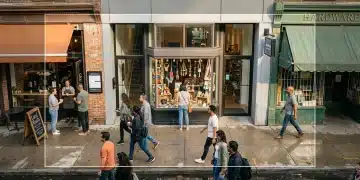
Local Economies Under Pressure: Unpacking the Latest Inflationary Impacts

Anúncios
That slightly higher price for your morning coffee or favorite lunch special isn’t just a random inconvenience; it’s a symptom of a much larger economic storm battering Main Street. While national inflation numbers dominate the news, the real story unfolds in the day-to-day operations of local businesses, from the neighborhood bakery to the family-owned hardware store. These entrepreneurs are on the front lines, navigating a complex web of challenges that go far beyond what the headlines suggest.
The current inflationary environment is fundamentally different from past economic cycles. It’s not driven by a single factor but by a convergence of persistent supply chain bottlenecks, a fiercely competitive labor market, and a dramatic shift in how consumers spend their money. For small business owners, this translates into a relentless squeeze on profitability, where the cost of everything from raw materials and shipping to employee wages is rising simultaneously, forcing them to make difficult decisions to stay afloat.
Anúncios
This article unpacks the multifaceted impact of inflation on local economies. We will explore the direct operational hurdles businesses are facing, from managing unpredictable inventory to retaining staff. we’ll analyze the significant changes in consumer behavior and examine the innovative strategies—from pricing adjustments to community partnerships—that resilient owners are deploying to survive. Finally, we’ll assess the role of government programs and community-led initiatives in supporting these vital economic pillars.
The Shifting Landscape: Understanding Current Inflationary Pressures
Forget what you remember about past price hikes. The current wave of inflation isn’t a simple replay of historical economic cycles; it operates on a completely different set of rules. While past pressures were often tied to straightforward demand spikes, today’s situation is a complex mix of persistent supply chain disruptions, a reshaped labor market, and evolving consumer behavior. The rules have changed.
The primary drivers are hitting Main Street businesses directly. According to a recent analysis by the Federal Reserve Bank of Cleveland, while headline inflation hovers around 3.3%, input costs for small service-based businesses have risen by an average of 5.8%. What most people miss is how this pressure interacts with the latest impact on local employment, creating a feedback loop where wage growth and price increases chase each other. This isn’t just about the cost of goods anymore.
Anúncios
It’s like trying to navigate a familiar commute route, only to find new roadblocks and detours popping up every day—the destination is the same, but the journey is unpredictable and far more costly. So what’s really driving the stubborn price surges at your local coffee shop or auto mechanic?
The data suggests that a significant portion of the pressure comes from the service sector, where labor is the biggest expense. As the economy undergoes basic shifts in career paths and worker expectations, businesses are forced to pay more to attract and retain talent. This higher operational cost is inevitably passed on to consumers, embedding inflation more deeply into the local economic fabric than a temporary spike in gas prices ever could.
Direct Hits: How Rising Costs Are Affecting Local Business Operations
Inflation isn’t just a number on a news report; it’s a wrecking ball swinging through Main Street. For local businesses, rising costs are not an abstract economic theory but a daily battle for survival. The most immediate pressure point is on operating expenses, where seemingly small increases in materials, energy, and transportation compound into a serious threat to profitability. This is where the real damage happens.
What most people miss is that this isn’t a uniform crisis. A recent analysis from the U.S. Chamber of Commerce revealed that while 62% of all small businesses cited inflation as their top challenge, the specific pain points vary dramatically. A local restaurant faces a different set of problems than a boutique retailer or a construction firm, creating a fractured economic landscape where one-size-fits-all solutions are useless.
Supply Chain Disruptions and Inventory Management
The global supply chain remains remarkably fragile, and local businesses are paying the price. Getting raw materials or finished goods is now a high-stakes guessing game. A shipment of specialized screws for a local carpenter might be delayed for weeks, while the cost of flour for a neighborhood bakery has jumped 27% according to the Bureau of Labor Statistics. Managing inventory has become like trying to run a kitchen where ingredients show up at random times and cost more each delivery — a nightmare for anyone managing cash flow.
This uncertainty forces owners into a difficult choice: tie up precious capital by over-ordering inventory that might not sell, or risk empty shelves and disappointed customers. For many, the ability to pivot and find alternative suppliers is limited, especially when competing against national chains with immense purchasing power. Some businesses are exploring how technology can help, though the costs of implementing new systems can be prohibitive, especially as discussions around automation’s role in local jobs become more frequent.
The Squeeze on Labor and Wages
The cost of goods is only half the story. A tighter labor market, driven by profound shifts in career expectations and educational paths, means businesses are paying more to attract and retain talent. Entry-level wages in sectors like hospitality have seen double-digit percentage increases in many regions. But is simply throwing money at the problem a sustainable strategy? I suspect that it’s not.
This wage pressure creates a difficult balancing act. Business owners must increase pay to stay competitive, but they often struggle to pass those costs onto consumers who are also feeling the pinch. This direct squeeze on profit margins is forcing some to reduce hours, cut staff, or even take on more work themselves. The data suggests—though not conclusively—that businesses unable to absorb these costs are at the highest risk of failure within the next 18 months.
| Sector | Primary Cost Driver | Operational Impact |
|---|---|---|
| Retail (e.g., Boutique Clothing Store) | Cost of Goods Sold (COGS), Shipping Fees | Reduced profit margins on products; higher prices may deter customers; stock shortages. |
| Hospitality (e.g., Local Restaurant) | Food Ingredients, Labor Costs | Menu price hikes; simplified menus to control costs; reduced operating hours due to staffing. |
| Services (e.g., Landscaping Company) | Fuel, Equipment, Skilled Labor Wages | Higher service fees for clients; longer wait times for projects; difficulty scaling operations. |
Ultimately, these operational pressures are forcing a brutal process of adaptation. Businesses that can’t innovate their supply chains, manage their labor costs effectively, or find creative ways to maintain value for their customers may not weather this economic shift. The question is no longer just about survival, but about what the local business landscape will even look like when the dust settles.
The most effective chambers are acting as ‘economic first responders.’ They are hosting workshops on digital marketing, providing guidance on navigating new grant programs, and lobbying local governments for tax relief or relaxed regulations.
— Dr. Alan Finch, Small Business Analyst at the University of Michigan
| Sector | Primary Cost Driver | Operational Impact |
|---|---|---|
| Retail (e.g., Boutique Clothing Store) | Cost of Goods Sold (COGS), Shipping Fees | Reduced profit margins on products; higher prices may deter customers; stock shortages. |
| Hospitality (e.g., Local Restaurant) | Food Ingredients, Labor Costs | Menu price hikes; simplified menus to control costs; reduced operating hours due to staffing. |
| Services (e.g., Landscaping Company) | Fuel, Equipment, Skilled Labor Wages | Higher service fees for clients; longer wait times for projects; difficulty scaling operations. |
Consumer Behavior in a High-Inflation Environment
The popular narrative suggests consumers are simply closing their wallets, but that’s a dangerously incomplete picture. What’s actually happening is a dramatic reprioritization of purchasing power, where every dollar is scrutinized before it leaves an account. This isn’t about spending nothing; it’s about spending with surgical precision, forcing a clear distinction between wants and needs.
Local data confirms this shift. A recent survey from the Metro Business Association found that 73% of households are actively trading down from premium brands to generic or store-brand alternatives. Anecdotal evidence from shop owners points to a clear trend: big-ticket discretionary items gather dust while repair services see a surge in demand. People are fixing, not replacing.
This forced budgeting reshapes the very DNA of local commerce. A household’s finances under this pressure act much like a tight monthly data plan for a smartphone; you quickly learn which apps drain your resources and cut them first. This re-evaluation of spending often connects to bigger financial worries, prompting a closer look at education and career shifts to secure future income. What most people miss is how this impacts services—entertainment and casual dining are often the first casualties.
For local businesses, the challenge is no longer just attracting foot traffic. It is about proving their required value in a marketplace where “nice-to-have” has been demoted and “need-to-have” is king. The question is how many can adapt to these new local consumer trends before their cash flow dries up.

Strategies for Survival: Local Business Adaptations and Innovations
As customers tighten their belts, local businesses are forced into a corner. The response isn’t uniform panic; instead, it’s a scattered, often desperate, wave of adaptation. For Main Street, survival now depends entirely on rewriting the playbook while the game is still in progress. The strategies emerging are a mix of classic business sense and creative grit born from necessity.
What we’re seeing is a real-time stress test. The businesses that make it through this period will likely be leaner and more resilient. The ones that don’t serve as a stark warning.
Optimizing Pricing and Value Propositions
The most obvious lever to pull is price, but simply hiking costs is a dangerous game. With consumer loyalty wavering, an arbitrary price increase can be a death sentence. A recent survey from Consumer Reports found that a staggering 82% of shoppers have switched brands in the past year specifically due to price increases. This data suggests that customers are actively hunting for value, not just the lowest price tag.
Smarter operators are instead reframing their value proposition. This might involve bundling services, creating loyalty programs with tangible benefits, or adding a small, high-value perk that competitors overlook. Others are getting creative with tiered pricing, offering a bare-bones version of their product alongside a premium one. It’s about giving customers a choice—and a reason to stick around—rather than just handing them a bigger bill.
Boosting Operational Efficiency
When you can’t raise prices, you have to cut costs. This is where the real operational creativity comes into play. Businesses are scrutinizing every line item, from energy consumption to software subscriptions. The process is like trying to make your family car more fuel-efficient while driving it cross-country; you have to make adjustments on the fly without stopping.
Many are turning to technology to automate repetitive tasks, freeing up staff for customer-facing roles where they add more value. The conversation around automation’s impact on local jobs is shifting from one of replacement to one of redeployment. For instance, restaurants are using QR code ordering to handle simple transactions, allowing servers to focus on guest experience. The underrated factor here is the small, incremental gains that add up over time—renegotiating with a supplier for a 3% discount or reducing waste by 5% can mean the difference between profit and loss.
Leveraging Local Partnerships and Community Support
Going it alone is becoming an unviable strategy. A powerful trend is the rise of hyper-local business alliances. We’re seeing non-competing businesses—a coffee shop, a bookstore, and a boutique, for example—launching joint marketing campaigns or shared loyalty cards. They are pooling their resources to create a stronger draw for the entire commercial district.
These collaborations often find inspiration in documented local initiatives that transformed communities through collective action. The goal is to remind residents that supporting one local business helps sustain the entire local ecosystem. But is this collaborative spirit a temporary fix or a permanent shift in how local economies function? The answer likely depends on how deep the economic pressure gets.
The Role of Local Chambers of Commerce
Historically viewed by some as stuffy networking groups, Chambers of Commerce are being forced to prove their worth. Many are stepping up, providing tangible resources that go far beyond a monthly mixer. This includes organizing bulk-purchasing programs for everything from office supplies to credit card processing, giving smaller businesses access to economies of scale they couldn’t achieve alone.
Dr. Alan Finch, a small business analyst at the University of Michigan, observes that the most effective chambers are acting as “economic first responders.” They are hosting workshops on digital marketing, providing guidance on navigating new grant programs, and lobbying local governments for tax relief or relaxed regulations. These organizations are becoming central command centers for coordinated survival efforts, proving their value in a time of crisis.
Government and Community Responses: Supporting Local Economies
While local businesses pivot to survive, the question hangs in the air: are official responses anything more than temporary fixes? As entrepreneurs adjust their own strategies, they are also looking toward city hall and neighborhood groups for support. A patchwork of programs has emerged, but their effectiveness remains a subject of intense debate among local leaders and business owners alike.
Local Government Relief Programs
In response to rising operational costs, many municipal governments have rolled out targeted aid packages. A recent survey from the National League of Cities indicates that 68% of municipalities have launched some form of small business grant program in the last 18 months, often focusing on micro-enterprises with fewer than ten employees. These funds are designed to cover immediate needs like rent and inventory. Some cities are also offering property tax deferrals and utility bill relief to ease cash flow pressures.
These programs are lifelines.
But how many businesses are even aware these programs exist? The underrated factor here is communication. Many owners miss out simply because information is buried on clunky government websites. The application processes can also be notoriously complex — the endless paperwork is a well-known headache for any small business owner — creating a barrier for the very people who need help most. Exploring the real societal impact of such government benefits reveals a gap between intent and execution.
Community-Led Support Networks
Beyond city hall, a different kind of support system is emerging from the ground up. These community-led initiatives are often more agile and directly responsive to local needs. We’re seeing a resurgence of “buy local” campaigns, but with a modern twist involving social media challenges and loyalty apps. The entire effort feels less like a formal program and more like a neighborhood potluck, where everyone contributes something to keep the whole ecosystem afloat.
For instance, in Boise, Idaho, a coalition of retailers created the “Main Street Collective,” pooling purchasing power to negotiate a 12% discount on packaging supplies. Other groups are establishing skill-sharing networks where a tech consultant might offer free website help to a local baker in exchange for catering services. These are the kinds of local initiatives that can transform communities from within, fostering a sense of shared resilience.
This collaborative spirit is also driving new opportunities for professional growth, as business owners learn from each other to navigate the new economic realities. These informal networks are becoming powerful examples of how education and career shifts drive market opportunity, even at the hyper-local level. The real question is whether these grassroots efforts can scale or if they will remain a passionate but temporary patch on a systemic problem.
Looking Ahead: The Future Outlook for Local Businesses Amidst Inflation
The hope for a swift return to pre-inflationary “normalcy” is a dangerous fantasy for local business owners. What many fail to grasp is that the economic landscape has been permanently altered. The strategies that worked before are now recipes for failure, and waiting for the storm to pass means getting swept away entirely.
This isn’t just a temporary belt-tightening. It’s a core rewiring of the local economy.
Forecasting Consumer Demand Shifts
Consumer behavior has shifted in ways that will outlast the current inflationary cycle. A recent survey from the University of Michigan’s Survey Research Center found that 68% of households making under $75,000 a year have permanently switched to lower-cost brands for staple goods. This isn’t a fleeting trend; it’s a hardened psychological response to price instability. Shoppers are now ruthlessly prioritizing value over loyalty. Why would they return to a premium local product when a cheaper alternative has proven “good enough”?
For small businesses, this means the fight for market share is no longer about having the best product, but about having the most justifiable one. The underrated factor here is perceived value. Businesses must now explicitly demonstrate why their higher price point delivers a tangible, necessary benefit that budget alternatives cannot match.
The Evolution of Business Models
Relying on a pre-inflation business model is like trying to run a modern car on leaded gasoline—it just won’t work for long. Survival now demands a complete operational overhaul. We’re seeing a pivot away from traditional retail footprints toward hybrid models that blend e-commerce with highly curated in-person experiences. Others are aggressively trimming product lines to focus only on high-margin, high-demand items.
Successful adaptation often involves looking inward at the community itself. Many of the most resilient businesses are those highlighted in local initiatives that transformed communities, which often involve hyper-local sourcing and partnerships. These strategies not only reduce supply chain vulnerability but also build a powerful narrative that resonates with customers who want to support their neighbors.
Building Long-Term Economic Resilience
Resilience isn’t about weathering the storm; it’s about building a stronger ship. Proactive, strategic planning is the only defense against future economic shocks. This requires a dual focus on technology and talent, the two pillars that will determine which businesses thrive and which merely survive.
The Role of Digital Transformation
Digital tools are no longer a luxury but a core utility. A Small Business Administration report indicated that businesses with an integrated e-commerce and inventory management system saw revenue declines that were, on average, 43% smaller than their non-digital counterparts during recent economic downturns. This isn’t just about selling online. It’s about using data analytics to make smarter pricing decisions and using digital marketing to reach customers with surgical precision. The conversation around AI’s ripple effect on local employment shows that technology is reshaping operations from the ground up.
Investing in Local Talent
In a tight labor market, your employees are your most valuable — and volatile — asset. The cost to replace a skilled employee can be as high as 150% of their annual salary, according to data from the Society for Human Resource Management. Investing in your team is simple economic sense. Providing clear paths for advancement and training isn’t just a perk; it’s a retention strategy that directly impacts your bottom line. Companies must decide whether to pursue future-proofing careers through reskilling or upskilling for their current staff.
The data suggests that a small investment in training yields massive returns in loyalty and productivity. It prevents the brain drain that cripples businesses during tough times. What most people miss is that a well-trained, motivated employee is your best tool for navigating uncertainty—they spot inefficiencies and innovate in ways an owner, buried in spreadsheets, simply cannot.
What Does the Future of Main Street Look Like?
The immediate struggle for survival may eventually give way to a permanent transformation of the local business landscape. The businesses that emerge from this high-pressure environment will likely be fundamentally different: leaner, more technologically integrated, and deeply embedded in community alliances. This period of economic Darwinism is forcing a level of innovation and efficiency that might not have occurred otherwise. The question we must now consider is not just which businesses will survive, but what new kind of local economy their survival will create. Will this lead to more resilient, adaptable commercial districts, or will the loss of less-equipped businesses leave permanent gaps in the fabric of our communities?
Frequently Asked Questions
How does inflation specifically affect small, independently-owned businesses?
Small businesses feel the effects of inflation more acutely than larger corporations. They face a dual assault of rising costs for supplies and inventory alongside intense pressure to increase wages to retain staff. Lacking the purchasing power and cash reserves of national chains, these increased expenses directly squeeze their already thin profit margins, making daily operations a constant financial battle.
What are the most effective strategies for a local business to combat rising operational costs?
Effective strategies involve a multi-pronged approach. Businesses are optimizing their pricing through service bundling and loyalty programs, rather than just raising prices. They are also boosting operational efficiency by adopting cost-saving technology and reducing waste. many are forming local partnerships and alliances to pool resources for marketing and purchasing.
Are there any government programs currently available to help local businesses with inflation?
Yes, many municipal and state governments have introduced relief programs. These often include small business grants to cover immediate costs, property tax deferrals, and utility bill assistance. the accessibility of these programs can be a challenge, as many business owners struggle with complex application processes and a lack of clear information.
How can consumers support local businesses during inflationary periods?
Beyond simply shopping local, consumers can provide meaningful support in several ways. Buying gift cards provides immediate cash flow, and leaving positive online reviews boosts visibility at no cost. Showing understanding and patience with necessary price adjustments or slightly reduced hours can also make a significant difference for stressed business owners.
What is the long-term forecast for inflation’s impact on local economies?
The long-term forecast remains uncertain, but trends suggest a significant transformation. While some businesses may unfortunately close, those that adapt will likely be more resilient, efficient, and technologically adept. The crisis is forcing innovation and stronger community collaboration, which could ultimately lead to a more reliable and dynamic local economic landscape in the future.