Crafting a High-Impact US Resume for 2025 Job Applications
Anúncios
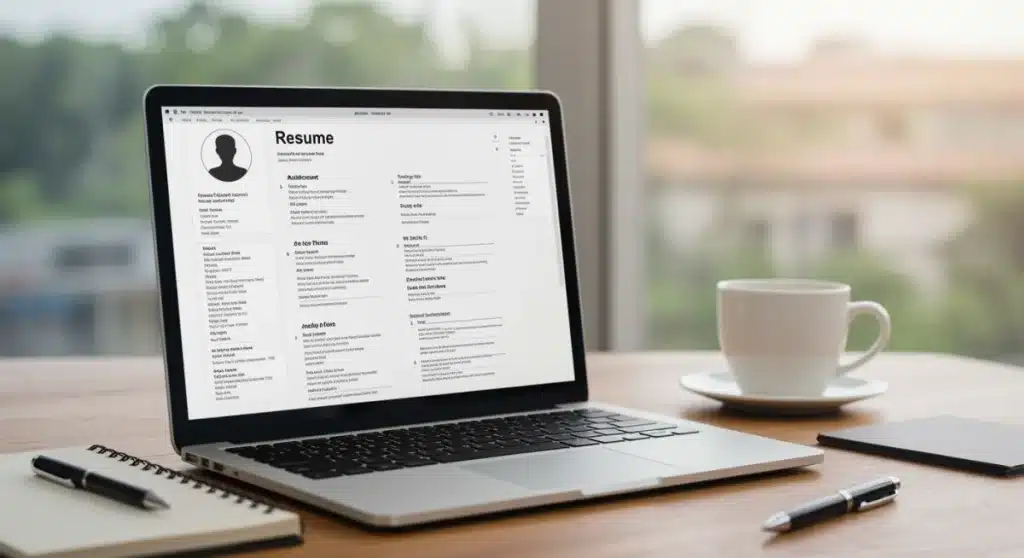
Crafting a high-impact US resume for 2025 job applications is crucial for career success, requiring a strategic approach to highlight skills and experiences effectively for the American job market.
Anúncios
Are you ready to elevate your job search in the competitive American market? Understanding the nuances of a compelling resume is paramount. This guide provides expert insights: crafting a high-impact US resume for 2025 job applications – 6 critical elements to help you stand out.
Anúncios
Understanding the 2025 US Job Market Landscape
The US job market is constantly evolving, and 2025 brings its own set of expectations and demands for job seekers. Recruiters are sifting through countless applications, often spending mere seconds on each resume. To capture their attention, your resume must be not only well-formatted but also strategically tailored to current industry needs and technological advancements.
The shift towards remote and hybrid work models continues to influence how skills are valued, with digital literacy and adaptability becoming even more critical. Furthermore, companies are increasingly prioritizing candidates who demonstrate a clear understanding of diversity, equity, and inclusion (DEI) initiatives, reflecting these values in their professional approach.
The Rise of AI in Recruitment
Applicant Tracking Systems (ATS) are no longer a new phenomenon, but their sophistication is rapidly increasing. In 2025, AI-powered ATS can analyze resumes for keywords, assess relevance, and even predict candidate success with greater accuracy. This means your resume must be optimized not just for human eyes, but also for these advanced algorithms.
- Keyword optimization is essential for ATS bypass.
- Clear, concise language prevents misinterpretation by AI.
- Standard resume formats are preferred by most systems.
In-Demand Skills for 2025
Beyond industry-specific technical skills, several soft skills are highly sought after. Employers are looking for individuals who can collaborate effectively, think critically, and demonstrate strong emotional intelligence. Highlighting these transferable skills can significantly boost your resume’s appeal.
Moreover, proficiency in data analysis, cybersecurity awareness, and cloud computing continue to be significant assets across various sectors. Ensure your resume reflects any relevant experience or certifications in these areas.
In conclusion, staying abreast of the 2025 US job market trends is the foundational step for any successful job application. Your resume must be a dynamic document that addresses both human and artificial intelligence gatekeepers, showcasing not just what you’ve done, but how well you align with future professional demands.
Critical Element 1: Strategic Formatting and Readability
First impressions matter, and on a resume, that impression is largely made by its visual layout. In 2025, a clean, professional, and easily scannable format is non-negotiable for a US resume. Recruiters look for clarity and conciseness, enabling them to quickly extract key information.
Avoid overly elaborate designs or unusual fonts that can hinder readability or be misinterpreted by ATS. Stick to a classic, professional aesthetic that prioritizes content over flashy graphics. Consistency in font sizes, spacing, and headings across the entire document is also crucial for a polished look.
Choosing the Right Layout
The chronological format remains the most common and preferred by US employers, especially for those with a consistent work history. It clearly outlines your career progression, making it easy for recruiters to follow your journey. However, hybrid or functional formats can be effective for career changers or those with employment gaps, emphasizing skills over strict timelines.
- Use ample white space to prevent a cluttered appearance.
- Opt for clear section headings (e.g., “Experience,” “Education,” “Skills”).
- Limit your resume to one or two pages, depending on your experience level.
Font Choices and Consistency
Selecting the right font can subtly influence readability and professionalism. Sans-serif fonts like Arial, Calibri, or Lato are popular choices due to their clean lines and universal readability. Maintain a consistent font size, typically 10-12 points for body text and 14-16 points for headings, to ensure visual hierarchy.
Ensure that your contact information is prominently displayed at the top, along with your professional title if applicable. This allows recruiters to quickly identify who you are and how to reach you.
Ultimately, strategic formatting and readability are about making the recruiter’s job easier. A well-organized resume allows them to quickly find the information they need, increasing the likelihood of your application moving forward. Prioritize clarity and a professional appearance above all else.
Critical Element 2: Compelling Summary or Objective Statement
The summary or objective statement at the top of your resume serves as your elevator pitch, a brief yet powerful introduction to your professional brand. In 2025, this section must immediately convey your value proposition and align with the specific job you’re applying for, capturing the recruiter’s attention from the outset.
For experienced professionals, a summary statement is ideal. It should highlight your most relevant skills, accomplishments, and career goals in 3-5 concise lines. For recent graduates or those changing careers, an objective statement can be used to clearly articulate your career aspirations and how your skills can benefit the prospective employer.
Crafting an Effective Summary Statement
A compelling summary statement goes beyond merely listing job titles. It should showcase quantifiable achievements and key strengths that directly relate to the target role. Think of it as a preview of the best parts of your resume, enticing the recruiter to read further.
- Use strong action verbs to describe your capabilities.
- Quantify achievements whenever possible (e.g., “Increased sales by 15%”).
- Tailor the summary to each job application, using keywords from the job description.
When to Use an Objective Statement
While less common for seasoned professionals, an objective statement can be effective in specific scenarios. If you are entering the workforce, switching industries, or have a unique career path, an objective can clearly state your immediate career goals and demonstrate how your foundational skills are transferable.
Ensure your objective is focused on what you can offer the employer, not just what you seek. It should communicate enthusiasm and a clear direction, even if your experience is limited in the specific field.
The summary or objective statement is your first opportunity to make a strong impression. It’s a critical element that can determine whether a recruiter spends more than a few seconds on your resume. Make it impactful, relevant, and a direct reflection of your professional value.
Critical Element 3: Quantifiable Achievements and Action Verbs
Moving beyond generic job descriptions, a high-impact US resume for 2025 demands a focus on quantifiable achievements. Employers want to see the tangible results of your work, not just a list of responsibilities. This approach demonstrates your impact and value to previous organizations, providing concrete evidence of your capabilities.
For every bullet point under your experience section, ask yourself: “What was the outcome of my action? How can I measure it?” Even in roles where direct numerical results seem scarce, consider improvements in efficiency, problem resolution, or positive feedback.
The Power of Numbers
Numerical data provides undeniable proof of your contributions. Whether it’s percentage increases, dollar amounts, project completion rates, or the number of people managed, quantifiable metrics speak volumes. They transform vague statements into compelling evidence of your success.
- “Managed a team of 10” is good; “Managed and mentored a team of 10, improving project delivery efficiency by 20%” is better.
- “Responsible for customer service” is vague; “Resolved an average of 50 customer inquiries per day with a 95% satisfaction rate” is impactful.
- Always ensure the numbers are accurate and verifiable.
Choosing Strong Action Verbs
Coupling quantifiable achievements with strong action verbs elevates your resume from passive to powerful. Words like “responsible for” or “duties included” are weak and fail to convey initiative. Instead, opt for dynamic verbs that showcase leadership, problem-solving, and direct contribution.
Examples include: “Developed,” “Implemented,” “Spearheaded,” “Optimized,” “Negotiated,” “Analyzed,” “Led,” and “Generated.” These verbs paint a picture of an engaged and effective professional.
By consistently integrating quantifiable achievements and powerful action verbs throughout your experience section, you create a resume that not only describes your past roles but also predicts your future success. This is a fundamental shift from simply listing tasks to demonstrating your value.
Critical Element 4: Tailoring to Each Job Description with Keywords
In the 2025 job market, a generic resume is a missed opportunity. To truly create a high-impact US resume, you must meticulously tailor it to each specific job description. This involves more than just changing the job title; it requires a strategic integration of keywords and a clear alignment with the employer’s stated needs.
Recruiters, and more importantly, Applicant Tracking Systems (ATS), scan resumes for specific keywords relevant to the role. Failing to include these keywords can result in your resume being overlooked, regardless of your qualifications. Think of tailoring as creating a customized solution for each job opening.
Identifying Key Terms and Phrases
Carefully read the job description multiple times, highlighting key skills, responsibilities, and qualifications. These are the keywords you need to incorporate into your resume. Pay attention to both hard skills (e.g., “Python,” “SQL,” “Salesforce”) and soft skills (e.g., “leadership,” “communication,” “problem-solving”).
- Analyze the job description for frequently used terms.
- Look for specific industry jargon or technical requirements.
- Integrate these keywords naturally into your summary, experience, and skills sections.
Strategic Keyword Placement
Once identified, keywords shouldn’t just be stuffed into your resume. They need to be integrated naturally and contextually. Place them in your professional summary, within bullet points describing your achievements, and in a dedicated skills section. This ensures both ATS and human readers understand your relevance.
Consider creating a “Core Competencies” or “Technical Skills” section where you can list relevant keywords in an easy-to-scan format. This section is particularly effective for ATS scanning, as it provides a clear repository of your capabilities.
Tailoring your resume is a time investment that yields significant returns. It demonstrates your genuine interest in the role and your understanding of the company’s needs, dramatically increasing your chances of securing an interview.
Critical Element 5: Highlighting Relevant Skills and Technologies
In the rapidly advancing technological landscape of 2025, a dedicated and well-organized skills section is paramount for a high-impact US resume. This section should go beyond a simple list, categorizing skills to provide clarity and emphasize your proficiency in areas critical to the modern workplace.
Employers are not just looking for a broad range of skills, but specific proficiencies that directly contribute to their operational needs. This means being selective and highlighting those skills that are most relevant to the positions you are targeting.
Categorizing Your Skills Effectively
Instead of a single, long list, consider breaking down your skills into logical categories. This could include “Technical Skills,” “Software Proficiency,” “Language Skills,” “Soft Skills,” or “Industry-Specific Tools.” This structure makes it easier for recruiters to quickly identify your key competencies.
- List specific software, programming languages, or platforms you are proficient in.
- Include any relevant certifications (e.g., PMP, AWS Certified, Google Analytics).
- Mention foreign language proficiencies and your level (e.g., “Spanish – Fluent,” “French – Conversational”).
Showcasing Emerging Technologies
The year 2025 places a strong emphasis on emerging technologies. If you have experience with AI tools, machine learning, blockchain, cybersecurity protocols, or advanced data analytics, make sure these are prominently featured. Even basic familiarity with these areas can set you apart.
Remember to substantiate these skills with examples in your experience section whenever possible. For instance, if you list “Data Analysis,” describe a project where you utilized data to drive a business decision.
A well-curated skills section acts as a quick reference guide for recruiters, instantly communicating your technical and professional capabilities. By aligning these skills with current industry demands, you significantly enhance your resume’s impact and relevance.
Critical Element 6: Proofreading and Professionalism
Even with the most impressive experience and perfectly tailored content, a resume marred by errors or unprofessional presentation will fail to make a high impact. Proofreading and maintaining a high level of professionalism are the final, yet crucial, elements for any US resume in 2025. These details reflect your attention to detail and overall work ethic.
A single typo or grammatical error can undermine your credibility, suggesting carelessness. Recruiters often use such mistakes as an easy way to filter out candidates, especially in highly competitive fields. Therefore, a meticulous review process is non-negotiable.
The Importance of Error-Free Content
Beyond grammar and spelling, check for consistency in formatting, dates, and terminology. Ensure that all contact information is accurate and up to date. A professional email address (e.g., [email protected]) is essential; avoid informal or outdated addresses.
- Read your resume aloud to catch awkward phrasing or errors.
- Ask a trusted friend or colleague to proofread for a fresh perspective.
- Utilize online grammar and spell-checking tools, but don’t rely on them exclusively.
Maintaining a Professional Online Presence
In 2025, your professional online presence is an extension of your resume. Ensure your LinkedIn profile is up-to-date, consistent with your resume, and reflects a professional image. Remove or privatize any unprofessional social media content that might be easily accessible to recruiters.
If you have an online portfolio or personal website, include a link on your resume. Make sure these links are functional and showcase your best work in a professional manner. This integrated approach to professionalism reinforces your brand.
Proofreading and professionalism are the ultimate quality control checks for your resume. They demonstrate your commitment to excellence and attention to detail, reassuring employers that you are a reliable and competent professional. Never underestimate the power of a flawless presentation.
| Key Resume Element | Brief Description |
|---|---|
| Strategic Formatting | Ensures readability and ATS compatibility with clean layouts and professional fonts. |
| Compelling Summary | An engaging introduction highlighting key skills and career goals, tailored to the role. |
| Quantifiable Achievements | Demonstrates impact with metrics and strong action verbs, proving value. |
| Tailored Keywords | Optimizes for ATS and relevance by incorporating terms from job descriptions. |
Frequently Asked Questions About US Resumes
For most professionals, a one-page resume is preferred. Candidates with extensive experience (10+ years) or in highly technical fields may extend to two pages, but conciseness remains key. Each page should add significant value and avoid redundancy.
No, it is highly recommended not to include a photo on a US resume. This practice is generally discouraged to prevent unconscious bias and ensure fair hiring practices. Focus on your professional qualifications and experience.
Keywords are extremely important. Applicant Tracking Systems (ATS) use them to filter resumes. Without relevant keywords from the job description, your resume might not even reach a human recruiter. Tailoring your resume with these terms is crucial.
Yes, a tailored cover letter is still highly recommended unless explicitly stated otherwise. It provides an opportunity to elaborate on your interest in the role and company, and to highlight specific experiences not fully detailed in your resume, adding a personal touch.
AI plays an increasing role in screening, not just for keywords but also for relevance, sentiment, and even predicting job fit. This necessitates a well-structured, clear, and keyword-rich resume that can be easily parsed by advanced algorithms.
Conclusion
Crafting a high-impact US resume for 2025 job applications is an art and a science, demanding strategic thinking and meticulous execution. By focusing on strategic formatting, a compelling summary, quantifiable achievements, keyword tailoring, relevant skills, and impeccable professionalism, you can significantly enhance your chances of securing your dream job. Remember, your resume is more than a document; it’s a powerful marketing tool that, when optimized, opens doors to new career opportunities. Invest the time and effort into perfecting these six critical elements, and you’ll be well-positioned to thrive in the competitive American job market of 2025.