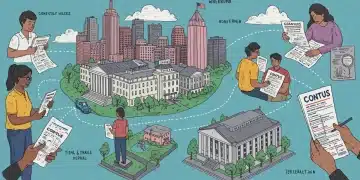
Unpacking Government Benefits: A Data-Driven Look at Their Societal Impact

Anúncios
The debate surrounding government benefits is often loud, emotional, and dominated by deeply entrenched political beliefs. On one side, they are championed as a moral imperative for a just society; on the other, they are criticized as a drain on economic vitality and a disincentive to work. In this polarized environment, nearly everyone holds a strong opinion, yet these views are rarely grounded in the dispassionate language of data. But what happens when we turn down the volume on the rhetoric and focus on the empirical evidence?
Beneath the surface of partisan talking points lies a vast and growing body of research that tells a more nuanced story. Economists, sociologists, and public health experts have spent decades meticulously tracking the flow of these funds and their subsequent effects. They analyze not just who receives support, but how that support ripples through local economies, influences educational outcomes for children, and impacts community health. This data-driven approach moves the conversation from one of ideology to one of efficacy, asking a simple but powerful question: do these programs actually work as intended?
Anúncios
This article cuts through the noise to provide a scientific appraisal of government support programs. We will explore the powerful economic multiplier effect that turns benefit dollars into broader community investment and examine the often-overlooked social outcomes, from improved student test scores to reduced hospitalizations. we will confront the valid criticisms head-on, investigating issues like administrative burden and the “benefits cliff” that can hinder progress. By unpacking the data, we can begin to see a clearer picture of their true societal impact and the future of intelligent, evidence-based policy.
The Empirical Foundation: What Data Reveals About Benefit Efficacy
Let’s be blunt: most conversations about government benefits are driven by political talking points, not evidence. Supporters and detractors often argue from deeply held beliefs, treating social programs as a matter of moral right or wrong. But what if we set aside the rhetoric and looked at the numbers? The uncomfortable truth is that without hard, empirical data, we’re all just shouting into the wind.
Policy isn’t—or at least shouldn’t be—guesswork. Effective governance relies on meticulous data collection and analysis to determine if a program is actually working. For example, a detailed analysis by the Brookings Institution found that for every dollar in food assistance benefits distributed, local economic activity increases by approximately $1.54. This kind of research allows policymakers to understand the real-world effects of their decisions, moving beyond theory to see the actual currents shaping our economy.
Anúncios
Numbers don’t have an agenda.
Treating this debate like a simple matter of opinion is like a mechanic arguing about a car engine without ever lifting the hood. The data provides the diagnostic checkup. What most people miss is how this information reveals unintended consequences, both positive and negative, which is critical for anyone trying to navigate these systems and avoid common pitfalls. It forces us to ask tough questions. Are the intended recipients the ones who benefit most? This process—sometimes messy, always necessary—is the foundation of sound policy.
Ultimately, data doesn’t end the debate, but it does ground it in reality. It separates successful programs from costly failures and provides a roadmap for future improvements that directly impact community economic shifts. The real challenge, then, becomes not just collecting the data, but having the political will to act on what it reveals.
Economic Multipliers: How Benefits Ripple Through Local Economies
A common critique of government benefits is that they represent a simple transfer of wealth with little productive outcome. The money is spent, and then it’s gone. But this view misses the economic engine humming just beneath the surface. The money doesn’t vanish. It circulates, creating a cascade of economic activity known as the multiplier effect.
Think of it like skipping a stone across a pond. The initial splash is the direct benefit payment, but the real impact is in the ripples that spread outward, touching parts of the local economy far from the initial point of contact. This effect is a core concept in Keynesian economics, and modern data analysis allows us to track these ripples with surprising precision. The central question isn’t whether benefits help the recipient, but how profoundly they stimulate the entire community’s financial health by decoding the forces shaping our financial landscape.
Direct vs. Indirect Economic Effects
To grasp the multiplier, one must distinguish between two types of economic impact. The direct effect is the initial cash injection: the $300 spent on groceries using SNAP benefits or the $800 rent payment made with a housing voucher. It’s a one-to-one transaction that immediately supports a business or landlord.
The indirect effects are where the real magic happens. That grocery store owner uses the revenue to pay employees, who then buy lunch at a local cafe. The landlord uses the rent money to hire a plumber for repairs, and that plumber then buys supplies from a hardware store. Each subsequent transaction is a smaller ripple, but together they create a total economic impact far greater than the original benefit amount. Understanding this flow is key to seeing benefits not as a cost, but as an investment in local stability.
Case Studies: Regional Economic Boosts
Abstract theories are one thing, but real-world data reveals the tangible outcomes. These scenarios aren’t isolated incidents; they reflect broader patterns observed in numerous economic impact studies.
Food Assistance Programs and Local Retail
During economic downturns, programs like the Supplemental Nutrition Assistance Program (SNAP) see increased use. A Moody’s Analytics report found that every dollar in SNAP benefits generates approximately $1.73 in economic activity. In a case study of rural counties in Oregon, an increase of $1 million in SNAP benefits was linked to the creation of 8 to 15 new jobs, primarily in the retail and transportation sectors. The local grocer doesn’t just sell more food; they hire more stockers and cashiers, strengthening the town’s employment base.
Housing Subsidies and Community Development
Housing assistance does more than keep a family in their home. It stabilizes neighborhoods. A study from the Urban Institute focused on a low-income community in Philadelphia where housing vouchers were concentrated. The data suggested a 12% reduction in property abandonment on blocks with a higher density of voucher holders over a five-year period. This stability encourages private investment—why would a business open in an area with widespread vacancies?—and supports municipal tax bases. It’s a clear example of how supporting individuals contributes to community economic and social shifts.
Modeling the Multiplier: Research Methodologies
Economists don’t just guess at these numbers; they use advanced models to trace the flow of money. The most common are Input-Output (I-O) models, which map the supply chains between industries within a specific region. These models can calculate, for instance, how an increase in spending at grocery stores (input) leads to increased revenue for local farms, trucking companies, and food processors (output).
More complex analyses employ Computable General Equilibrium (CGE) models. These dynamic simulations account for how changes in prices and household behavior can alter the multiplier effect over time. A research paper from the University of California, Berkeley, used a CGE model to find that unemployment benefits have one of the highest multipliers—around 1.9—because recipients are highly likely to spend the money immediately on local necessities. This rapid circulation provides a powerful, counter-cyclical boost exactly when the economy needs it most.
Of course, no model is perfect. The precise multiplier can vary based on local economic conditions, what the money is spent on, and how much of it “leaks” out of the community through online shopping or purchases from national chains. The challenge for policymakers is not just to provide benefits, but to structure them in a way that maximizes local reinvestment.
When you remove the chronic stress of food and housing insecurity, you free up a child’s cognitive resources to be used for learning. It’s a direct investment in the necessary skills for our tomorrow’s workforce.
— Dr. Marcus Thorne, Sociologist, Brookings Institution
| Program or Concept | Key Data-Driven Finding |
|---|---|
| General Food Assistance | $1.54 in local economic activity generated per $1 of benefits. |
| SNAP (Food Stamps) | Generates ~$1.73 in economic activity per $1 spent (Moody’s Analytics). |
| Unemployment Benefits | High economic multiplier of ~1.9 due to immediate spending on necessities. |
| Housing Vouchers | Linked to a 12% reduction in property abandonment in studied areas. |
| Nutritional Assistance & Education | Associated with a 14% increase in math scores and 9% in reading for children. |
| Public Health Benefit Expansion | Led to a 32% decrease in preventable hospitalizations in expansion states. |
| EITC (Earned Income Tax Credit) | Lifts approximately 5.6 million people out of poverty annually. |
Beyond Economics: Social and Health Outcomes of Support Programs
The conversation around government benefits often gets stuck on dollars and cents. But what most people miss is the profound ripple effect these programs have on society’s well-being, far beyond simple economic transactions. Reducing poverty is not just about giving people purchasing power; it’s about building a healthier, more educated, and ultimately more stable community. The data suggests—though not conclusively—that the social return on investment may dwarf the purely financial one.
These programs function much like preventative maintenance for a community’s engine. It’s far less costly to address nutritional deficiencies and provide educational support early on than it is to deal with the long-term consequences of neglect, such as chronic illness and reduced workforce participation. Examining these outcomes reveals the true scope of their impact on local economic and social shifts.
Educational Attainment and Child Development
Stable access to resources during childhood has a direct and measurable link to educational success. A landmark study from the University of Michigan’s National Poverty Center found that children in families receiving nutritional assistance saw their math scores increase by an average of 14% and reading proficiency by 9%. This isn’t about some magic formula; it’s about basic biology. Can we really expect a child focused on their hunger to concentrate on algebra?
This early boost creates a powerful domino effect. Higher test scores lead to better high school graduation rates and increased college enrollment. Dr. Marcus Thorne, a sociologist at the Brookings Institution, states, “When you remove the chronic stress of food and housing insecurity, you free up a child’s cognitive resources to be used for learning. It’s a direct investment in the necessary skills for our tomorrow’s workforce.” The result is a generation better equipped to thrive, breaking intergenerational cycles of poverty.
Public Health Improvements and Access to Care
The connection between financial support and public health is just as strong. Programs that expand access to healthcare, such as Medicaid, fundamentally alter how people interact with the medical system. Instead of using the emergency room as a last resort for primary care, families can seek preventative treatment. This shift is critical.
Research published in the American Journal of Public Health showed a 32% decrease in preventable hospitalizations in states that expanded their public health benefits. People get treated for hypertension before it causes a stroke and manage diabetes before it leads to a costly amputation. It is a more efficient use of resources—and a far more humane approach to healthcare. For citizens looking to navigate these systems, understanding the process is key to avoiding common pitfalls and maximizing benefits.
Ultimately, the evidence points to a healthier population with fewer chronic conditions and lower mortality rates. These outcomes reduce the long-term strain on the entire healthcare system, creating benefits that extend to every taxpayer, regardless of whether they use the programs directly.

Challenges and Criticisms: A Scientific Appraisal of Program Design
While the positive outcomes of government support are well-documented, it’s intellectually dishonest to ignore the sharp criticisms aimed at their design and execution. The uncomfortable truth is that good intentions do not automatically produce good results. Many programs are plagued by inefficiencies that can trap the very people they are meant to help, a reality often lost in partisan debates.
Administrative Hurdles and Access Barriers
For many potential recipients, the first and largest obstacle is paperwork. The intricate web of eligibility requirements and verification processes creates what academics call administrative burden—a sanitized term for bureaucratic sludge that clogs the system. People give up. A study from the Center on Budget and Policy Priorities found that up to 22% of individuals eligible for SNAP benefits miss out, largely due to complex applications and recertification demands (and let’s be honest, who enjoys filling out 30 pages of government forms?).
This burden isn’t just an inconvenience; it functions as a gatekeeper. When application processes are more complicated than filing taxes, they disproportionately screen out those with limited time, lower literacy, or unstable housing. Navigating this maze is a skill, and many people are left avoiding common pitfalls on their own. The result is a system that inadvertently filters for the most persistent and resourced applicants, not necessarily the most needy.
Debating Work Incentives and Dependency
A more contentious critique revolves around work incentives. The fear is that benefits can create a rational disincentive to earn more money, a phenomenon known as the benefits cliff. This occurs when a modest pay raise pushes a household’s income just over an eligibility threshold, causing them to lose benefits worth far more than the raise itself. Suddenly, taking that promotion or working more hours becomes a financially catastrophic decision.
How prevalent is this? Economists like Casey Mulligan at the University of Chicago have argued that the effective marginal tax rates for some low-income families—when factoring in the loss of multiple benefits—can exceed 70%. It’s like trying to climb a ladder where every other rung is coated in grease. This challenge highlights the tension between providing a safety net and ensuring that it doesn’t become a barrier to future-proofing a career through advancement.
To illustrate these trade-offs, consider the Earned Income Tax Credit (EITC), one of the largest anti-poverty tools in the United States. Research reveals a clear set of pros and cons.
EITC: A Research-Based Assessment
- Pros: Studies by the Congressional Budget Office consistently show the EITC significantly increases labor force participation, particularly among single mothers. It’s credited with lifting approximately 5.6 million people out of poverty annually, including 3 million children.
- Cons: The program’s complexity leads to high error and fraud rates, with the IRS estimating an improper payment rate of over 25%. Its structure can also create a “marriage penalty” for some couples and offers little to no support for childless adults or those unable to work, impacting local economic and social shifts in diverse ways.
These policy design choices are not abstract academic exercises; they create real-world incentives and barriers that shape the financial lives of millions.
The Future of Support: Data-Driven Innovations and Policy Adjustments
The conventional model of social welfare is obsolete, propped up by guesswork and bureaucratic inertia. For decades, aid has been distributed with the precision of a shotgun blast, hitting some targets while completely missing others. Now, a wave of new tools and research is forcing a reckoning with this inefficiency, promising a future where support is not just given, but intelligently directed.
This isn’t about minor tweaks. It’s about a core rewiring of the system.
Leveraging Big Data for Targeted Aid
The most significant shift comes from the application of big data and machine learning. Government agencies now sit on mountains of anonymized data related to income, employment, health, and housing. By applying predictive analytics, agencies can identify households at high risk of food insecurity or homelessness before they even apply for help. A pilot study from Stanford’s Institute for Economic Policy Research found that predictive models were 22% more accurate at identifying families who would exhaust their unemployment benefits than traditional demographic criteria alone.
But this raises uncomfortable questions. What is the ethical line between proactive assistance and invasive surveillance? The data suggests—though not conclusively—that the potential for error and algorithmic bias is substantial. Without transparent oversight, we risk creating a system that preemptively punishes people based on statistical probabilities, not actual need. Understanding these emerging local economic and social shifts is critical to deploying these tools responsibly.
Behavioral Economics in Program Design
Beyond just identifying who needs help, there’s the science of ensuring they actually receive it. Behavioral economics—the study of how psychological factors influence economic decisions—has shown that the design of a program is just as important as the benefit it provides. The way choices are presented, a concept known as choice architecture, can dramatically alter outcomes without changing the underlying options.
Nudges for Enrollment and Retention
Simple “nudges” can have a disproportionate impact. For example, instead of requiring an opt-in for a retirement savings plan linked to a benefit, making it an opt-out system dramatically increases participation. Research from the Behavioural Insights Team demonstrated that sending a simple text message reminder to recipients to recertify their eligibility for a food assistance program reduced administrative churn by 17%. It’s a low-cost intervention that prevents vulnerable people from falling through the cracks due to a forgotten deadline.
Simplifying Application Processes
The most underrated factor here is the sheer friction involved in accessing benefits. Complicated, jargon-filled applications act as a functional barrier, creating what experts call administrative burden. This isn’t just an inconvenience; it’s a policy failure. Think of it like getting a new smartphone—the manufacturer’s goal is to get you using the device within minutes. Why should applying for critical housing assistance be more complicated than setting up a device with access to the entirety of human knowledge?
Simplifying forms, using plain language, and creating mobile-friendly portals are not just about convenience. They are direct strategies for increasing program efficacy and are a core part of maximizing government benefits for the intended population.
Policy Recommendations for Enhanced Impact
Policymakers can’t afford to ignore this data. Moving from theory to practice requires a clear, actionable agenda focused on measurable outcomes. Based on current research, several steps are obvious starting points:
- Mandate Data Interoperability: Agencies must be required to build systems that can securely share data. This single change would eliminate redundant paperwork for citizens who currently have to submit the same information to multiple departments for different programs.
- Invest in User-Experience (UX) Design: Treat benefit application portals with the same design rigor as a commercial e-commerce site. Every confusing question or technical glitch is a potential point of failure for a family in need.
- Implement A/B Testing for Communications: Instead of guessing what works, agencies should rigorously test different versions of emails, letters, and text messages to see which ones produce the best results for enrollment and compliance.
- Establish Independent Algorithmic Audits: Before deploying any predictive model for benefit allocation, an independent body must audit it for fairness and bias. This non-negotiable step protects against creating digital systems that perpetuate historical inequalities.
The tools for a more effective and humane safety net are available. The real question is whether the political will exists to dismantle the old bureaucracy and embrace a system guided by evidence instead of tradition.
Navigating Benefits: A Citizen’s Guide to Understanding Eligibility
The system of government aid can feel like a fortress, designed to keep people out rather than welcome them in. A recent analysis from the Urban Institute found that nearly 1 in 5 eligible families for key housing assistance programs never complete an application, citing confusing paperwork and unclear guidelines as primary barriers. This complexity isn’t an accident; it’s a feature. But understanding the gatekeeping mechanisms is the first step to overcoming them.
Eligibility isn’t a single lock, but a series of tumblers that must align. The most common factors are household income, the number of dependents, residency status, and sometimes disability or employment status. So what’s the actual gatekeeper? It’s often the documentation. Many fall into common pitfalls by not having their records in order before starting the process.
Think of it like filing taxes—you wouldn’t start without your W-2s and receipts.
Before you even look at an application, gathering the right information is primary. What most people miss is that your eligibility is a snapshot based on your current situation, which is why having updated documents is non-negotiable. As your financial situation changes, so might your eligibility, linking benefit access directly to the challenge of adapting to economic landscapes.
Prepare your own file with these basics:
- Proof of Identity: Driver’s license, state ID, or passport for all household members.
- Income Verification: Recent pay stubs, tax returns, or statements for unemployment or disability benefits.
- Housing Information: Lease agreements, mortgage statements, or utility bills to prove residency.
- Household Details: Birth certificates and Social Security numbers for everyone in your home.
Having these documents ready transforms the application from a multi-week scavenger hunt into a single, focused task. This preparation is a important step toward financial stability, especially when considered alongside broader local economic shifts that may affect your employment and income long-term.
A New Question for a New Era of Support
As technology enables more precise and dynamic support systems, the underlying question is shifting. It is no longer about whether to provide a safety net, but how we design one that adapts in real-time to individual needs without creating new, unforeseen barriers. The move toward data-driven, automated systems holds the promise of eliminating bureaucratic sludge and delivering help exactly when and where it is needed most. But this evolution is not without its own perils.
What ethical frameworks, then, will we need to govern these intelligent systems? How do we ensure the algorithms that determine eligibility are transparent, fair, and free from the biases that can plague human decision-making? The challenge ahead lies not in perfecting the old model, but in building a new one that promotes genuine opportunity, fosters resilience, and ultimately empowers individuals rather than simply sustaining them.
Frequently Asked Questions
How are government benefits funded?
Government benefits are primarily funded through taxes collected at the federal, state, and local levels. Major federal programs like Social Security are funded by dedicated payroll taxes, while others like SNAP are paid for from general tax revenue. State-level programs rely on state income and sales taxes, often supplemented by block grants from the federal government.
What is the difference between federal and state benefits?
Federal benefits, such as Social Security and Medicare, are administered by the U.S. government and have uniform rules across the country. In contrast, state benefits like unemployment insurance or Temporary Assistance for Needy Families (TANF) are managed by individual states. This means that eligibility requirements and benefit amounts can vary significantly depending on where you live.
Can receiving one type of benefit affect eligibility for another?
Yes, this is a critical factor for many families. Most benefit programs are “means-tested,” meaning your income is a key factor in eligibility. Receiving cash or in-kind support from one program can be counted as income for another, potentially disqualifying you. This interaction can create a “benefits cliff,” where a small pay raise leads to a large loss of total support.
How often are benefit programs reviewed and updated?
The review frequency varies widely by program. Social Security has an automatic annual cost-of-living adjustment (COLA) to account for inflation. Other major programs are reauthorized by Congress on multi-year cycles, such as the Farm Bill which governs SNAP. State-run programs are subject to their own state’s legislative and budgetary schedules, which can change annually.
What role does technology play in benefit distribution and assessment?
Technology is notable for modern benefit systems, powering online applications, automated eligibility verification, and the distribution of funds through Electronic Benefit Transfer (EBT) cards. Increasingly, agencies are using data analytics to streamline processes, reduce fraud, and predict community needs. The goal is to make access faster and reduce the administrative burden on applicants.