Federal Unemployment Benefits 2025: Eligibility & Extended Aid

Anúncios
Understanding the eligibility criteria and extended assistance options for Federal Unemployment Benefits in 2025 is essential for navigating potential job loss and securing vital financial support.
Anúncios
As we look ahead to 2025, the landscape of Federal Unemployment Benefits 2025 continues to be a critical topic for many American workers and their families. Economic shifts, technological advancements, and legislative changes can all influence the availability and structure of these vital support systems. This comprehensive guide aims to demystify the federal unemployment benefits system, offering clarity on eligibility, application processes, and potential extended assistance options for the coming year.
Anúncios
Understanding the Basics of Federal Unemployment Benefits
Federal unemployment benefits serve as a financial lifeline for individuals who lose their jobs through no fault of their own. While administered by individual states, these programs often receive federal funding and adhere to federal guidelines, especially during times of economic distress. The core purpose remains consistent: to provide temporary income replacement, allowing recipients to cover essential expenses while actively seeking new employment.
It’s important to differentiate between state and federal programs. State unemployment insurance (UI) is the primary source of benefits, funded by taxes on employers. Federal involvement typically comes in the form of extensions or supplementary programs enacted during recessions or national emergencies to bolster state efforts. Understanding this duality is crucial for anyone seeking to claim benefits in 2025.
Current Legislative Framework and Potential Changes
- State-Administered Programs: Each state has its own specific rules regarding benefit amounts, duration, and eligibility.
- Federal Oversight: The U.S. Department of Labor provides general guidelines and oversight for state UI programs.
- Emergency Legislation: Past federal expansions, like those during the pandemic, highlight the potential for future legislative action in response to economic downturns.
The interplay between state and federal regulations means that benefit amounts and durations can vary significantly depending on where you live. Staying informed about both federal legislative updates and your specific state’s unemployment agency is paramount. These benefits are not an entitlement for everyone; strict criteria must be met to qualify.
Eligibility Criteria for Federal Unemployment Benefits in 2025
Qualifying for federal unemployment benefits in 2025 will largely hinge on meeting specific criteria, which are primarily determined at the state level but influenced by federal standards. While the exact rules can vary, several foundational requirements are universally applied. These ensure that benefits are directed to those genuinely in need and actively seeking re-employment.
Key Eligibility Requirements
To be eligible, individuals must generally meet criteria related to their past earnings, reason for job separation, and availability for work. Understanding these aspects is the first step toward a successful claim.
- Reason for Job Separation: You must have lost your job through no fault of your own. This typically includes layoffs, company closures, or reductions in force. Quitting voluntarily without good cause or being fired for misconduct usually disqualifies applicants.
- Work and Wage Requirements: States require applicants to have worked a certain amount and earned a minimum amount of wages during a specific period (known as the ‘base period’) prior to filing a claim. This ensures that only individuals with a recent work history contribute to the system before drawing benefits.
- Able and Available for Work: Claimants must be physically and mentally able to work and actively seeking new employment. This often involves regular job searches, attending interviews, and being ready to accept suitable work.
Navigating these requirements can sometimes be complex, especially with unique employment situations or health considerations. It’s advisable to consult your state’s unemployment agency for precise details tailored to your circumstances. The process often involves detailed documentation of your work history and efforts to find employment.
Application Process and Required Documentation
Applying for federal unemployment benefits, while primarily handled by state agencies, follows a generally consistent process across the United States. Preparing the necessary documentation and understanding the steps involved can significantly streamline your application and prevent delays. Accuracy and completeness are key to a successful claim.
Steps to File an Unemployment Claim
The application process typically begins online or over the phone with your state’s unemployment agency. It’s crucial to file your claim as soon as you become unemployed, as benefits are usually not retroactive to your last day of work.
- Gather Information: Collect all necessary documents before starting your application. This includes personal identification, employment history, and wage information.
- Submit Your Application: Complete the initial application form, providing accurate details about your past employment, reason for separation, and personal information.
- Certify Weekly Benefits: Once approved, you will typically need to certify your eligibility weekly or bi-weekly, confirming that you are still unemployed, able and available for work, and actively seeking employment.
Essential Documents for Application
Having the right documents on hand will make the application much smoother. Missing information can lead to significant delays in processing your claim.
- Social Security Number: Your SSN is required for identification and wage verification.
- Driver’s License or State ID: Proof of identity and residency.
- Employment History: Names and addresses of all employers for the past 18-24 months, including dates of employment and reasons for separation.
- Wage Information: Pay stubs, W-2 forms, or other proof of earnings to establish your base period wages.
- Bank Account Information: For direct deposit of benefits, if chosen.
It’s also wise to keep records of all communications with the unemployment office, including confirmation numbers and dates. This can be invaluable if you need to appeal a decision or clarify any discrepancies.
Duration and Amount of Federal Unemployment Benefits
The duration and amount of federal unemployment benefits are critical considerations for anyone relying on this support. These figures are not static and are primarily determined by state law, though federal legislation can introduce temporary extensions or supplementary payments during economic crises. Understanding how these calculations work can help individuals plan their finances more effectively.
How Benefit Amounts Are Calculated
State agencies generally calculate weekly benefit amounts based on a claimant’s earnings during their base period. This ensures that benefits are somewhat proportional to an individual’s previous income, though there are typically minimum and maximum weekly benefit amounts.
- Base Period Wages: States look at your highest earnings over a specific period (usually the first four of the last five completed calendar quarters before you filed your claim) to determine your weekly benefit amount.
- State-Specific Formulas: Each state employs a unique formula to calculate the exact weekly payment, often involving a percentage of your average weekly wage during the base period.
- Maximum and Minimum Benefits: All states have a cap on the maximum weekly amount an individual can receive, as well as a minimum payment.
Standard Benefit Duration
In most states, regular unemployment benefits are available for a maximum of 26 weeks. However, this can vary, with some states offering fewer weeks and others more. The duration is a fixed period, regardless of how long it takes to find new employment within that window.
It is important to remember that these benefits are intended to be temporary. While they provide essential relief, they are not designed as a long-term income replacement. Actively seeking new employment remains a key requirement throughout the benefit period.
Extended Assistance Options and Federal Programs
While standard state unemployment benefits typically last for a fixed period, federal legislation can activate extended assistance options during periods of high unemployment or economic recession. These programs are designed to provide additional support when job markets are particularly challenging, ensuring a safety net for those who exhaust their regular benefits.
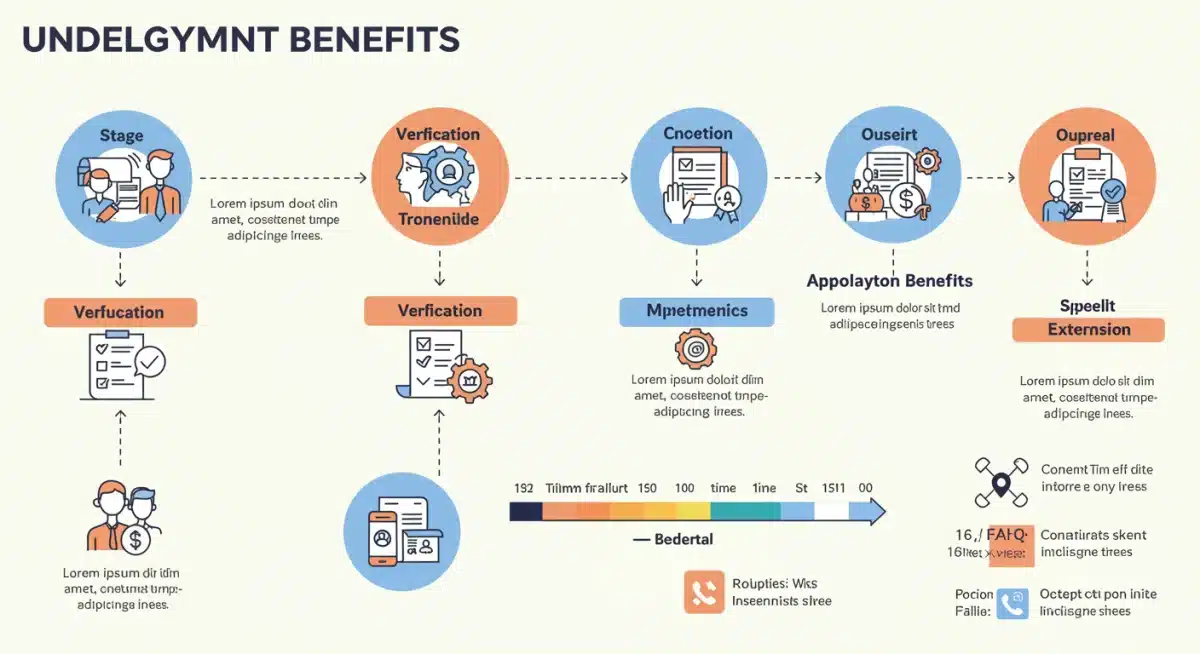
Emergency Unemployment Compensation (EUC) and Other Federal Extensions
Historically, Congress has passed various federal programs to extend unemployment benefits beyond the standard state duration. While specific program names and structures can change, the underlying principle is to provide additional weeks of aid when unemployment rates are elevated nationally or within individual states.
- Federally Funded Extensions: These programs are typically 100% federally funded and are triggered by specific economic indicators, such as a state’s insured unemployment rate.
- Tiered Systems: Often, these extensions are implemented in tiers, providing additional weeks of benefits as unemployment severity increases.
- Pandemic-Era Programs: During the COVID-19 pandemic, programs like Pandemic Unemployment Assistance (PUA) and Pandemic Emergency Unemployment Compensation (PEUC) offered unprecedented levels of federal support, including benefits for self-employed individuals and extended durations.
It is crucial for claimants to stay informed about any federal legislation that might activate or modify these extended benefits. Such programs are not permanent fixtures and often have expiration dates or conditions for their implementation. Should economic conditions necessitate it, similar federal interventions could be enacted in 2025 to provide additional weeks of assistance.
Taxation of Unemployment Benefits and Financial Planning
Receiving unemployment benefits can provide much-needed financial relief, but it’s crucial to understand the tax implications. Federal unemployment benefits, along with most state unemployment compensation, are considered taxable income by the IRS. Proper financial planning is essential to avoid unexpected tax burdens.
Understanding Taxable Income
Many individuals are surprised to learn that unemployment benefits are not tax-free. They must be reported on your federal income tax return, and in some states, they are also subject to state income tax.
- Federal Income Tax: All unemployment benefits are subject to federal income tax. You can choose to have taxes withheld from your weekly payments or pay estimated taxes quarterly.
- State Income Tax: Some states also tax unemployment benefits. It’s important to check your state’s specific tax laws to understand your obligations.
- Form 1099-G: At the end of the year, you will receive Form 1099-G from your state unemployment agency, which reports the total amount of unemployment compensation you received during the tax year.
Strategies for Financial Planning
Proactive financial planning can help mitigate the impact of taxes on your unemployment benefits and manage your finances during a period of joblessness.
- Withholding Taxes: Opting to have federal income tax (and state tax, if applicable) withheld from your weekly payments can prevent a large tax bill at year-end.
- Budgeting: Create a strict budget to manage your reduced income effectively. Prioritize essential expenses and cut back on non-essential spending.
- Emergency Savings: Utilizing any existing emergency savings can supplement your unemployment benefits and provide a buffer.
Consulting with a tax professional can provide personalized advice on how to manage the tax implications of your unemployment benefits and ensure you are meeting all your tax obligations. Being prepared can alleviate additional stress during an already challenging time.
Resources and Support for Unemployed Individuals
Beyond financial assistance, there are numerous resources and support systems available to unemployed individuals. These resources can aid in job searching, skill development, and mental well-being, helping claimants transition back into the workforce more quickly and effectively. Navigating unemployment can be isolating, but a wealth of support exists.
Government and Community Programs
Many government agencies and local organizations offer free or low-cost services designed to assist job seekers. These range from career counseling to training programs.
- State Workforce Agencies: These agencies often provide job search assistance, resume writing workshops, interview coaching, and access to job listings.
- One-Stop Career Centers: Found in local communities, these centers offer comprehensive employment services, including skill assessments, training referrals, and job placement assistance.
- Community Colleges and Vocational Schools: Many offer short-term training programs or certifications that can enhance your skills and make you more competitive in the job market.
Mental Health and Well-being Support
Losing a job can take a significant toll on mental health. Accessing support services is crucial for maintaining well-being during this challenging period.
- Counseling Services: Many community organizations and healthcare providers offer counseling or therapy services to help individuals cope with the stress and emotional impact of unemployment.
- Support Groups: Connecting with others who are experiencing similar challenges can provide a sense of community and shared understanding.
- Online Resources: Numerous websites and apps offer tools for managing stress, improving mental health, and staying motivated during a job search.
Taking advantage of these resources can not only help you find a new job faster but also ensure your overall well-being. It’s a holistic approach to navigating the complexities of unemployment, offering more than just financial aid.
| Key Aspect | Brief Description |
|---|---|
| Eligibility | Must have lost job through no fault of your own, meet wage requirements, and be actively seeking work. |
| Application Process | File with state agency, submit documentation, and weekly certify eligibility. |
| Extended Options | Federal programs may offer additional weeks during high unemployment periods. |
| Taxation | All unemployment benefits are considered taxable income by the IRS. |
Frequently Asked Questions About Unemployment Benefits
While core state-level benefits remain consistent, federal unemployment benefits in 2025 could differ if new legislation is passed in response to economic conditions. Historically, federal extensions are temporary and enacted during recessions or emergencies.
Eligibility for extended benefits in 2025 would depend on specific federal legislation that might be enacted. Typically, these are for individuals who have exhausted their regular state benefits and meet additional criteria during periods of high unemployment.
Yes, all unemployment benefits, whether federal or state, are considered taxable income by the IRS and must be reported on your federal income tax return for 2025. Some states may also tax these benefits.
You apply for unemployment benefits through your state’s unemployment insurance agency. While federally influenced, the application process is state-specific. You’ll need personal and employment information, and you’ll typically file online.
If you exhaust your regular state benefits, you might be eligible for extended federal benefits if such programs are active in 2025 due to economic conditions. Your state unemployment agency will typically inform you of any available extensions.
Conclusion
Navigating the complexities of federal unemployment benefits in 2025 requires vigilance and a clear understanding of both state and potential federal guidelines. While the landscape can shift with economic conditions and legislative actions, the fundamental purpose of these benefits remains to provide a crucial safety net for those experiencing job loss. By staying informed about eligibility criteria, understanding the application process, and being aware of extended assistance options, individuals can better prepare for and manage periods of unemployment. Proactive financial planning and utilizing available resources are key to successfully transitioning back into the workforce and maintaining stability during challenging times.