Energy Sector Shifts 2026: Economic Impact Across the U.S.
Anúncios
The United States energy landscape is a dynamic and ever-evolving tapestry, constantly shaped by technological innovation, geopolitical forces, and shifting environmental priorities. As we delve into a comprehensive 3-month review of 2026, it becomes clear that the energy sector shifts underway are not merely incremental adjustments but rather profound transformations with far-reaching economic ripple effects across the entire nation. This analysis will explore the intricate interplay between policy decisions, market dynamics, and technological advancements that are redefining how energy is produced, consumed, and integrated into the U.S. economy.
Anúncios
Understanding these shifts is crucial for policymakers, businesses, and citizens alike. The implications touch everything from job creation and regional economic stability to national security and global competitiveness. The period under review, the first quarter of 2026, has seen a confluence of factors accelerating these changes, making it a pivotal moment in the ongoing energy transition. From the continued push towards decarbonization to the strategic recalibration of fossil fuel production, every facet of the energy sector is experiencing significant movement, demanding careful observation and strategic adaptation.
The Driving Forces Behind Current Energy Sector Shifts
Several key drivers are propelling the current energy sector shifts in the U.S. economy. These forces are interconnected, creating a complex web of cause and effect that influences investment, innovation, and infrastructure development. Recognizing these drivers is the first step toward comprehending the broader economic impact.
Government Policy and Regulatory Frameworks
Government policy remains a paramount driver. In 2026, the legislative and regulatory environment continues to favor renewable energy deployment and carbon emission reduction targets. Federal incentives, such as tax credits for solar and wind projects, alongside stricter emissions standards for traditional power plants, are catalyzing significant investment in clean energy technologies. State-level mandates, often more aggressive than federal ones, further amplify these trends, creating diverse regional energy markets with varying degrees of renewable penetration.
Anúncios
The Infrastructure Investment and Jobs Act, passed in previous years, continues to funnel substantial funding into upgrading the nation’s grid infrastructure, enhancing its resilience and capacity to integrate intermittent renewable sources. This investment is not just about clean energy; it’s also about modernizing an aging system, reducing transmission losses, and preparing for a future where electricity demand grows with electrification of transportation and other sectors. These policy-driven investments create direct economic benefits through job creation in construction, manufacturing, and engineering, while also laying the groundwork for long-term economic growth by ensuring a reliable and sustainable energy supply.
Technological Advancements and Innovation
Innovation is the engine of change in the energy sector. Advances in battery storage technology, for instance, are rapidly improving the reliability and dispatchability of renewable energy. The declining cost of lithium-ion batteries and the emergence of new storage solutions are making solar and wind power more competitive and capable of providing baseload power, traditionally the domain of fossil fuels. This technological leap is critical for overcoming one of the primary challenges of renewable energy: intermittency.
Furthermore, breakthroughs in small modular reactors (SMRs) are revitalizing interest in nuclear power as a carbon-free, always-on energy source. While regulatory hurdles and public perception remain significant challenges, the promise of SMRs to provide clean, reliable power with a smaller footprint and enhanced safety features is attracting considerable attention and investment. The first quarter of 2026 has seen accelerated research and development in this area, with several pilot projects moving closer to commercialization.
Beyond generation, advancements in smart grid technologies, artificial intelligence for energy management, and efficient energy consumption devices are also playing a crucial role. These innovations optimize energy use, reduce waste, and empower consumers with greater control over their energy consumption, contributing to both economic efficiency and environmental sustainability.
Global Market Dynamics and Geopolitical Influences
The U.S. energy sector does not operate in isolation. Global oil and gas prices, influenced by geopolitical events, OPEC+ decisions, and global demand fluctuations, continue to exert significant pressure. While the U.S. has achieved greater energy independence through its shale revolution, global prices still dictate the profitability of domestic fossil fuel production and impact consumer energy costs. The first three months of 2026 have witnessed a period of moderate volatility in global energy markets, driven by ongoing geopolitical tensions and evolving demand forecasts from major economies.
The increasing global emphasis on climate change and decarbonization also affects U.S. energy policy and investment. International agreements and carbon pricing mechanisms in other major economies create both pressure and opportunities for U.S. businesses. Companies that innovate in clean energy technologies find expanding export markets, while those reliant on high-carbon processes face increasing scrutiny and potential trade barriers.
Economic Ripple Effects Across U.S. Regions
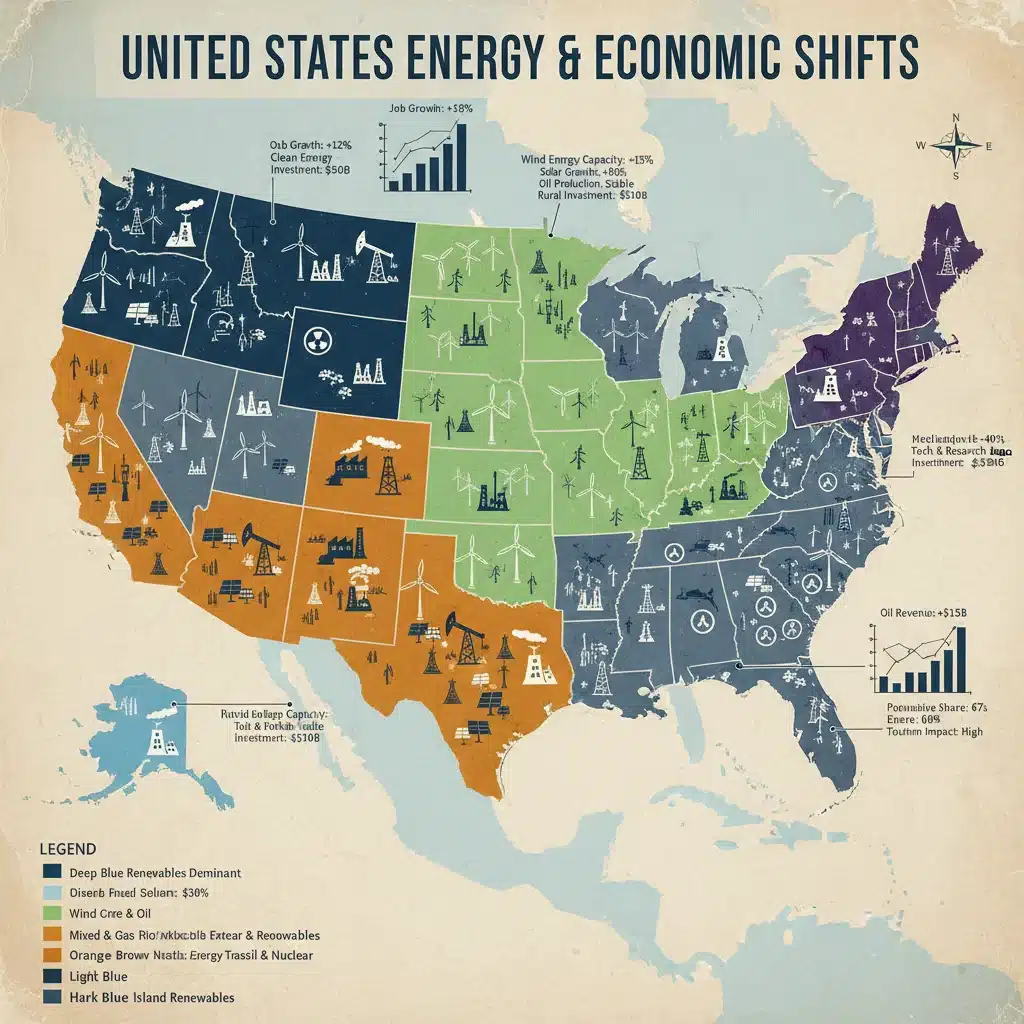
The energy sector shifts are not uniform across the United States; their economic ripple effects vary significantly by region, reflecting diverse energy mixes, economic structures, and policy environments.
The Northeast: A Hub for Offshore Wind and Grid Modernization
The Northeast continues its aggressive pursuit of offshore wind development. States like New York, Massachusetts, and New Jersey are investing billions in large-scale offshore wind farms, creating a burgeoning supply chain for turbine manufacturing, installation, and maintenance. This has led to significant job growth in coastal communities, transforming former industrial ports into hubs for renewable energy infrastructure. The associated economic benefits extend to related industries such as maritime services, engineering, and advanced manufacturing.
Simultaneously, the region is heavily focused on grid modernization to integrate these new renewable sources and improve resilience against extreme weather events. This involves substantial investment in smart grid technologies, energy storage, and transmission upgrades, providing further economic stimulus and creating a more robust energy system.
The Southeast: Balancing Growth with Energy Transition
The Southeast presents a more mixed picture. While it continues to rely significantly on natural gas and nuclear power, there’s a growing embrace of solar energy, particularly in states like Florida, Georgia, and North Carolina. Large-scale solar farms are becoming more common, attracting utility-scale investment and generating local employment. However, the region also faces the challenge of managing the transition away from coal-fired power plants, leading to economic adjustments in communities historically dependent on coal mining and power generation.
The economic impact here involves retraining programs for displaced workers, investment in new industries, and the strategic repurposing of former industrial sites. The first quarter of 2026 has seen several states in the Southeast announce new initiatives to attract clean energy manufacturing, aiming to diversify their economic base while meeting growing energy demands.
The Midwest: Agricultural Land Meets Renewable Energy
The Midwest, with its vast open spaces, is becoming a powerhouse for onshore wind energy. States like Iowa, Kansas, and Oklahoma are seeing continued expansion of wind farms, generating significant revenue for landowners through lease payments and creating jobs in construction and operations. Furthermore, the region is exploring the potential of bioenergy and sustainable aviation fuels, leveraging its agricultural strengths to produce renewable fuels. This creates new markets for agricultural products and stimulates innovation in biorefining technologies.
The economic benefits are palpable, supporting rural economies and attracting investment in associated manufacturing and research. The integration of renewable energy projects with agricultural practices also presents unique opportunities for land management and environmental stewardship.
The Southwest: Solar Dominance and Water Challenges
The Southwest, with its abundant sunshine, is a natural leader in solar energy. Arizona, Nevada, and California continue to lead the nation in solar capacity, driving down the cost of electricity for consumers and businesses. This solar boom supports a thriving industry for solar panel manufacturing, installation, and maintenance. However, the region also grapples with significant water scarcity, which impacts energy production, particularly for traditional thermal power plants and, to a lesser extent, some concentrated solar power technologies.
The economic ripple effects include robust job growth in the renewable energy sector, but also an increased focus on water-efficient energy solutions and advanced desalination technologies to support both energy and population growth. The first three months of 2026 have seen continued investment in large-scale battery storage co-located with solar farms, further enhancing grid stability and reliability in this sun-drenched region.
The Mountain West: Resource Extraction and Emerging Renewables
The Mountain West, historically rich in fossil fuel resources, is experiencing a dual transformation. While states like Wyoming and Colorado continue to play a significant role in oil, gas, and coal production, there’s a growing emphasis on carbon capture technologies and responsible resource management. Simultaneously, the region boasts immense potential for geothermal energy and hydropower, which are gaining traction as reliable, baseload renewable sources. Uranium mining for nuclear power also remains a vital part of the regional economy.
The economic impact involves a delicate balance between supporting existing industries and fostering new ones. Investment in carbon capture, utilization, and storage (CCUS) projects is creating a new segment of the energy economy, while the development of geothermal and hydropower projects diversifies the energy portfolio and creates green jobs. This region is a microcosm of the national challenge: how to transition towards a cleaner energy future while minimizing economic disruption to communities built around traditional energy industries.
The Pacific Northwest: Hydropower and Green Hydrogen
The Pacific Northwest benefits from extensive hydropower resources, providing a significant portion of its electricity. The region is now at the forefront of developing green hydrogen, using renewable electricity to split water and produce a clean fuel that can be used for industrial processes, heavy transportation, and energy storage. This emerging industry has the potential to create a new economic engine, attracting investment in electrolyzer manufacturing, hydrogen production facilities, and distribution infrastructure.
The economic ripple effects include job creation in advanced manufacturing, engineering, and chemical processing, positioning the Pacific Northwest as a leader in the global hydrogen economy. The first quarter of 2026 has seen several major announcements regarding green hydrogen pilot projects and partnerships, signaling a strong commitment to this innovative energy pathway.
Impact on Key Economic Sectors
The energy sector shifts are not confined to the energy industry itself; they reverberate across various key economic sectors, creating both challenges and opportunities.
Manufacturing and Industrial Sector
The manufacturing sector is undergoing a significant transformation. The demand for renewable energy components – solar panels, wind turbine blades, battery cells, and electric vehicle components – is fueling a resurgence in domestic manufacturing. This creates high-skilled jobs and strengthens supply chains, reducing reliance on foreign imports. However, energy-intensive industries are also facing pressure to decarbonize their operations, leading to investments in energy efficiency, electrification, and, in some cases, the adoption of carbon capture technologies. The availability of reliable and affordable clean energy is becoming a competitive advantage for industrial businesses.
Transportation Sector
The electrification of transportation is a monumental shift. The rapid adoption of electric vehicles (EVs), from passenger cars to heavy-duty trucks, is driving demand for charging infrastructure, battery manufacturing, and new service models. This creates a vast ecosystem of economic activity, from urban planning for charging networks to innovations in battery recycling. The first three months of 2026 have seen continued strong EV sales growth, pushing utilities to accelerate grid upgrades and expand charging capabilities. Furthermore, the development of sustainable aviation fuels and hydrogen-powered transportation is beginning to gain traction, promising further disruption and economic opportunity in the long term.
Agriculture Sector
The agriculture sector is impacted by energy costs for irrigation, machinery, and transportation. The rise of bioenergy and renewable natural gas (RNG) from agricultural waste offers new revenue streams for farmers. Additionally, the development of agrivoltaics – combining solar power generation with agriculture on the same land – presents opportunities for dual income generation and more efficient land use. Farmers are increasingly becoming energy producers, diversifying their operations and contributing to the nation’s energy security.
Real Estate and Construction
The construction sector is experiencing a boom related to energy infrastructure. This includes building new renewable energy facilities, upgrading transmission lines, and constructing EV charging stations. Furthermore, the demand for energy-efficient buildings, equipped with smart home technologies and on-site solar, is reshaping residential and commercial construction practices. Green building certifications and energy performance standards are increasingly influencing property values and development decisions, creating a market for specialized skills and materials.
Challenges and Opportunities in the Energy Transition
While the energy sector shifts present immense opportunities, they are not without challenges. Navigating these complexities will be critical for a successful and equitable energy transition.
Workforce Development and Reskilling
The transition creates a demand for new skills in renewable energy installation, grid management, data analytics, and advanced manufacturing. Simultaneously, it can lead to job displacement in traditional fossil fuel industries. A major challenge is ensuring that the workforce is adequately trained and reskilled to meet the needs of the evolving energy economy. Investment in vocational training programs, community college initiatives, and apprenticeships is crucial to bridge this skills gap and ensure a just transition for all workers.
Grid Modernization and Resilience
Integrating a growing share of intermittent renewable energy sources into an aging grid requires substantial investment in modernization. Enhancing grid flexibility, resilience, and cybersecurity is paramount to prevent blackouts and ensure a stable power supply. This involves not only physical upgrades but also the deployment of advanced software and artificial intelligence to manage complex energy flows. The first quarter of 2026 has highlighted the ongoing need for significant capital expenditure in this area, with several grid operators announcing multi-billion dollar investment plans.
Supply Chain Vulnerabilities
The rapid expansion of clean energy technologies has exposed vulnerabilities in global supply chains, particularly for critical minerals like lithium, cobalt, and rare earth elements. Diversifying sourcing, promoting domestic extraction and processing, and investing in recycling technologies are essential to ensure the long-term sustainability and security of the clean energy transition. Geopolitical tensions can exacerbate these vulnerabilities, making strategic international partnerships and domestic industrial policies crucial.
Financing and Investment
Mobilizing the trillions of dollars required for the energy transition is a significant undertaking. While private investment is flowing into clean energy, government incentives and innovative financing mechanisms are still necessary to de-risk projects, particularly for nascent technologies or in underserved communities. Public-private partnerships and green bonds are playing an increasingly important role in channeling capital towards sustainable energy projects.
Future Outlook and Policy Implications
Looking beyond the first quarter of 2026, the trajectory of energy sector shifts suggests several key trends and policy implications. The pace of change is expected to accelerate, driven by continued technological innovation and growing societal demand for sustainable solutions.
Continued Decarbonization Efforts
The push towards decarbonization will intensify. Expect more aggressive emissions targets, both at the federal and state levels, and increased adoption of carbon pricing mechanisms. This will drive further investment in renewables, nuclear power, and CCUS technologies, while gradually phasing out unabated fossil fuel use in power generation and heavy industry.
Emergence of New Energy Vectors
Beyond electricity, new energy vectors like green hydrogen and advanced biofuels will play a more prominent role, especially in hard-to-decarbonize sectors like heavy industry, shipping, and aviation. Policy support for research, development, and commercialization of these technologies will be crucial for scaling them up.
Focus on Energy Equity and Environmental Justice
There will be a growing emphasis on ensuring that the benefits of the energy transition are distributed equitably and that historically disadvantaged communities are not left behind. This includes addressing energy poverty, ensuring access to clean energy technologies, and mitigating the environmental impacts of both traditional and new energy infrastructure. Policies focused on community benefits agreements, local ownership models, and targeted investment in frontline communities will gain prominence.

Increased International Collaboration
Addressing climate change and accelerating the energy transition requires global cooperation. The U.S. will likely continue to engage in international partnerships to share best practices, coordinate research efforts, and address global supply chain issues for critical minerals and clean energy technologies. This collaboration is essential for creating a stable global energy market and fostering innovation on a worldwide scale.
Conclusion
The first three months of 2026 have underscored the profound and multifaceted nature of the energy sector shifts occurring across the U.S. economy. These transformations, driven by policy, technology, and market dynamics, are reshaping regional economies, impacting diverse industry sectors, and presenting both significant challenges and unparalleled opportunities.
From the burgeoning offshore wind industry in the Northeast to the solar dominance of the Southwest, and the innovative green hydrogen initiatives in the Pacific Northwest, each region is adapting and evolving in response to the changing energy landscape. The economic ripple effects are extensive, influencing job markets, investment patterns, and the very fabric of local communities.
As the nation continues its journey towards a cleaner, more sustainable, and resilient energy future, careful planning, strategic investment, and adaptive policies will be paramount. The ability to manage the transition effectively, ensuring energy security, economic competitiveness, and environmental stewardship, will define the U.S. economic landscape for decades to come. The ongoing monitoring and analysis of these shifts, like this 3-month review, are indispensable for navigating the complexities and harnessing the full potential of this transformative era.
The dialogue around energy is no longer just about supply and demand; it’s about innovation, sustainability, and equitable growth. The proactive embrace of these energy sector shifts will not only secure the nation’s energy future but also bolster its economic prosperity and global leadership in the 21st century.