Navigating US Inflation: 4.2% Rate’s Impact on 2026 Household Budgets

Anúncios
Understanding the US Inflation Impact: How a 4.2% Annual Rate Reshapes 2026 Household Budgets
The economic landscape is in constant flux, and one of the most significant factors influencing the financial well-being of American households is inflation. As we look towards 2026, projections hinting at a 4.2% annual inflation rate raise crucial questions about its potential US Inflation Impact on everyday life. This article aims to delve deep into what such a rate signifies for your household budget, spending habits, and overall financial stability. Understanding these dynamics is not merely an academic exercise; it’s a vital step towards proactive financial planning and resilience in an evolving economic environment.
Anúncios
Inflation, at its core, represents the rate at which the general level of prices for goods and services is rising, and consequently, the purchasing power of currency is falling. While a certain level of inflation is considered healthy for an economy, an elevated rate like 4.2% can pose substantial challenges. It means that the dollar you earn today will buy less tomorrow, necessitating adjustments in how families manage their income and expenditures. The ripple effects of such an inflation rate can be felt across various sectors, from the cost of your morning coffee to the price of your next big purchase, and even the returns on your savings and investments.
This comprehensive guide will explore the multifaceted nature of the US Inflation Impact, examining its causes, specific areas of impact on household budgets, and actionable strategies for individuals and families to navigate these financial headwinds. We will consider how different income brackets might be affected, the psychological impact on consumer confidence, and the broader implications for the national economy. By shedding light on these critical aspects, our goal is to empower you with the knowledge and tools needed to safeguard your financial future amidst inflationary pressures.
Anúncios
The Mechanics of Inflation: Why 4.2% Matters for the US Economy
Before we dissect the specific US Inflation Impact, it’s essential to grasp the underlying mechanisms that drive inflation. A 4.2% annual rate, while not historically unprecedented, signifies a notable acceleration in price increases compared to the Federal Reserve’s target of around 2%. Several factors contribute to inflationary pressures, including supply chain disruptions, increased consumer demand, fiscal and monetary policies, and global economic events. In the context of 2026, these factors could converge to create a challenging economic climate for many.
Supply chain issues, often exacerbated by geopolitical events or natural disasters, can limit the availability of goods, driving up prices. When demand outstrips supply, businesses can charge more, passing those increased costs onto consumers. Simultaneously, robust consumer demand, fueled by factors like wage growth or accumulated savings, can also contribute to rising prices as businesses try to keep pace. Government spending and central bank policies, such as interest rate adjustments and quantitative easing, play a crucial role in managing inflation. When the money supply expands too quickly or interest rates remain low, it can lead to more money chasing fewer goods, thereby pushing prices higher.
Understanding these drivers is crucial because they inform the economic forecasts that project a 4.2% inflation rate. Economists analyze a myriad of indicators, including producer price indexes, consumer price indexes, wage growth, and global commodity prices, to predict future inflationary trends. A sustained 4.2% rate suggests that these underlying pressures are significant and persistent, requiring households to develop robust strategies to mitigate the US Inflation Impact on their personal finances. This is not just about isolated price hikes; it’s about a systemic increase in the cost of living that affects nearly every aspect of economic activity and individual spending.
Moreover, the expectation of inflation can itself become a self-fulfilling prophecy. If consumers and businesses anticipate higher prices, consumers might rush to buy goods now, and businesses might raise prices in anticipation of higher costs later, further fueling the inflationary cycle. This psychological aspect is a powerful force in economic dynamics and can make it particularly challenging to bring inflation back down once it gains momentum. Therefore, the projected 4.2% rate for 2026 should be a significant call to action for households to prepare and adapt.
Direct Impact on Household Budgets: Where Will Your Money Go?
The most immediate and tangible US Inflation Impact for most Americans will be felt directly in their household budgets. A 4.2% inflation rate means that, on average, the same basket of goods and services that cost $100 today will cost approximately $104.20 a year from now. While this might seem like a small increment annually, its cumulative effect over time can significantly erode purchasing power and strain financial resources, especially for those on fixed incomes or with limited savings.
Essential Goods and Services: The First Casualties
The categories most vulnerable to inflationary pressures are often essential goods and services – those that households cannot easily cut back on. These include:
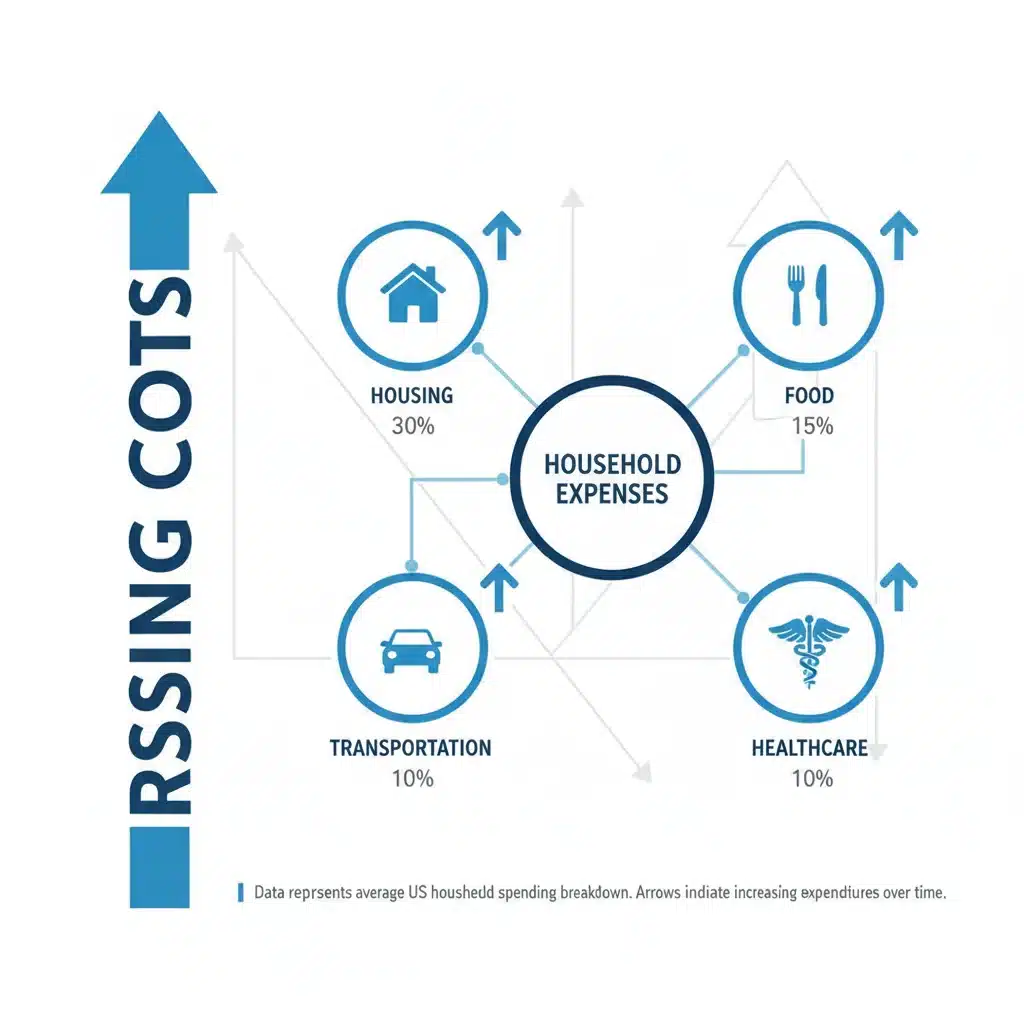
- Food: Grocery bills are typically one of the largest expenditures for families. A 4.2% increase can mean hundreds of extra dollars spent annually on staples like milk, bread, meat, and produce. This forces many to make difficult choices, potentially compromising nutritional quality or quantity.
- Housing: Rent and mortgage payments, while sometimes fixed, can see indirect impacts. Property taxes, insurance, and maintenance costs are likely to rise. For renters, landlords often pass on increased operational costs through higher rental rates upon lease renewal.
- Transportation: Fuel prices are notoriously volatile and highly susceptible to inflation. Beyond gas, the cost of vehicle maintenance, public transportation fares, and even new car prices can climb, making commuting and travel more expensive.
- Utilities: Electricity, natural gas, and water bills are also prone to inflationary increases. Energy costs, in particular, are influenced by global supply and demand dynamics, which can be unpredictable.
- Healthcare: Medical expenses, including prescription drugs, doctor visits, and health insurance premiums, have historically outpaced general inflation. A 4.2% overall inflation rate could exacerbate these already rising costs, placing further burden on families.
The combined effect of these increases can significantly reduce discretionary income, forcing families to re-evaluate their spending priorities. For many, this means less money for entertainment, dining out, vacations, or even saving for future goals. The US Inflation Impact on these essential categories creates a domino effect across the entire budget.
Discretionary Spending and Lifestyle Adjustments
Beyond essentials, discretionary spending will inevitably face cuts. Families might postpone large purchases like new appliances, electronics, or home renovations. Leisure activities, such as movies, concerts, and dining out, may become less frequent. The cumulative US Inflation Impact can subtly, yet significantly, alter lifestyles, requiring consumers to be more mindful and strategic about every dollar spent. This shift in spending patterns can also have broader economic consequences, affecting businesses that rely heavily on consumer discretionary spending.
Consider a household that previously allocated a certain percentage of its income to savings or investments. With higher living costs, that percentage might shrink, impacting long-term financial goals such as retirement planning or a child’s education fund. The opportunity cost of inflation is often overlooked but is a critical component of its total impact.
The Erosion of Purchasing Power and Savings
One of the most insidious aspects of the US Inflation Impact is the erosion of purchasing power. Even if your income remains stable or sees a modest increase, if inflation outpaces that growth, your real income effectively decreases. This means that your money buys less than it used to, making it harder to maintain your current standard of living. For individuals on fixed incomes, such as retirees relying on pensions or social security, the impact can be particularly severe, as their income does not adjust to the rising cost of living at the same pace.
Savings also take a hit. If your savings account offers an interest rate of, say, 1%, but inflation is running at 4.2%, your money is losing value in real terms. The purchasing power of your savings diminishes over time, making it harder to reach financial milestones that require a substantial sum, such as a down payment on a house or funding for a child’s college education. This phenomenon incentivizes seeking higher-yield investments, but these often come with increased risk, creating a dilemma for conservative savers.
The psychological toll of this erosion should not be underestimated. Constantly feeling like you’re falling behind, even with careful budgeting, can lead to financial stress and anxiety. This is a significant part of the overall US Inflation Impact that extends beyond mere numbers on a spreadsheet, affecting mental well-being and overall quality of life.
Strategies for Households to Mitigate the US Inflation Impact
While a 4.2% inflation rate presents significant challenges, households are not powerless. Proactive planning and strategic adjustments can help mitigate the negative US Inflation Impact. Here are several actionable strategies:
1. Re-evaluate and Revamp Your Budget
The first step is to get a clear picture of where your money is going. Review your current budget with a fine-tooth comb. Identify areas where you can cut back, even slightly. This might mean reducing subscriptions, eating out less frequently, or finding more affordable alternatives for everyday items. Use budgeting apps or spreadsheets to track every dollar and identify unnecessary expenditures. A detailed budget provides the foundation for making informed financial decisions in an inflationary environment.
2. Prioritize Debt Reduction, Especially High-Interest Debt
Inflation can make debt more expensive in real terms, especially variable-rate debt. Prioritize paying down high-interest debts like credit card balances. While the interest rate on your credit card might seem fixed, the purchasing power of the payments you make is decreasing. Reducing debt frees up cash flow, which becomes increasingly valuable when prices are rising. Consider consolidating high-interest debt into a lower-interest personal loan or balance transfer card if feasible.
3. Optimize Your Savings and Investments
Keeping large sums of cash in low-yield savings accounts during high inflation is akin to watching your money evaporate. Explore higher-yield savings options, such as high-yield savings accounts (HYSA) or certificates of deposit (CDs), although even these might not fully outpace a 4.2% inflation rate. For long-term savings, consider investments that historically perform well during inflationary periods, such as real estate, commodities, or inflation-protected securities (TIPS). Diversification is key to managing risk.
4. Seek Opportunities for Income Growth
To combat the erosion of purchasing power, look for ways to increase your income. This could involve negotiating a raise at your current job, taking on a side hustle, or investing in skills development to qualify for higher-paying roles. For those in a position to do so, seeking a higher-paying job can be a direct way to offset the US Inflation Impact on your household budget. Even small increases in income can make a significant difference over time.
5. Smart Shopping and Frugal Living
Adopt smarter shopping habits. Compare prices, buy in bulk when appropriate, look for sales and discounts, and consider generic brands. Meal planning can reduce food waste and impulse purchases at the grocery store. For larger purchases, research thoroughly and wait for sales events. Repairing items instead of replacing them, and extending the lifespan of goods, can also save money. These small adjustments collectively contribute to mitigating the US Inflation Impact.
6. Review Insurance Policies
Inflation can also affect the adequacy of your insurance coverage. The cost to replace a damaged home or car will likely be higher in an inflationary environment. Review your home, auto, and health insurance policies to ensure they provide sufficient coverage for current and projected replacement costs. Adjusting deductibles or exploring different providers could also yield savings.

Broader Economic and Societal Implications of Sustained Inflation
The US Inflation Impact extends beyond individual household budgets to the broader economy and society. A sustained 4.2% inflation rate can lead to several macroeconomic challenges:
Wage-Price Spiral Concerns
One major concern is the potential for a wage-price spiral. As prices rise, workers demand higher wages to maintain their purchasing power. Businesses, facing increased labor costs, then raise prices further, leading to a continuous cycle that is difficult to break. This spiral can entrench inflation and make it harder for monetary policy to bring it under control without triggering a recession.
Impact on Businesses and Investment
Businesses face increased costs for raw materials, labor, and transportation. This can squeeze profit margins, forcing them to either raise prices (contributing to inflation) or reduce investment, hiring, and expansion. Uncertainty caused by inflation can also deter long-term investment, as the future value of returns becomes harder to predict. Small businesses, often with less financial flexibility, can be particularly vulnerable to these pressures.
Government Fiscal Policy and Debt
Governments also feel the pinch. The cost of providing public services increases, and the real value of government debt can decrease, but new borrowing becomes more expensive as interest rates typically rise to combat inflation. This can lead to difficult choices regarding public spending, taxation, and debt management. The US Inflation Impact on fiscal policy can have long-lasting effects on national economic stability.
Wealth Distribution and Inequality
Inflation often disproportionately affects lower-income households and those on fixed incomes, as they spend a larger percentage of their income on essential goods and have fewer assets that appreciate with inflation. Wealthier individuals, who often hold assets like real estate and stocks, may find their net worth growing in nominal terms, exacerbating wealth inequality. This social dimension of the US Inflation Impact is a critical consideration for policymakers.
Looking Ahead: The Role of Policy and Personal Preparedness
The projected 4.2% annual inflation rate for 2026 underscores the importance of both sound economic policy and robust personal financial preparedness. Central banks, like the Federal Reserve, will likely employ monetary tools, primarily interest rate adjustments, to try and cool down the economy and bring inflation back to their target. However, these actions can have their own consequences, such as potentially slowing economic growth or increasing borrowing costs for consumers and businesses.
From a personal standpoint, the key takeaway is that vigilance and adaptability are paramount. The financial landscape is rarely static, and understanding the potential US Inflation Impact is the first step toward building resilience. Regularly reviewing your financial plan, diversifying investments, and continuously seeking ways to optimize your income and expenses will be crucial in navigating the challenges of an inflationary period.
Moreover, financial education plays a significant role. The more informed individuals are about economic trends and personal finance strategies, the better equipped they will be to make decisions that protect their financial well-being. Engaging with financial advisors, utilizing reputable online resources, and staying abreast of economic news can provide invaluable insights and guidance.
Conclusion: Empowering Yourself Against the US Inflation Impact
The prospect of a 4.2% annual inflation rate in the US by 2026 presents a clear challenge for households across the nation. From rising costs of essential goods and services to the erosion of purchasing power and savings, the US Inflation Impact will necessitate careful planning and strategic financial management. However, by understanding the mechanics of inflation, diligently managing budgets, optimizing savings and investments, and seeking opportunities for income growth, individuals and families can effectively mitigate these pressures.
This period demands a proactive approach to personal finance, emphasizing frugality, smart spending, and a continuous reassessment of financial goals. While macroeconomic forces are largely beyond individual control, the choices we make within our personal financial ecosystems can significantly influence our ability to weather economic storms. By embracing these strategies, you can not only survive but potentially thrive in an inflationary environment, safeguarding your financial future against the anticipated US Inflation Impact.
Stay informed, stay adaptable, and empower yourself with the knowledge and tools to navigate the evolving economic landscape. Your financial resilience in 2026 and beyond will largely depend on the preparedness and strategic decisions you make today.