Enhancing Election Security: Federal Guidelines for 2026 Local Elections
Anúncios
The integrity of democratic processes hinges significantly on the security of our elections. As we look towards 2026, the landscape of local election administration is undergoing a transformative shift, driven by new federal guidelines designed to bolster election security guidelines. These directives are not merely suggestions; they represent a concerted effort to standardize and elevate the protective measures safeguarding every ballot cast, from voter registration to the final certification of results. The goal is clear: to fortify the electoral system against emerging threats, enhance public trust, and ensure that every citizen’s voice is accurately and securely represented.
Anúncios
The imperative for robust election security guidelines has never been more pronounced. In an era marked by sophisticated cyber threats, disinformation campaigns, and evolving geopolitical challenges, the vulnerability of electoral systems can be exploited to undermine democratic institutions. Recognizing these risks, federal authorities have developed a comprehensive framework that addresses various facets of election administration. This framework aims to provide local election officials with the tools, resources, and best practices needed to navigate the complexities of modern elections effectively. Understanding these new guidelines, their scope, and their potential impact on voting districts across the nation is crucial for anyone invested in the future of our democracy.
The Evolution of Election Security: A Historical Context
To fully appreciate the significance of the 2026 federal election security guidelines, it’s essential to understand the historical trajectory of election security in the United States. Historically, election administration has been largely decentralized, with states and local jurisdictions bearing primary responsibility. This decentralization, while fostering local control, has also led to a patchwork of security standards, some more robust than others. Major events, particularly the 2000 presidential election and more recently, concerns surrounding foreign interference in 2016 and 2020, have consistently highlighted the need for more unified and resilient security protocols.
The Help America Vote Act (HAVA) of 2002 was a landmark piece of legislation that introduced federal funding and mandates for election administration, primarily in response to the issues of the 2000 election. HAVA led to the modernization of voting equipment and the establishment of statewide voter registration databases. However, HAVA predominantly focused on accessibility and basic administrative standards, with cybersecurity aspects being less prominent given the technological landscape of the early 2000s.
Anúncios
In subsequent years, as digital threats escalated, the focus shifted. The Cybersecurity and Infrastructure Security Agency (CISA) designated election systems as critical infrastructure in 2017, underscoring their national importance. This designation paved the way for increased federal engagement, resources, and expertise in protecting election systems. Various federal agencies, including the Election Assistance Commission (EAC) and the Department of Homeland Security (DHS), have since played increasingly vital roles in providing guidance, threat intelligence, and technical assistance to states and localities. The 2026 guidelines build upon this foundation, aiming to integrate lessons learned and address emerging challenges with a forward-looking approach to election security guidelines.
Key Pillars of the 2026 Federal Election Security Guidelines
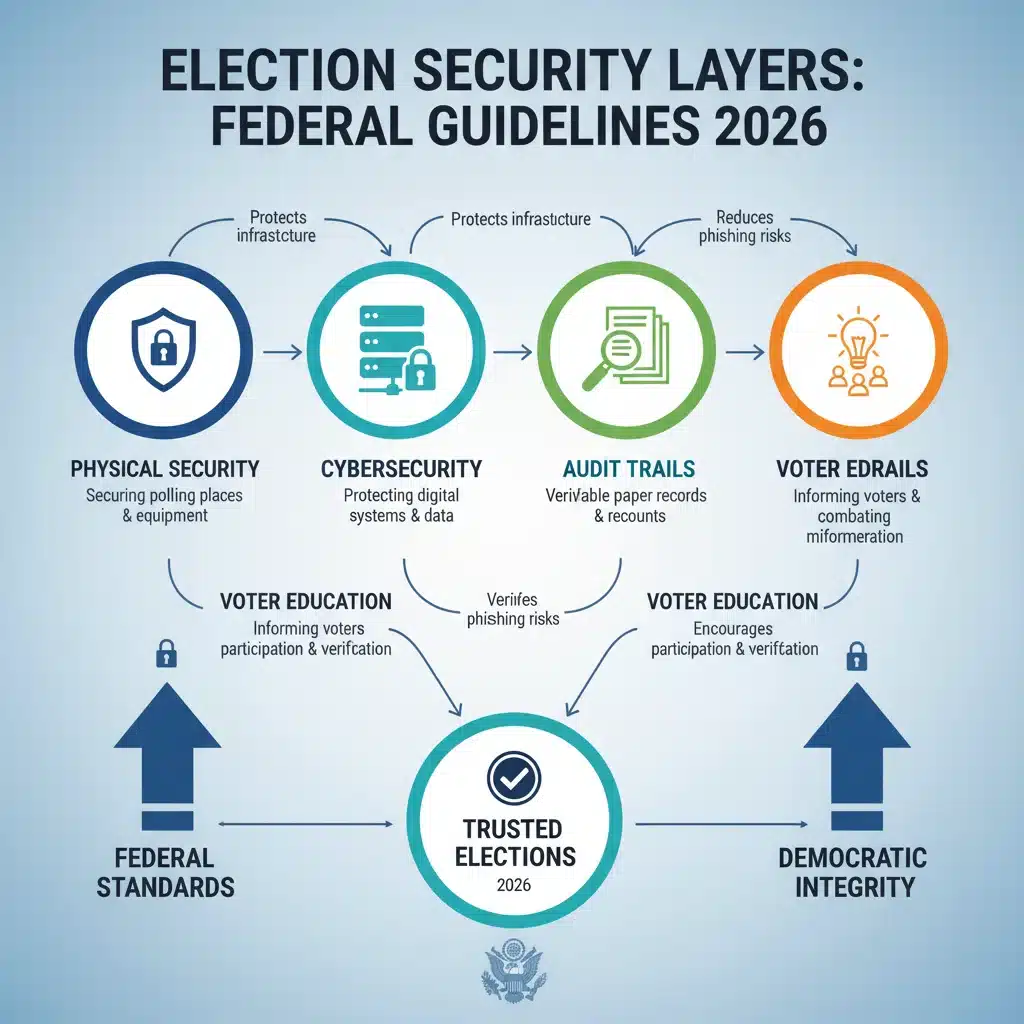
The new federal election security guidelines for 2026 are structured around several core pillars, each designed to address specific vulnerabilities and enhance the overall resilience of the electoral system. These pillars represent a holistic approach, recognizing that true security requires a multi-faceted strategy.
Cybersecurity Enhancements: Protecting the Digital Frontier
Perhaps the most prominent aspect of the new guidelines is the intensified focus on cybersecurity. This includes mandates and recommendations for:
- Advanced Threat Detection and Prevention: Implementing sophisticated intrusion detection systems, firewalls, and endpoint protection across all election-related networks and devices. This moves beyond basic antivirus software to proactive threat hunting and real-time monitoring.
- Secure Software Development and Patch Management: Requiring rigorous testing and certification processes for election software, along with stringent protocols for timely patching of vulnerabilities. Emphasis is placed on supply chain security for all election technology.
- Multi-Factor Authentication (MFA) and Access Controls: Mandating MFA for all access to critical election systems and databases, coupled with least-privilege access controls to limit potential damage from compromised accounts.
- Regular Security Audits and Penetration Testing: Encouraging or requiring independent third-party audits and penetration tests to identify and remediate weaknesses before they can be exploited.
- Data Encryption: Ensuring that sensitive voter data and election results are encrypted both in transit and at rest, protecting against unauthorized access.
Physical Security Measures: Safeguarding Infrastructure and Materials
While digital threats often dominate headlines, physical security remains a critical component of election security guidelines. The 2026 guidelines emphasize:
- Secure Storage of Voting Equipment: Protocols for storing voting machines, ballots, and other sensitive materials in locked, monitored facilities with restricted access.
- Chain of Custody for Ballots: Strict procedures for tracking ballots from printing to tabulation, including tamper-evident seals and comprehensive documentation.
- Poll Worker Training and Security: Enhanced training for poll workers on identifying suspicious activities, handling emergencies, and maintaining the security of polling places.
- Access Control at Polling Locations and Election Offices: Implementing measures such as badging, visitor logs, and surveillance systems to control access to critical election facilities.
Post-Election Audits and Transparency: Building Confidence
To ensure accuracy and build public trust, the guidelines place significant importance on robust post-election processes:
- Risk-Limiting Audits (RLAs): Promoting the adoption of RLAs, which are statistical audits designed to provide a high level of confidence that the reported election outcome is correct, even if a small error rate exists.
- Transparent Reporting: Mandating clear and accessible reporting of audit results and other election data, allowing for public scrutiny and verification.
- Voter Verifiable Paper Records: Encouraging or requiring the use of voting systems that produce voter-verifiable paper records, serving as the official ballot for audits and recounts.
Voter Registration and Integrity: Ensuring Accurate Rolls
Maintaining accurate and secure voter registration databases is fundamental to election integrity. The guidelines address:
- Data Hygiene and Maintenance: Regular cleaning of voter rolls to remove duplicate registrations, deceased voters, and those who have moved out of the jurisdiction, while adhering to federal laws like the National Voter Registration Act.
- Secure Data Sharing: Establishing secure protocols for sharing voter registration data between states and with federal agencies, where appropriate, to enhance accuracy and prevent fraud.
- Protection Against Disinformation: Strategies to combat false information related to voter registration and election procedures, ensuring voters receive accurate information from official sources.
Implementation Across Voting Districts: Challenges and Opportunities
The successful implementation of these new federal election security guidelines hinges on the capacity and willingness of individual voting districts to adopt and integrate them. This presents both significant challenges and unique opportunities.
Financial and Resource Constraints
One of the primary challenges for many local voting districts is the financial burden associated with upgrading technology, training personnel, and implementing new security protocols. While federal funding may be available, it often requires matching funds or can be insufficient to cover all necessary expenditures. Smaller, rural districts, in particular, may struggle to acquire the specialized cybersecurity expertise needed.
Technological Integration and Legacy Systems
Many voting districts still rely on older election equipment and IT infrastructure. Integrating new security measures with legacy systems can be complex, costly, and time-consuming. The guidelines will likely push for the retirement of outdated, insecure technology, but the transition period requires careful planning and significant investment.
Training and Workforce Development
Effective election security guidelines require a skilled workforce. This means extensive training for election officials and staff on new technologies, cybersecurity best practices, incident response, and legal compliance. Developing this expertise at the local level is a substantial undertaking.
Inter-Agency Coordination and Information Sharing
Successful implementation demands robust coordination not only between federal, state, and local election officials but also with law enforcement, intelligence agencies, and cybersecurity experts. Establishing secure and efficient channels for information sharing, particularly regarding threat intelligence, is critical.
Opportunities for Modernization and Innovation
Despite the challenges, the 2026 federal election security guidelines offer a significant opportunity for voting districts to modernize their election infrastructure. This can lead to:
- Enhanced Efficiency: Streamlined processes and updated technology can improve the efficiency of election administration.
- Increased Public Confidence: Demonstrably secure elections can bolster voter confidence in the integrity of the democratic process.
- Greater Resilience: A more secure and adaptable electoral system will be better equipped to withstand future threats, whatever form they may take.
- Standardization of Best Practices: The guidelines provide a common framework, allowing for the widespread adoption of proven security measures across diverse jurisdictions.
The Role of Technology in Election Security
Technology is a double-edged sword in election security. While it introduces new vulnerabilities, it also offers powerful tools for protection. The 2026 election security guidelines leverage technology for both offense (defending against attacks) and defense (implementing secure systems).
Secure Voting Systems
The guidelines will likely push for the widespread adoption of secure, auditable voting systems. This includes:
- Paper Ballots: Emphasizing systems that produce voter-verifiable paper ballots as the official record, crucial for audits and recounts.
- Certified Equipment: Requiring the use of voting equipment that has been rigorously tested and certified by federal and state authorities to meet specific security and accuracy standards.
- Open-Source Auditing: Exploring the potential for open-source components in election software to allow for greater transparency and community-driven security review, though with careful consideration of supply chain integrity.
Cybersecurity Tools and Services
Federal agencies like CISA offer a suite of free cybersecurity tools and services to state and local election officials, including vulnerability assessments, penetration testing, and continuous monitoring. The 2026 guidelines will likely encourage or mandate the utilization of these resources, ensuring that districts, regardless of their size or budget, have access to high-level security expertise.
Blockchain and Distributed Ledger Technologies (DLT)
While still largely experimental for mainstream elections, the guidelines may acknowledge the potential of blockchain and DLT for specific aspects of election security, such as secure voter registration databases or transparent audit trails. However, widespread adoption would require extensive research, pilot programs, and addressing significant scalability and regulatory challenges.
Enhancing Voter Confidence and Public Engagement
Beyond technical security, the 2026 federal election security guidelines also implicitly aim to strengthen voter confidence. A secure election is one that is not only protected from threats but also perceived as trustworthy by the public. This involves several strategies:
Transparent Communication
Election officials are encouraged to communicate proactively and transparently with the public about the security measures in place. This includes explaining how ballots are secured, how voting machines are tested, and how audits are conducted. Clear and consistent messaging can counter disinformation and build trust.
Voter Education Programs
Educating voters about the security features of their local election system, how to identify and report suspicious activity, and the importance of official sources of information is vital. Informed voters are less susceptible to misinformation and more likely to trust the process.
Community Involvement
Engaging community groups, civic organizations, and academic institutions in election observation, audit processes, and voter education can foster a sense of shared responsibility and ownership over the electoral system. This collaborative approach reinforces the democratic principles of transparency and accountability.
Rapid Response to Disinformation
The guidelines will likely emphasize the need for election officials to have robust plans for rapidly identifying and countering disinformation campaigns that seek to undermine election integrity or suppress voter participation. This requires strong partnerships with social media platforms and traditional media outlets.
Case Studies and Best Practices: Lessons from the Field
While the 2026 guidelines are forward-looking, many states and localities have already implemented innovative election security guidelines that serve as valuable case studies. For instance:
- Georgia’s Statewide Voting System: Following significant security concerns, Georgia implemented a new statewide voting system that uses ballot marking devices (BMDs) to produce paper ballots, which are then scanned. This system, while not without its critics, represents a significant investment in auditable paper records.
- Colorado’s Risk-Limiting Audits: Colorado has been a leader in implementing statewide risk-limiting audits, providing a strong example of how these statistical audits can be effectively integrated into post-election procedures to verify results.
- Ohio’s Election Cybersecurity Initiatives: Ohio has invested heavily in a statewide election cybersecurity center, offering resources and expertise to all its counties, demonstrating a centralized approach to supporting local election officials.
These examples highlight that successful implementation often involves a combination of technological upgrades, robust auditing procedures, and strong collaborative efforts between state and local entities. The 2026 federal guidelines aim to distill these best practices into a national framework.

Looking Ahead: The Future of Election Security in 2026 and Beyond
The 2026 federal election security guidelines mark a critical juncture in the ongoing effort to secure democratic elections. Their successful implementation will require sustained commitment, significant investment, and continuous adaptation to an ever-evolving threat landscape. As voting districts grapple with these new directives, several key areas will remain paramount:
Continuous Threat Intelligence and Adaptation
Cyber threats are dynamic. The guidelines must foster a culture of continuous learning and adaptation, ensuring that election officials receive up-to-date threat intelligence and have the flexibility to implement new protective measures as needed. This requires ongoing collaboration between federal security agencies and local administrators.
Balancing Security with Accessibility
While security is paramount, it must never come at the expense of voter accessibility. The guidelines must ensure that security measures do not create undue barriers for eligible voters, including those with disabilities, language barriers, or limited access to technology. Striking this balance is crucial for inclusive democracy.
Long-Term Funding and Resource Allocation
The sustainability of enhanced election security depends on consistent and adequate funding. Federal and state governments must commit to long-term financial support for election administration, recognizing it as a critical component of national security and democratic health. This includes funding for equipment upgrades, personnel training, and ongoing cybersecurity services.
Building a Culture of Security
Ultimately, election security is not just about technology; it’s about people and processes. The guidelines aim to foster a culture of security awareness among all election stakeholders, from federal policymakers to local poll workers and the voting public. This collective responsibility is the strongest defense against those who seek to undermine our democratic institutions.
In conclusion, the 2026 federal election security guidelines represent a vital step forward in safeguarding the integrity of local elections. By focusing on comprehensive cybersecurity, robust physical protections, transparent audits, and accurate voter rolls, these guidelines seek to create a more resilient, trustworthy, and secure electoral system for all Americans. The journey to full implementation will undoubtedly present challenges, but the opportunities for strengthening our democracy are immense and essential for the future.