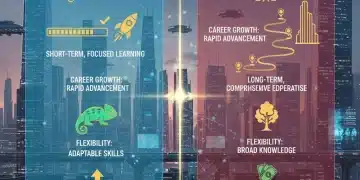
Bootcamps vs. Degrees: Faster Tech Career Entry in 2025 US?
Anúncios
Navigating the 2025 US tech job market requires understanding whether an intensive bootcamp or a comprehensive traditional degree offers the fastest and most effective path to a successful career.
Anúncios
In the rapidly evolving landscape of the 2025 US tech industry, aspiring professionals face a critical decision: pursue the immersive, fast-paced world of coding bootcamps or opt for the foundational, in-depth learning of a traditional university degree? This pivotal comparison: bootcamps vs. traditional degrees aims to dissect which path offers a faster and more sustainable career entry into the competitive tech sector.
Anúncios
The accelerated path: understanding tech bootcamps in 2025
Tech bootcamps have emerged as a significant force in tech education, promising rapid skill acquisition and direct pathways to employment. These programs are typically short, intensive, and focused on specific, in-demand technical skills, making them an attractive option for those looking to pivot careers or enter the tech industry quickly.
The curriculum of a bootcamp is designed to be highly practical, often mirroring the day-to-day tasks of a junior developer or data analyst. Students spend long hours coding, collaborating on projects, and building portfolios that showcase their abilities to potential employers. This hands-on approach is a hallmark of bootcamp education, distinguishing it from more theoretical academic settings.
Curriculum focus and duration
- Specialized Skills: Bootcamps concentrate on niche areas like full-stack web development, data science, cybersecurity, or UX/UI design.
- Intensive Schedule: Programs typically run from 10 to 24 weeks, demanding full-time commitment and often long hours.
- Project-Based Learning: The emphasis is on building real-world projects, creating a portfolio that demonstrates practical skills.
Many bootcamps also integrate career services, including resume building, interview preparation, and job placement assistance. This support system is crucial for graduates, as it helps bridge the gap between learning and employment. The speed at which individuals can acquire job-ready skills and enter the workforce is a primary advantage of bootcamps, particularly for those with prior degrees in unrelated fields or individuals seeking a career change.
In conclusion, tech bootcamps in 2025 offer a streamlined, practical, and fast-tracked route into the tech industry. Their intensive, specialized curricula and strong career support make them a compelling choice for individuals prioritizing speed and direct employment opportunities.
The traditional route: an overview of university degrees
Traditional university degrees, particularly in computer science or related engineering fields, have long been the gold standard for entering the tech industry. These programs offer a broad and deep understanding of theoretical concepts, algorithms, and foundational computer science principles. A bachelor’s degree typically spans four years, providing a comprehensive education that goes beyond immediate job skills.
The academic rigor of a university program often includes advanced mathematics, physics, and a wide array of computer science electives, allowing students to explore various sub-disciplines. This extensive exposure is designed to foster critical thinking, problem-solving abilities, and a strong theoretical base that can adapt to future technological shifts.
Advantages of a traditional degree
- Foundational Knowledge: Provides a deep understanding of computer science principles, algorithms, and data structures.
- Broader Career Paths: Opens doors to research, academia, and highly specialized roles requiring advanced theoretical backgrounds.
- Networking Opportunities: Access to alumni networks, research labs, and academic connections that can be invaluable for long-term career growth.
Beyond the technical curriculum, universities also offer a holistic educational experience. Students engage in extracurricular activities, liberal arts courses, and develop soft skills such as communication, teamwork, and leadership. These experiences are often cited by employers as crucial for long-term success in any professional field.
Ultimately, traditional university degrees provide a robust, comprehensive education that prepares graduates for a wide range of roles and challenges within the tech industry. While longer, this path emphasizes foundational knowledge and broader career potential.
Cost and investment: comparing financial commitments
The financial investment required for both bootcamps and traditional degrees varies significantly, influencing the decision-making process for many aspiring tech professionals. Understanding these costs is crucial for planning and evaluating the return on investment.
Traditional four-year university degrees in the US can range from tens of thousands to over a hundred thousand dollars for tuition alone, not including living expenses, books, and other fees. Public universities generally offer lower tuition for in-state residents, while private institutions and out-of-state tuition can be considerably higher. Financial aid, scholarships, and student loans are common ways to finance a university education, but they often lead to substantial debt.
Financial aspects to consider
- University Tuition: Can range from $10,000 to $50,000+ per year, depending on the institution type and residency.
- Bootcamp Fees: Typically between $10,000 and $20,000 for the entire program, though some can be higher.
- Income Share Agreements (ISAs): Some bootcamps offer ISAs, where students pay a percentage of their salary after securing a job.
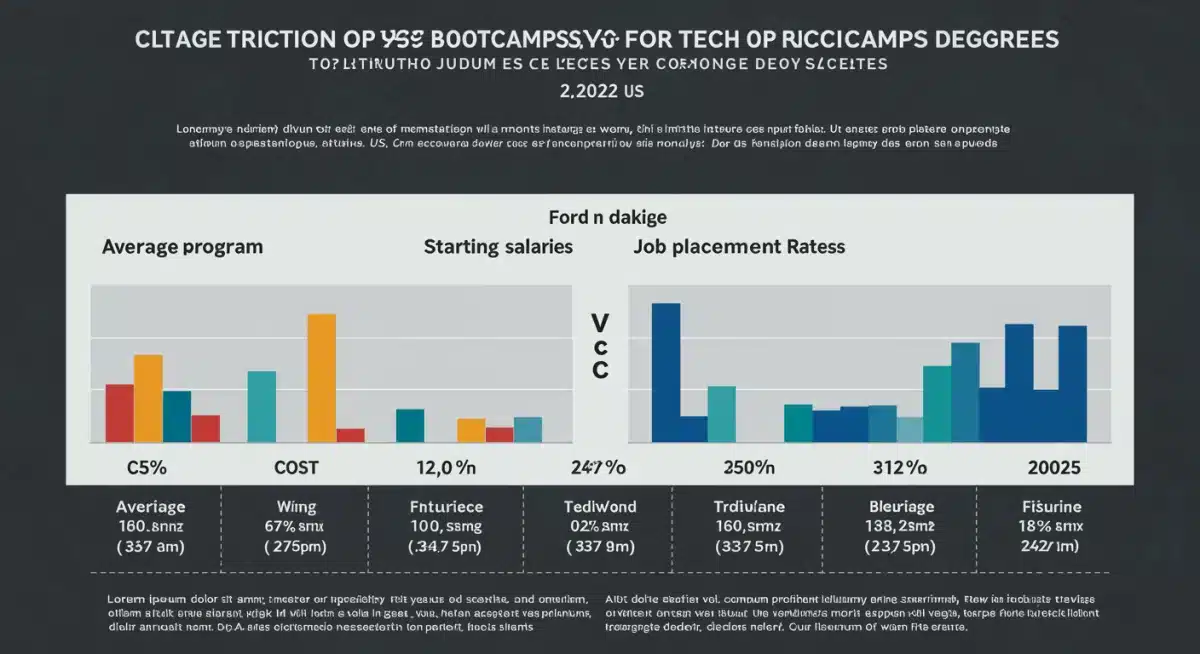
Bootcamps, by contrast, generally come with a lower upfront cost. While still a significant investment, ranging from $10,000 to $20,000 for the entire program, their shorter duration means lower total living expenses and a quicker entry into earning potential. Many bootcamps also offer flexible payment options, including income share agreements (ISAs), where students pay a percentage of their salary only after securing a job above a certain income threshold.
The financial commitment is a major factor in the comparison: bootcamps vs. traditional degrees. Bootcamps offer a quicker and often less expensive entry point, while traditional degrees represent a larger, long-term investment that may yield different types of returns.
Job market readiness and employer perceptions in 2025
The perception of employers regarding bootcamp graduates versus traditional degree holders has evolved significantly, especially as the tech industry continues to prioritize practical skills and diverse talent. In 2025, many tech companies are increasingly open to hiring individuals from non-traditional educational backgrounds, provided they can demonstrate competence and a strong portfolio.
Bootcamp graduates often enter the job market with highly specialized, up-to-date skills that are directly applicable to current industry needs. Their project-based learning model means they frequently have a robust portfolio of work that showcases their abilities from day one. This practical readiness can lead to faster initial job placement in specific roles.
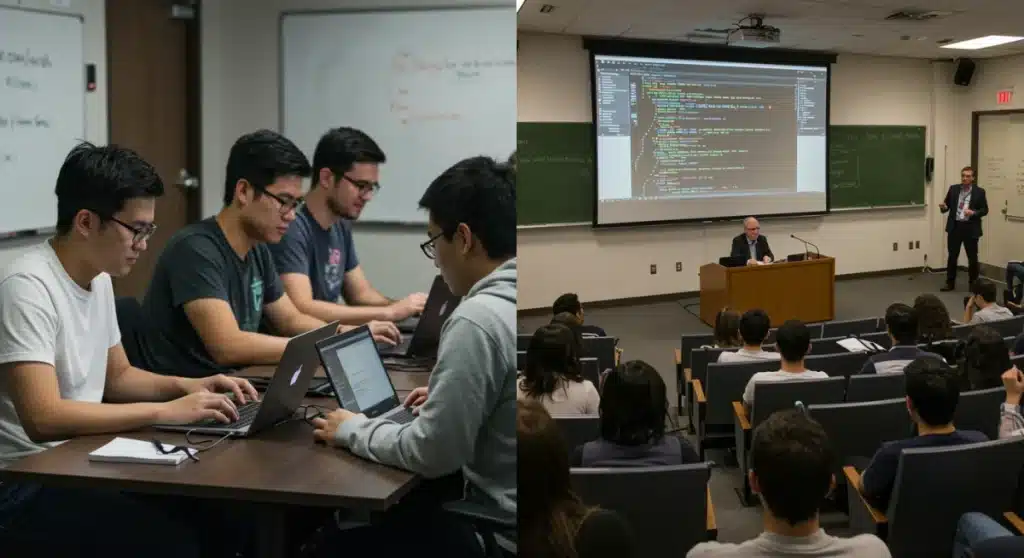
Employer perspectives
- Bootcamp Graduates: Valued for immediate practical skills, project portfolios, and adaptability to specific roles.
- Degree Holders: Sought after for strong foundational knowledge, critical thinking, and potential for growth into leadership or architect roles.
- Hybrid Approach: Many employers appreciate candidates with a blend of theoretical understanding and practical application, sometimes achieved through a degree combined with self-study or short courses.
On the other hand, traditional degree holders are often seen as having a deeper, more theoretical understanding of computer science, which can be advantageous for roles requiring complex problem-solving, research, or leadership potential. While they might take longer to acquire specific job-ready skills, their foundational knowledge provides a strong basis for long-term career growth and adaptability to new technologies.
In conclusion, the 2025 job market embraces both paths. Bootcamp graduates often find quicker entry into specialized roles due to their practical skills, while degree holders are valued for their comprehensive knowledge and long-term potential. The best fit often depends on the specific role and company culture.
Long-term career growth and adaptability
Beyond initial job entry, understanding the implications for long-term career growth and adaptability is crucial when comparing bootcamps and traditional degrees. The tech industry is characterized by constant change, and professionals must continuously learn and evolve to remain relevant.
Traditional degrees, with their emphasis on foundational computer science principles, often provide a robust framework for understanding new technologies and paradigms. Graduates with this deep theoretical knowledge may find it easier to transition between different tech stacks, adapt to new programming languages, or move into more abstract roles like system architecture or research over time. Their broad education equips them with the tools for continuous self-learning and problem-solving at a higher conceptual level.
Sustaining career momentum
- Degree Holders: Often better prepared for senior engineering roles, R&D, and leadership due to broad theoretical base.
- Bootcamp Graduates: Excel in quickly mastering new tools and technologies for specific roles, benefiting from continuous upskilling.
- Lifelong Learning: Essential for both paths; the tech landscape demands constant adaptation and skill refinement.
Bootcamp graduates, while excelling in immediate application, might need to be more proactive in filling any theoretical gaps as their careers progress. However, their proven ability to rapidly acquire new skills through intensive learning environments positions them well for continuous upskilling and staying current with industry trends. Many bootcamp alumni pursue further specialized certifications or even advanced degrees later in their careers to broaden their knowledge base.
Therefore, while traditional degrees might offer a smoother path to certain advanced or research-oriented roles, bootcamp graduates demonstrate remarkable agility and a strong capacity for continuous learning, which is invaluable in the dynamic tech world. Both paths require a commitment to lifelong learning to ensure sustained career growth.
Making the choice: which path is right for you in 2025?
The decision between a tech bootcamp and a traditional university degree is highly personal and depends on individual circumstances, career aspirations, and learning styles. There isn’t a universally ‘better’ option, but rather a more suitable one for each unique candidate looking to enter the US tech sector in 2025.
If speed, practical skills, and a lower upfront time commitment are your priorities, a bootcamp might be the ideal choice. It’s particularly well-suited for career changers, individuals with existing degrees in other fields, or those who learn best through intensive, hands-on project work. Bootcamps offer a direct route to specific job functions, allowing you to quickly enter the workforce and begin gaining professional experience.
Factors guiding your decision
- Time Horizon: How quickly do you need to enter the job market?
- Learning Style: Do you prefer hands-on, intensive learning or a more theoretical, foundational approach?
- Career Goals: Are you aiming for specialized entry-level roles or long-term research/leadership positions?
- Financial Resources: What is your budget for education and living expenses?
Conversely, if you value a deep, comprehensive understanding of computer science, a broader range of career options, and are prepared for a longer educational journey, a traditional degree is likely more appropriate. This path is often favored by those aspiring to roles in research, academia, or highly complex engineering fields that demand a strong theoretical foundation.
Ultimately, prospective students should carefully assess their personal goals, financial situation, and preferred learning environment. Both bootcamps and traditional degrees offer valid and valuable pathways into the US tech industry in 2025, each with its distinct set of advantages and considerations.
| Key Aspect | Description |
|---|---|
| Time to Entry | Bootcamps offer faster career entry (months), while degrees are longer (years). |
| Cost Efficiency | Bootcamps are generally less expensive overall, with flexible payment options. |
| Curriculum Focus | Bootcamps: practical, job-specific skills. Degrees: broad, theoretical foundations. |
| Career Trajectory | Bootcamps for quick entry, degrees for long-term versatility and advanced roles. |
Frequently asked questions about tech education
Yes, many tech employers, especially startups and mid-sized companies, increasingly recognize and value bootcamp graduates for their practical, job-ready skills. A strong portfolio and demonstrable projects are key to their success in the job market.
Traditional degrees often provide a broader foundational knowledge that can lead to more versatile long-term career paths, including research, leadership, and highly specialized engineering roles. Adaptability to new technologies is a significant benefit.
ISAs can be beneficial as they defer payment until you’ve secured a job above a certain salary threshold, aligning the bootcamp’s success with your own. However, it’s crucial to understand all terms and conditions before committing.
Absolutely. Many professionals with traditional degrees attend bootcamps for specialized skills, or bootcamp graduates pursue certifications or even advanced degrees later. This hybrid approach can offer the best of both worlds, enhancing career flexibility.
For a complete beginner, a traditional degree offers a more structured and comprehensive introduction to computer science. However, many bootcamps are designed for beginners, providing intensive foundational training in specific areas, so checking prerequisites is key.
Conclusion
The choice between a tech bootcamp and a traditional degree for entering the US tech industry in 2025 is a multifaceted decision. Each pathway presents distinct advantages in terms of speed, cost, curriculum, and long-term career implications. Bootcamps offer an accelerated, practical route, ideal for those seeking quick entry into specialized roles with a hands-on learning approach. Traditional degrees, conversely, provide a deep theoretical foundation, fostering critical thinking and opening doors to a broader array of advanced and leadership positions over time. Ultimately, the most effective path aligns with an individual’s unique learning style, financial situation, and career aspirations, emphasizing that continuous learning and adaptability are paramount for sustained success in the ever-evolving tech landscape.