2025 Commodity Volatility: US Industries’ Financial Impact
Anúncios
Commodity price volatility in 2025 is poised to significantly impact U.S. industries, influencing production costs, consumer prices, and overall economic stability, necessitating robust risk management strategies.
Anúncios
The global economic landscape continues to evolve, and understanding the potential financial ramifications of
commodity price volatility in 2025 on U.S. industries is now more critical than ever.
From energy and metals to agricultural products, fluctuations in commodity markets can ripple through
supply chains, affecting everything from manufacturing costs to consumer spending.
How prepared are American businesses for these impending shifts?
Understanding the Drivers of 2025 Commodity Volatility
Several interconnected factors are expected to fuel commodity price volatility in 2025. Geopolitical tensions,
climate change impacts, and shifts in global demand and supply dynamics all play a pivotal role.
These elements create an environment where prices can swing dramatically, challenging businesses across various sectors.
Anúncios
Geopolitical Dynamics and Supply Disruptions
Ongoing geopolitical conflicts and trade disputes are primary contributors to market instability.
Sanctions, export restrictions, and regional instability can suddenly remove significant suppliers from the market or
disrupt key transportation routes, leading to immediate price surges.
-
Energy Markets: Tensions in oil-producing regions can directly impact crude oil and natural gas prices,
affecting energy-intensive industries. -
Metals and Minerals: Strategic metals crucial for technology and manufacturing are often sourced from politically
unstable areas, making their supply vulnerable. -
Agricultural Goods: Conflicts in major food-exporting nations can lead to global food price inflation,
impacting food processors and consumers alike.
Climate Change and Production Capacity
The increasing frequency and intensity of extreme weather events, driven by climate change, pose a significant threat to
agricultural output and raw material extraction. Droughts, floods, and unseasonal frosts can decimate harvests,
while severe storms can halt mining operations or damage infrastructure.
These environmental challenges directly reduce the available supply of commodities, driving up prices.
Furthermore, the push towards green energy and sustainable practices can also influence demand and production methods,
creating new layers of complexity.
The confluence of these drivers suggests that U.S. industries must brace for a period of heightened uncertainty.
Proactive monitoring of these global trends will be essential for effective financial planning and risk mitigation.
Impact on U.S. Manufacturing and Production Costs
The U.S. manufacturing sector is particularly susceptible to commodity price fluctuations.
Raw materials, ranging from steel and aluminum to plastics and specialized chemicals, form the backbone of production.
Any upward movement in these prices directly translates into higher input costs for manufacturers.
Raw Material Price Hikes
Manufacturers often operate on tight margins, and unexpected increases in the cost of raw materials can quickly erode profitability.
These costs must either be absorbed, passed on to consumers, or mitigated through efficiency gains.
The latter two options can present significant challenges in competitive markets.
-
Automotive Industry: Higher prices for steel, aluminum, and rare earth metals used in electric vehicles
can increase car production costs, potentially slowing EV adoption. -
Construction Sector: Volatility in timber, cement, and metal prices directly impacts project budgets
and the affordability of new builds. -
Electronics Manufacturing: Increases in the cost of semiconductors and other electronic components,
often tied to rare earth minerals, can make consumer electronics more expensive.
Supply Chain Disruptions and Inventory Management
Beyond price, volatility can also lead to supply chain disruptions. When raw materials become scarce or their prices
unpredictable, manufacturers may struggle to maintain consistent production schedules.
This can necessitate increased inventory holdings, tying up capital and adding to storage costs.
Conversely, a sudden drop in commodity prices can devalue existing inventory, leading to write-downs.
Effective inventory management and diversified sourcing strategies become paramount in such an environment.
The financial health of many U.S. manufacturers hinges on their ability to adapt to these dynamic market conditions.
Energy Sector Vulnerability and Consumer Prices
The energy sector is inherently linked to commodity markets, with crude oil, natural gas, and coal prices directly
influencing operational costs and consumer utility bills. Volatility in these key energy commodities can have a
cascading effect throughout the entire U.S. economy.
Impact on Transportation and Logistics
Rising fuel prices, a direct consequence of volatile oil markets, significantly increase transportation and logistics costs.
This affects virtually every industry, from agriculture to retail, as goods must be moved across the country.
Businesses face higher shipping expenses, which are often ultimately passed on to consumers.
-
Freight Transport: Trucking companies and airlines see their operating costs surge, potentially leading to
higher freight rates and slower delivery times. -
Public Transportation: Increased fuel costs can force public transit agencies to raise fares or reduce services,
impacting commuters. - Agricultural Distribution: The cost of transporting produce from farms to markets rises, contributing to higher food prices.
Household Budgets and Inflationary Pressures
Beyond transportation, energy prices directly influence household utility bills for heating and cooling.
Significant increases can strain household budgets, reducing discretionary spending and impacting overall consumer demand.
This can contribute to broader inflationary pressures across the economy.
The financial implications for consumers are substantial. When energy costs consume a larger portion of income,
purchasing power for other goods and services diminishes. This creates a challenging environment for businesses
reliant on consumer spending, highlighting the widespread financial impact of energy commodity volatility.
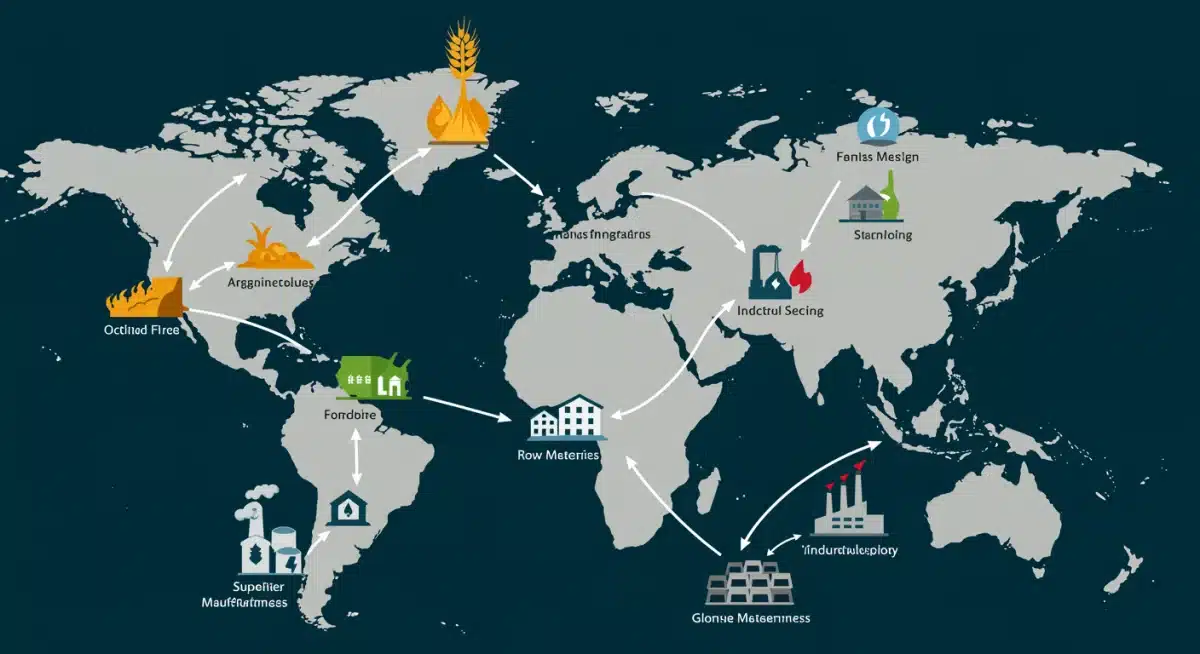
Agricultural Sector: Weather, Geopolitics, and Market Swings
The U.S. agricultural sector, a cornerstone of the nation’s economy, faces unique challenges from commodity price volatility.
It is directly exposed to both supply-side shocks from weather patterns and demand-side shifts influenced by global trade and economic health.
Farmers and agribusinesses must navigate a complex web of factors that dictate the prices of their crops and livestock.
Crop Yields and Input Costs
Weather events, as discussed earlier, can severely impact crop yields, leading to reduced supply and higher prices.
However, farmers also contend with volatile input costs, such as fertilizers, fuel for machinery, and even animal feed,
which are themselves commodities.
- Fertilizer Prices: Often tied to natural gas prices, fertilizer costs can skyrocket, increasing the expense of planting and growing crops.
- Fuel Costs: Diesel for tractors and harvesters directly impacts operational budgets, making farming more expensive.
- Feed Prices: For livestock producers, volatile corn and soybean prices directly affect the cost of raising animals.
Global Demand and Trade Policies
The demand for U.S. agricultural products is heavily influenced by global economic conditions and international trade policies.
Changes in tariffs, import quotas, or food security concerns in other nations can significantly alter export volumes and prices.
Farmers often face the dual challenge of managing production costs that are rising due to commodity volatility,
while simultaneously dealing with potentially fluctuating or even declining prices for their own output.
This creates immense financial pressure and necessitates sophisticated risk management strategies, including hedging and crop insurance.
The stability of the agricultural sector is vital for food security and rural economies across the U.S.
Mitigation Strategies for U.S. Businesses
In the face of anticipated commodity price volatility in 2025, U.S. businesses must adopt robust mitigation strategies
to safeguard their financial stability and maintain competitiveness. A multi-faceted approach, combining financial tools,
operational adjustments, and strategic planning, will be essential.
Financial Hedging and Futures Contracts
One of the most direct ways to manage price risk is through financial hedging using futures and options contracts.
By locking in prices for future purchases or sales of commodities, businesses can reduce their exposure to unexpected market swings.
- Energy-intensive industries: Can hedge against rising oil or natural gas prices.
- Food processors: Can secure future supplies of grains or livestock at predictable prices.
- Metals consumers: Can mitigate the risk of price surges in aluminum, copper, or steel.
Diversified Sourcing and Supply Chain Resilience
Relying on a single source for critical raw materials increases vulnerability. Businesses should actively seek to diversify
their supplier base geographically and politically.
Building more resilient supply chains, perhaps with regional suppliers or alternative materials, can reduce the impact of disruptions.
Exploring alternative materials or production processes that are less reliant on highly volatile commodities can also be a long-term solution.
Investing in technology that improves efficiency and reduces raw material consumption can further buffer against price shocks.
These proactive measures are crucial for enduring the financial challenges posed by commodity market instability.
Government Policies and Economic Stability
Government policies play a critical role in shaping the economic environment and can either exacerbate or mitigate
the effects of commodity price volatility on U.S. industries. From trade agreements to strategic reserves and
regulatory frameworks, governmental actions have far-reaching financial implications.
Strategic Reserves and Trade Policies
Maintained strategic reserves, such as the Strategic Petroleum Reserve, can be deployed to stabilize energy prices during crises,
providing a short-term buffer for industries and consumers.
Additionally, trade policies, including tariffs and import/export regulations, directly influence the availability and cost of commodities.
- Trade Agreements: Can open new markets and diversify supply sources, reducing reliance on single regions.
- Subsidies: For domestic production of critical materials can enhance national self-sufficiency and reduce import dependency.
- Regulatory Oversight: Of commodity markets can help prevent excessive speculation that contributes to volatility.
Investment in Infrastructure and Renewable Energy
Long-term government investments in resilient infrastructure and the transition to renewable energy sources can
fundamentally alter the U.S. economy’s vulnerability to fossil fuel price swings.
Supporting domestic renewable energy projects can reduce reliance on imported oil and gas, providing greater energy security.
Policies that encourage innovation in material science and recycling can also reduce the demand for virgin commodities.
Essentially, a robust policy framework that addresses both immediate market fluctuations and long-term structural dependencies
is vital for fostering economic stability in the face of persistent commodity price volatility.
Long-Term Economic Outlook and Adaptation
Looking beyond 2025, the persistent threat of commodity price volatility necessitates a fundamental shift in how U.S. industries
and policymakers approach economic planning. The long-term outlook suggests that such fluctuations may become the norm rather than the exception,
driven by ongoing global challenges and evolving market dynamics.
Innovation and Technological Advancement
Investment in research and development will be crucial to discover new materials, optimize existing processes,
and reduce overall commodity dependency. Technological advancements in areas like precision agriculture,
advanced manufacturing, and renewable energy storage can offer pathways to greater resilience.
- Circular Economy Models: Promoting recycling and reuse can significantly reduce the need for new raw material extraction.
-
Sustainable Sourcing: Developing ethical and environmentally friendly sourcing practices can enhance brand reputation
and reduce regulatory risks. - Digital Twins and AI: Utilizing advanced analytics to predict commodity price movements and optimize supply chain operations.
Strategic Partnerships and International Cooperation
Collaborating with international partners to stabilize commodity markets and ensure fair trade practices can benefit all nations.
Establishing strategic alliances for critical resource development and sharing best practices in risk management will strengthen global supply chains.
Ultimately, the U.S. economy’s ability to adapt to sustained commodity price volatility will depend on its capacity for innovation,
strategic foresight, and collaborative action. Businesses that proactively integrate these considerations into their long-term strategies
will be better positioned to thrive in an unpredictable global marketplace.
| Key Impact Area | Brief Description |
|---|---|
| Manufacturing Costs | Increased raw material prices (metals, chemicals) directly elevate production expenses for U.S. manufacturers. |
| Consumer Prices | Higher energy and agricultural commodity costs lead to increased goods and services prices, impacting household budgets. |
| Supply Chain Stability | Volatility can disrupt supply chains, causing delays, shortages, and increased inventory holding costs. |
| Risk Management | Necessity for robust hedging strategies and diversified sourcing to mitigate financial exposure. |
Frequently Asked Questions About Commodity Volatility in 2025
The main drivers include geopolitical tensions causing supply disruptions, the increasing impact of climate change on agricultural output and resource extraction, and shifts in global demand and supply dynamics. These factors collectively create an unpredictable market environment.
U.S. manufacturing will face higher production costs due to increased raw material prices (e.g., steel, aluminum, plastics). This can lead to eroded profit margins, challenges in maintaining consistent production, and potential delays in passing costs to consumers or supply chain disruptions.
Volatile energy prices will primarily affect consumers through higher utility bills for heating and cooling, and increased transportation costs. These factors reduce discretionary spending, contribute to inflationary pressures, and can strain household budgets significantly, impacting overall economic demand.
Businesses can mitigate risks through financial hedging using futures and options contracts to lock in prices. Diversifying supplier bases, building resilient supply chains, exploring alternative materials, and investing in operational efficiencies are also crucial strategies to adapt to market fluctuations.
Government policies can help by maintaining strategic reserves, implementing favorable trade agreements, and providing subsidies for domestic production. Long-term investments in renewable energy infrastructure and promoting a circular economy also reduce reliance on volatile commodities, fostering greater economic stability.
Conclusion
The financial implications of commodity price volatility in 2025 for U.S. industries are profound and multifaceted.
From manufacturing and agriculture to energy and consumer spending, the ripple effects of unpredictable market swings
will test the resilience and adaptability of businesses nationwide. Proactive strategies, including robust risk management,
supply chain diversification, and technological innovation, are not merely options but necessities.
Furthermore, supportive government policies that foster stability and encourage sustainable practices will be instrumental
in navigating this complex economic landscape, ensuring the continued strength and competitiveness of the U.S. economy.